


By ROBERT SEITZ
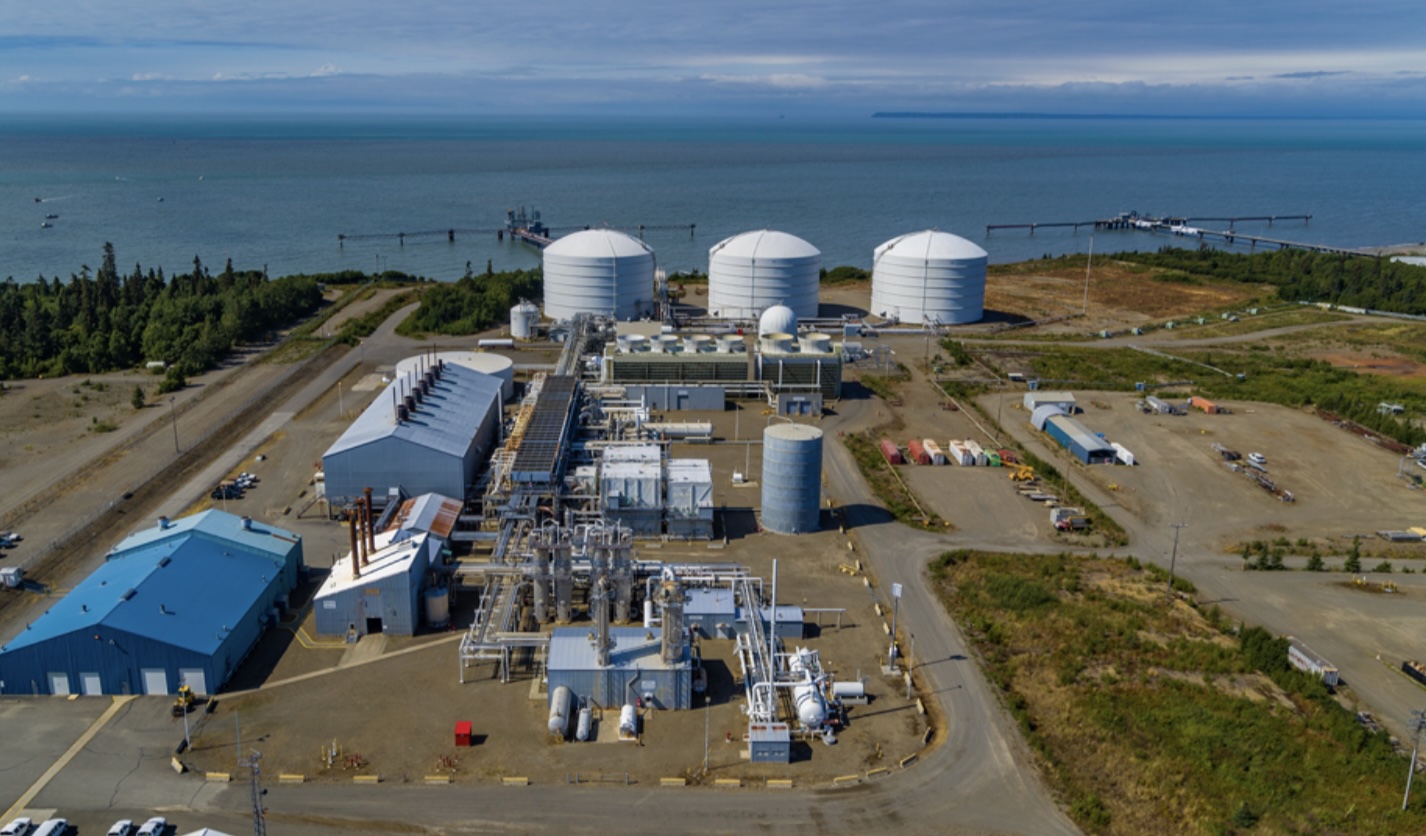
I have been advocating for both increased Cook Inlet Gas production and the development of the AK-LNG (Alaska Liquefied Natural Gas) project, but I want to caution against creating the gasline from the North Slope in any manner that will sabotage the viability of the future of Cook Inlet Gas production.
For instance, if the final investment decision for Glenfarne on the AK-LNG Project is to commit by the end of 2025 to begin with the compressed gas pipeline from the North Slope field to Wasilla with the primary intent to provide additional gas to Southcentral Alaska, to be followed with the gas treatment plant on the North Slope and the LNG processing plant in Nikiski, what can go wrong?
I see two problems that must be addressed with that decision.
The first is that any gas flow into Fairbanks or Southcentral cannot in any way pay back the cost of building the pipeline, it will require the actual export of LNG to the foreign customers.
The second is, that providing new gas into southcentral Alaska without first bolstering the production and local storage of Cook Inlet gas will have the effect of undermining the efforts of Cook Inlet gas producers and possibly totally collapse that effort.
I don’t think it is wise to proceed with actions that might sabotage the efforts to increase exploration and production efforts in Cook Inlet without first securing the sustainability of Cook Inlet gas. We have had an oil and gas economy on the Kenai Peninsula for nearly 70 years, and it is important to keep that infrastructure and economy viable no matter what we do with North Slope gas.
There has been little exploration and new production in Cook Inlet because no one would finance oil and gas activity because of the negative pressure from ESG (environmental, social, governance) influencers on fossil fuel project investment. A solution to the non expanding natural gas production in Cook Inlet was to arrange financing to provide LNG import capability, which will be paid for by energy rate payers for Railbelt gas and electricity. I
f Alaskans, from government, finance and industry work together maybe we could have come up with a viable financing solution that would encourage local producers to drill more wells for exploration and to increase production. We need the longest-term solutions, while benefiting the largest number of Alaska citizens.
I have advocated in past commentaries to build the AK-LNG gas pipeline to Fairbanks early, where Natural gas generation could be installed to provide electrical power from the north end of the Railbelt Utility and decrease the demand on Cook Inlet gas. To be able to ship natural gas down the pipeline at least to Fairbanks that would have good impact. As stated earlier there is no way that natural gas sales within Alaska from the AK-LNG compressed gas pipeline will be sufficient to pay for the investment in the pipeline but will require the eventual export of LNG to our foreign customers to cover repayment of the investment.
When we make decisions for increasing revenue, we need to make sure that the results of one project don’t result in the demise of other revenue generating projects. There are supposed to be lease sales in the Cook Inlet area soon, so we want to make sure that there is incentive to develope interest in the leases and encouragement for additional exploration, no matter how the AK-LNG project progresses. I
f there really is a market for Cook Inlet natural gas for Donlin Mine, it is then important to make sure Cook Inlet gas production is increased to ensure ability to supply the gas needed to the mine over the life of the mine. That is, we need to increase the demand for natural gas to be well above the current 70bcf/year. That increased demand will provide financial incentives to invest in additional exploration and development of facilities to expand production of natural gas and crude oil in Cook Inlet to meet the new demand. The new demand, whether for data centers, for mines or even to refine ore would provide new jobs, maybe it could result in a decrease in energy prices, and increased revenue for Alaska’s coffers.
This natural gas activity should help incentivize efforts to increase crude oil production on the North Slope as quickly as possible to bring much more revenue through the Trans Alaska pipeline to Alaska. Our efforts in ANWR and NPR-A have been interrupted by bad policies and bad politics for a lot of years. It is time to accelerate the efforts and get back on track. Alaskans must provide the incentive and motivation and encouragement to do the work necessary to allow sufficient revenue to be generated to run this State as quickly as is reasonable.
We must be able to ensure that we can increase our state’s revenue while maintaining a proper balance with the land to ensure that we each and all can live and play and work so as to enjoy our life in Alaska. Too many policies which have been in place for too many years have favored the land more than the economy and extraction and use of our resources. It is time to change this to get back to a real balance.
We must have a statewide economy, as well as economies within each city and remote community to ensure local financial resources to provide ability for each community to provide basic services and minimize the need to seek federal assistance. Let’s depend on private enterprise and sweat equity for our basic needs, let us depend on our people and not only on the government. Let us depend on each other rather than government.
We can plan for extraction activities to be adjacent to salmon streams, national parks, in the ocean and other sensitive locations. We just need to get all the right parties involved very early in the planning process, ask the right questions, work out the criteria for success and approach each project with an attitude that it can be done and that we just need to find the things that will work to make it happen.
As stated earlier in this piece, we can make sure that sufficient economic benefit can be available for the small remote communities that are near the project area of interest. We can take care of the small communities while providing funding for the state budget.
We just need to make sure all our important projects are sufficiently coordinated with all other projects and interest throughout the state, to maximum the positive results for all Alaskans. Let’s work together!
Robert Seitz is a professional engineer and life-long Alaskan.

5 thoughts on “Robert Seitz: Manage industrial development with caution and care”
The Japanese and Koreans have made zero commitments to buy Alaska gas.
The cost 30 billion dollar pipeline spread over 400,000 people for a 30-year period is about $25,000 per person. Just sayin’.
No. Sorry, but the constraint on Cook Inlet gas development is the lack of export during the off season. And a new LNG train at the end of the NS pipeline is the solution!
Please understand that gas wells don’t throttle back . They need to flow at an optimum rate.
Without the export of LNG to Japan and without the production of urea fertilizer in Kenai, the demand curve for Cook Inlet is too small most of the year, then too great in Jan/Feb. Leading to potential brownouts.
The addition of a new LNG export facility in Cook Inlet will solve this problem. It will provide gas developers the year-round market they need.
I appreciate Mr. Seitz’ advocacy for Cook Inlet, but wanted to share my perspective as an economic geologist.
Hmmm(?) … Possibly a better approach? Why not feed the LNG to foreign buyers first, shipping directly from the North Slope with ice breakers and arctic grade LNG Tankers. Utilizing the Cook Inlet gas resources and maximizing technologies and allowing to mature. Then, build-out the pipeline – compressor station infrastructure from the North Slope to the Interior and South Central areas in years following, once the industry is established, and hopefully growing onward to other areas of the North Slope.
The key is that the State needs to capitalize the cost of the construction and only charge for Operations and Maintenance. The economic benefit from a natural gas pipeline is immense and worth the investment.