


By SUZANNE DOWNING
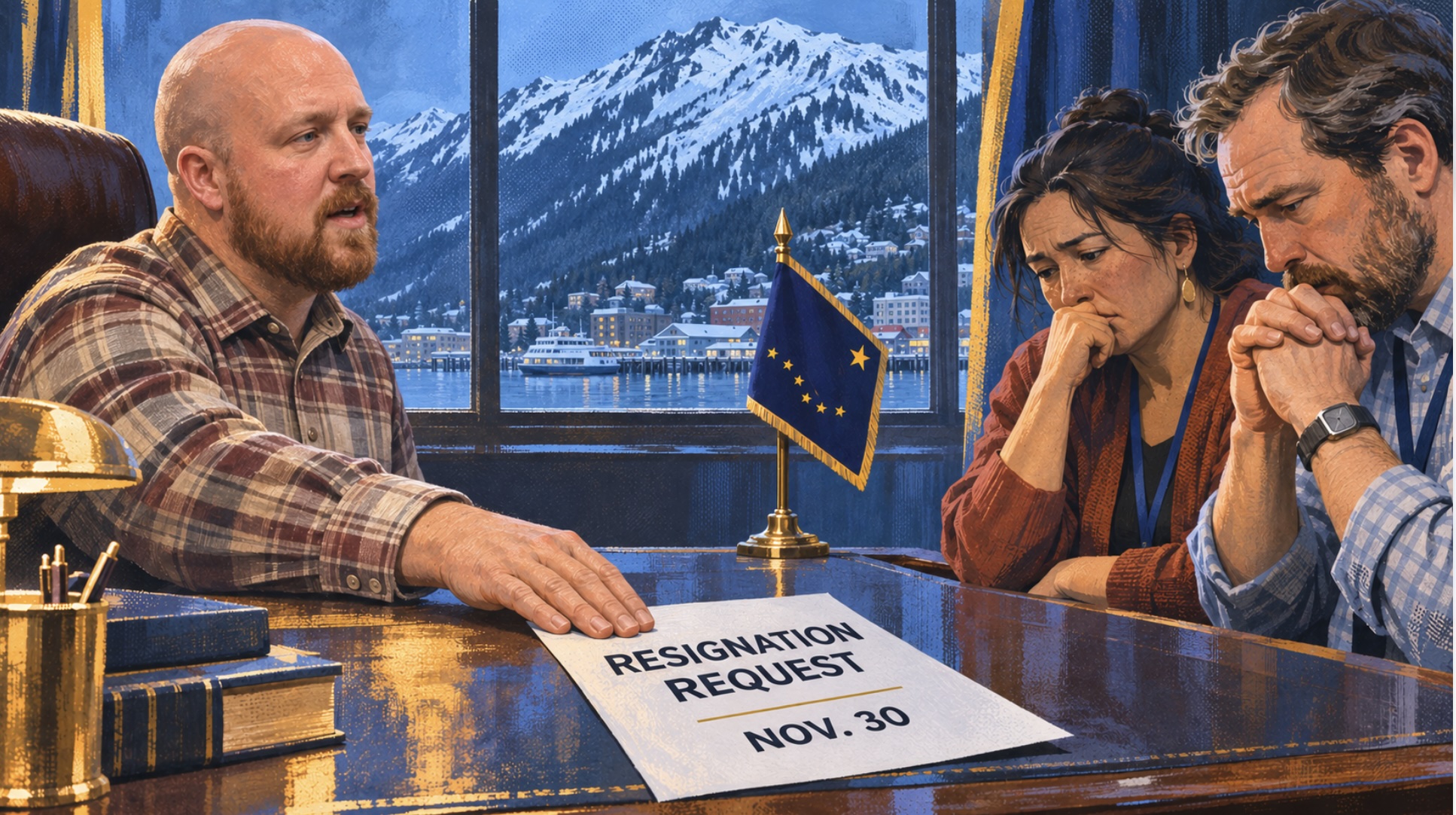
Nov. 19, 2026 — Gov.-elect Jonathan Kreiss-Tomkins’ transition team is telling some Alaska state employees to submit resignation letters by Nov. 30, a full week before he takes office.
Those who want to keep their jobs are being told to send a résumé with their resignation. Those who say nothing are being told their silence will count as quitting.
“We will interpret a non-response as a resignation,” the team wrote in a Nov. 17 email to some state employees.
The Alaska Story has received reports that receptionists and other employees who handle administrative operations were among those who received the resignation request. The number of employees affected and the full list of positions are unknown.
JKT won’t be sworn in as governor until the Dec. 7 inauguration ceremony in Sitka.
The Nov. 17 email calls the requests “customary” and says incumbents will be considered on the same basis as other applicants. It tells employees who send résumés to keep working while they wait for a decision.
In a separate email sent the same afternoon, the transition team said it was seeking resignations from a limited number of positions and told those recipients to continue working as usual. “Please don’t send a courtesy resignation,” that message said.
When Mike Dunleavy took office in 2018, his transition’s resignation demands led to lawsuits from employees who argued that their jobs did not require “political allegiance.”
A federal judge sided with a state assistant attorney general and two psychiatrists on First Amendment claims.
Elizabeth “Libby” Bakalar was a partially exempt assistant attorney general who advised the lieutenant governor and the Division of Elections. She submitted a resignation at the transition’s direction and asked to stay.
The incoming administration accepted her resignation on Dunleavy’s first day in office. In 2022, US District Judge John Sedwick ruled that her dismissal violated her First Amendment rights. The state agreed to pay $350,000 to settle the case in 2023.
Dr. Anthony Blanford, chief of psychiatry at the Alaska Psychiatric Institute, and Dr. John Bellville, a staff psychiatrist, were fired after they declined to submit resignation letters.
Sedwick ruled in 2021 that Dunleavy and Chief of Staff Tuckerman Babcock, violated the doctors’ First Amendment rights by firing them for refusing to express support for the incoming administration’s political agenda. The state settled the two claims for a combined $495,000.
The Kreiss-Tomkins email asks for a resignation and, for those seeking to stay, a résumé.
The 2018 cases turned on political speech. Under the US Supreme Court’s test, the government must show that political affiliation is an appropriate requirement for the job if it wants to base a dismissal on that ground.

Alaska’s personnel rules separately require “just cause” to dismiss permanent employees covered by those rules. An at-will employee can still have First Amendment protection against political dismissal.
Employees whose work is clerical, administrative or professional may have grounds to decline a resignation request. Because the transition has said it will treat silence as resignation, those employees should keep a copy and promptly ask agency HR, a union representative if covered, or an employment attorney what rules apply to their position.