By SUZANNE DOWNING
Sept. 30, 2026 — The New York Times has discovered one of Alaska’s most spectacular historic destinations. Its timing could use some local knowledge, however.
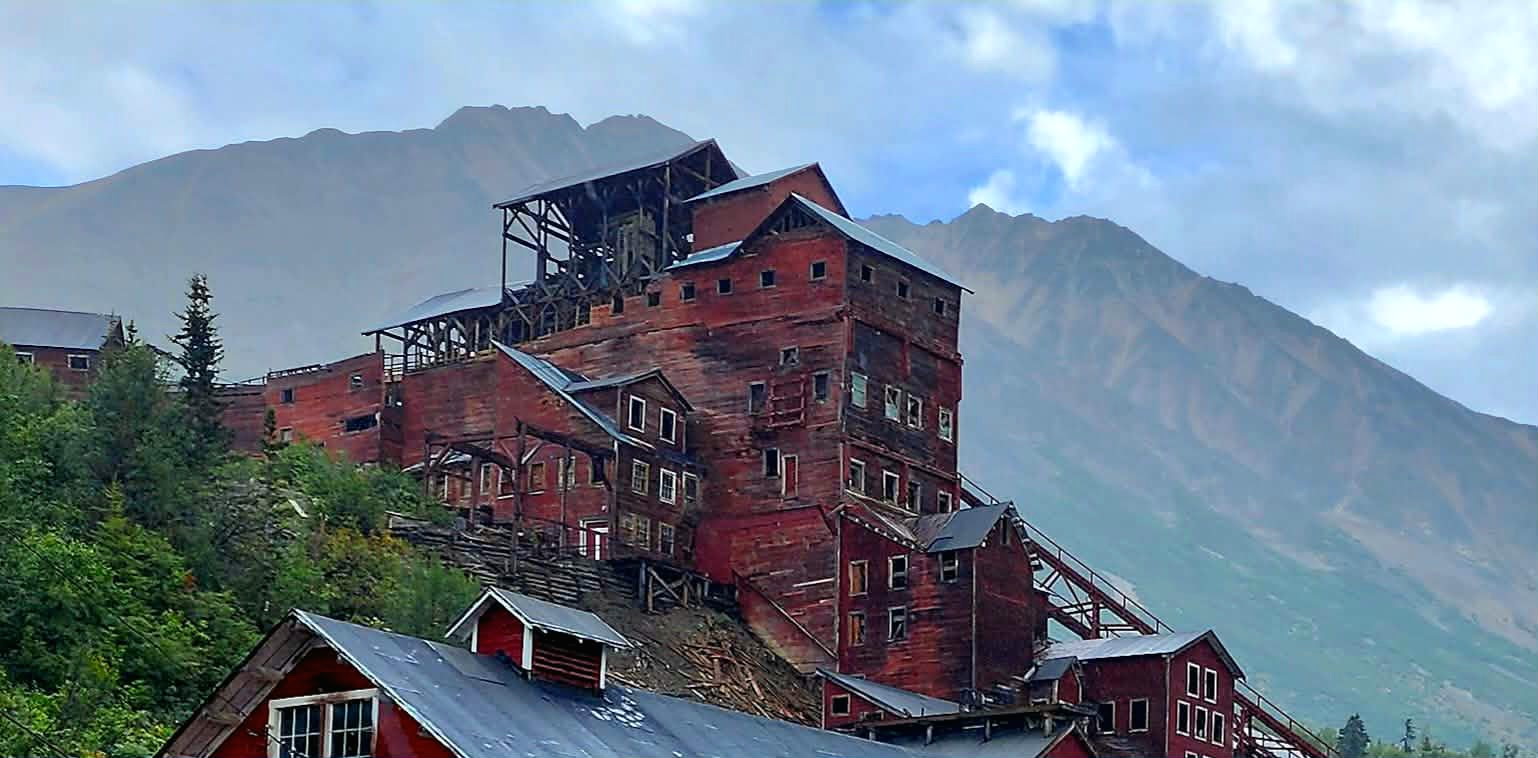
In its Sept. 17 travel feature, “After the Gold Rush: 5 Ghost Towns to Explore This Fall,” the newspaper included Kennecott among its five destinations for an autumn adventure. The others are Bodi, Calif; Rhyolite, Nev.; St. Elmo, Colo.; and Bannack, Mont.
Kennecott certainly belongs on any traveler’s bucket list. But a fall getaway in Alaska needs to come with a different expectation than a fall getaway in most of the Lower 48. By the time readers are considering an October excursion, Kennecott’s summer visitor season has already ended. It’s a season that is right now on the ragged edge of winter.
The National Park Service’s 2026 schedule listed the Kennecott Visitor Center as open May 23 through Sept. 13. Its scheduled season actually ended four days before the Times article appeared. Winter arrives early in Interior Alaska, services are limited by late September, and snow is usually on the ground by then.
Fall colors? Meh. Winter conditions? Possible to probable. An open visitor center waiting to welcome you? Nope. You can’t even go into the buildings. Bring your satellite phone.
The Times does acknowledge the long approach to get there. Its description places Kennecott about seven hours east of Anchorage, reached by paved highways followed by roughly 59 miles of remote gravel road without gas stations.
But distance is only a fraction of the story, when it is the season that determines what visitors will find when they arrive.
The McCarthy Road follows the old Copper River & Northwestern Railway route from Chitina toward the Kennicott River, deep into the interior of Alaska, where it is cold and beyond remote. Even in summer, the roughly 60-mile road has potholes, rough surfaces, and extremely limited cellphone coverage, or none at all. DOT advises bringing extra fuel, food, water, spare tires, appropriate clothing and emergency supplies. There are no gas stations or services along the road.
And reaching the road’s end does not mean pulling into a parking space beside the historic mill. Did we mention bring your sat phone if you’re going there at this time of year?
Visitors generally park at the Kennicott River and cross the footbridge. McCarthy is about half a mile beyond the bridge; Kennecott is about five miles away. Private shuttles operate seasonally, so an autumn visitor needs to confirm availability before counting on a ride.
A five-mile hike has a different character when transportation is unavailable and the weather is turning.
The Park Service says the McCarthy Road is open year-round, but it is not maintained regularly during winter. “Open” is an access designation.
DOT’s current webpage describes maintenance from early spring through mid-fall in one section, while another lists mid-May through mid-September. It does not establish a clear Oct. 1 cutoff. Travelers should check Alaska 511 and confirm local services before setting out without chains or a snow machine.
There is another Alaska detail beneath the gold-rush headline: Kennecott’s fortune came from copper. Its mines closed in 1938, leaving a remarkable industrial legacy in the mountains.
The Times chose an extraordinary destination in Alaska. It would have been more seasonally appropriate to have noted the Southeast town of Hyder, which is accessible through British Columbia and a border stop.
Alaska welcomes visitors. It just does not promise to keep summer running because a New York Times travel section has moved on to fall colors.