


By SUZANNE DOWNING
US Sen. Rand Paul of Kentucky released his 11th annual “Festivus Report” on Dec. 23, airing what he calls the federal government’s most egregious examples of wasteful and misguided spending. This year’s total reached a staggering $1.639 trillion, an increase from roughly $1 trillion identified in his 2024 report, driven largely by ballooning interest payments on the national debt. The report documents waste, fraud, and abuses of the Biden Administration’s budgets.
Paul’s report, inspired by the annual “airing of grievances” tradition from the television show Seinfeld, highlights spending across multiple federal agencies, ranging from biomedical experiments and influencer campaigns to foreign aid, leftover Covid-era programs, and ideological or unnecessary grants.
At the core of the report is the federal debt itself. Paul notes that US debt has climbed from about $36 trillion last year to nearly $40 trillion, with $1.22 trillion in interest payments alone in fiscal year 2025.
“Shockingly, in one short year, the career politicians and bureaucrats in Washington have managed to reach nearly $40 trillion in debt, without so much as a second thought,” Paul wrote in the introduction. “When asked who’s to blame for our crushing level of debt, the answer is ‘Everyone.’”
According to the report, Congress raised the debt ceiling by $5 trillion in the past year, the largest increase in history. Paul said interest costs are now rivaling major budget categories such as national defense, while Americans face inflation and higher borrowing costs at home.
The Alaska town of South Naknek is mentioned. A small village with only about 67 residents, it was called out for a $2 million earmark for affordable housing there as an example of wasteful spending for 2026. That was an earmark from Sen. Lisa Murkowski.
Animal experiments and biomedical research
A recurring theme in the Festivus Report is federally funded animal experimentation, much of it tied to the National Institutes of Health, the Department of Veterans Affairs, and related agencies. Among the examples cited:
• More than $5.2 million spent dosing dogs with cocaine
• $1.08 million to teach ferrets to binge drink alcohol
• $14.6 million to make monkeys play a “Price Is Right”-style video game
• $13.8 million in continued funding for beagle experiments associated with Dr. Anthony Fauci
• Hundreds of millions of dollars for gain-of-function research involving dogs, monkeys, rats, and other animals
Paul credits watchdog group White Coat Waste with uncovering many of the projects and spending that is both unethical and unnecessary.
Influencers, public health, and COVID spending
The report also targets Department of Health and Human Services spending on influencer-based public health campaigns. Examples include:
• $1.5 million for celebrity influencers aimed at reducing drug use in “Latinx” communities
• $1.9 million for a mobile phone intervention targeting childhood obesity among Latino families in Los Angeles County
• More than $40 million spent promoting Covid-19 vaccination through influencers for racial and ethnic minority groups
• $2.9 million to study screen time and parent-child relationships
• $936,000 targeting niche subcultures such as drag queens, “bear/cub” communities, and queer punk scenes for STD outreach in Los Angeles
Paul also pointed to nearly $200 billion in Covid relief funds for schools, which he said were spent on items such as hotel rooms at Caesars Palace, renting Major League Baseball stadiums, and ice cream trucks.
Foreign aid, ideology, and global programs
Several items highlighted involve foreign aid and international programs:
• $54 million to EcoHealth Alliance for bat coronavirus research connected to Wuhan, China
• $2 million for gender-affirming care and activism in Guatemala
• $244,252 for a climate-change cartoon series aimed at children in Pakistan
• $1.5 million promoting American films, television shows, and video games abroad
• Millions in global health and trauma-modeling projects in sub-Saharan Africa
Paul said that even after President Donald Trump moved to curtail many foreign aid programs, agencies continued funding global initiatives through waivers and alternative mechanisms.
Insects for human consumption
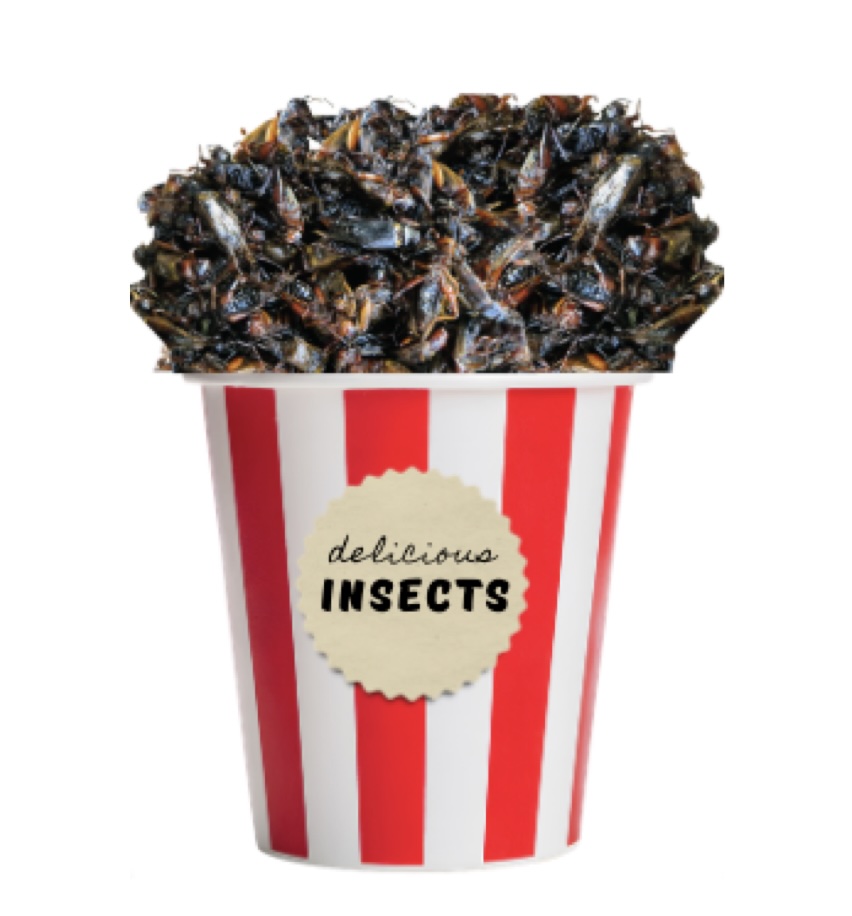
The National Science Foundation has committed $2,494,321 to programs like the Center for Environmental Sustainability through Insect Farming and the Center for Insect Biomanufacturing and Innovation, which promotes insects as the next frontier in food for humans, pets, and livestock, Rand wrote.
Defense, infrastructure, and bureaucracy
The report also flags waste in defense and infrastructure spending:
• An estimated $77 million per year for a Navy dolphin training program Congress has refused to end
• $7.5 billion allocated for electric vehicle chargers nationwide, with only 68 stations operational
• A $1.8 billion cost overrun at NASA for a shuttle project that ran six years behind schedule
• $187 billion paid by the Federal Reserve in interest on reserve balances to banks
Paul also criticized grants he described as ideologically driven, including $3.3 million for “safe spaces” and administrative expansions at Northwestern University and USDA funding for “inclusive” food programs targeting specific identity groups.
“If eating bugs turns your stomach, this ‘BLT’ might push the faint-hearted over the edge. The Department of Defense spent your money creating so-called ‘BLT mice’ — and no, not the kind of BLT you’re thinking of. These lab animals were implanted with bone marrow, liver, and thymus tissue obtained from aborted human babies. The projects drew military dollars to support projects using humanized BLT mice. What was billed as science for national defense instead exposed cruel and unnecessary research using aborted fetal tissue, a morally repugnant practice I have been fighting for years. The first Trump administration cut funding for fetal tissue research, but unfortunately Biden reinstated it and allowed taxpayer funds to once again be used for this inhumane and immoral research,” Paul wrote.
A bipartisan problem
While Paul has long criticized Democrat spending priorities, the 2025 Festivus Report places blame across party lines. He argues that unchecked spending, regardless of which party controls Congress, has led to a debt trajectory that is unsustainable.
The report cites Congressional Budget Office projections showing the federal government adding an average of $23.9 trillion in new debt over the next decade, or more than $6.5 billion per day.
“No matter how much taxpayer money Washington burns through, politicians can’t help but demand more,” Paul wrote. “Fiscal responsibility may not be the most crowded road, but it’s one I’ve walked year after year.”


2 thoughts on “Naknek featured in Sen. Rand Paul’s Festivus Report that tallies $1.6 trillion in federal waste, debt dubious programs”
I thought DOGE was getting rid of this waste?
They need Congressional approval to cut it