


By GOV. MIKE DUNLEAVY
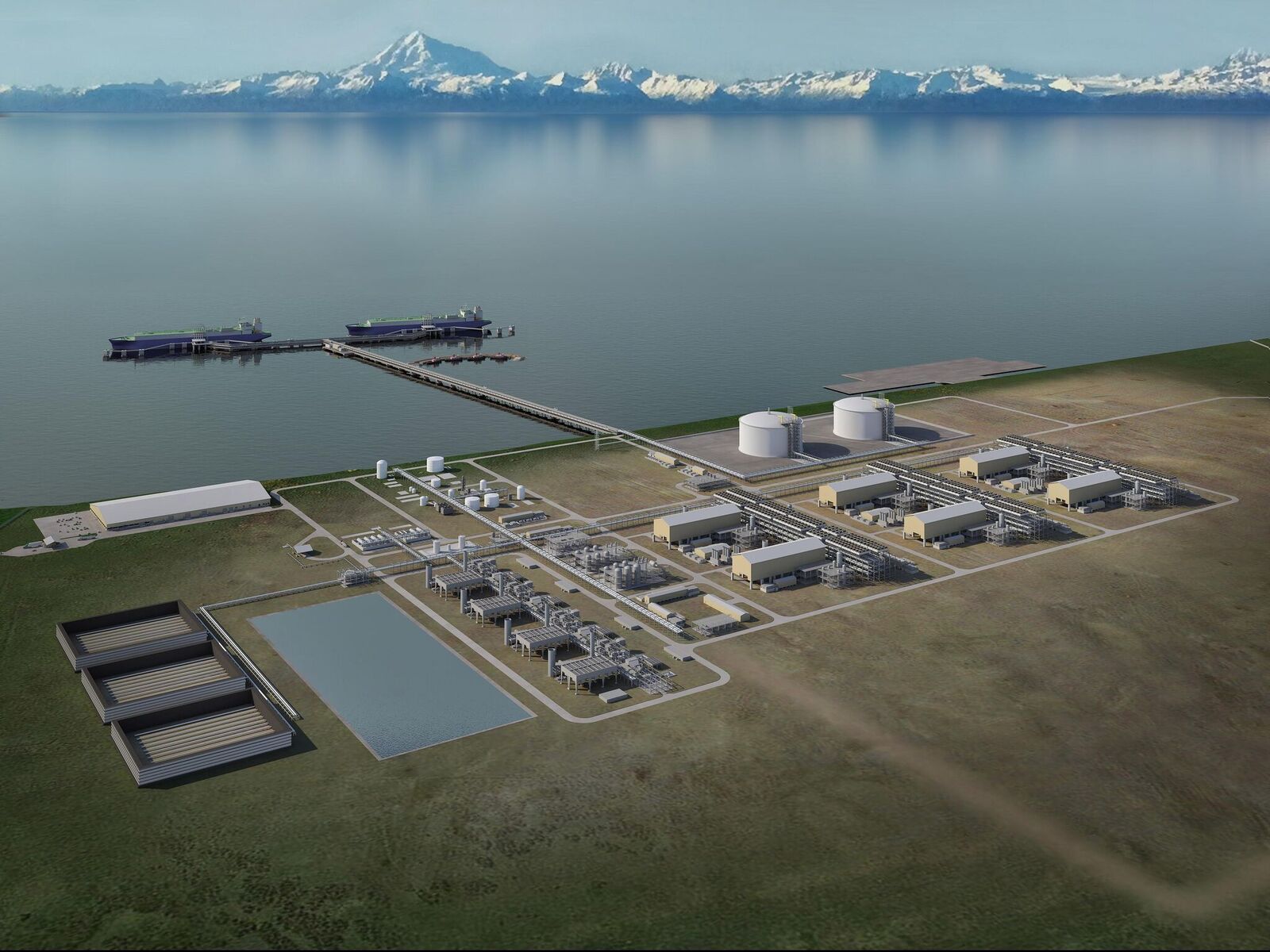
June 28, 2026 – Alaskans have been hearing about a natural gas pipeline for fifty years. Fifty years of studies, proposals, false starts, and broken promises. For most of that time, the project was either too expensive, too complicated, or too dependent on a federal government that had other priorities. But something changed. A private developer stepped forward, signed binding agreements, hired contractors, found buyers in Japan and South Korea, and put real money on the table. After half a century of waiting, the pipeline is no longer a dream. There is a plan.
But that very plan is at risk.
House Bill 381 started as a clean, focused piece of legislation. The Alaska LNG Project, as currently structured, triggers massive property tax obligations during the construction and early operational phases, before the project generates the revenue to pay them. The fix was simple: restructure the tax so the project can be financed. The House understood this and passed it with strong bipartisan support.
The Senate took a different path. Rather than passing a bill that works, they turned it into something else entirely. They added a new corporate income tax on pass-through entities, imposed construction deadlines that have nothing to do with how a project like this actually gets built, and inserted a forfeiture clause that will strip the developer of any compensation if the project falters. These amendments do not protect Alaska. They guarantee that nothing gets built.
Glenfarne, the company that has committed billions to this project, said exactly that. In their words, the Senate’s amendments would produce an “unworkable, unfinanceable, and uncompetitive project, unable to deliver reliable and affordable energy to Alaskans.” That is a clear and direct warning from the people who actually have to build it. When the developer tells you the terms make the deal impossible, you should listen.
Our constitution is clear. Under Article 8, Alaska’s resources belong to the people, and my charge as governor is to develop them for the maximum benefit of those people. A pipeline that never gets built delivers zero benefit. No jobs. No tax revenue. No affordable energy for Southcentral families already paying some of the highest utility rates in the country. No North Slope gas for our military bases, which depend on reliable energy to defend this nation. The Senate’s version of this bill does not protect Alaska’s interests. It sacrifices them.
Sens. Cathy Giessel and Bill Wielechowski are pursuing policies that will make Alaska weaker rather than maximizing our state’s resources. There is a difference between capturing value from a project that gets built, which includes cheap long-term energy for residents and future business activity, and demanding maximum extraction from one that never will. Adding a targeted income tax on oil and gas producers and on Glenfarne and its investors is not a negotiating tactic. It is a poison pill, and it must be treated as one.
That provision is a line in the sand. Any bill that reaches my desk with those targeted tax increases and any other language that would negatively impact the viability of this project will be vetoed.
The conference committee has the opportunity to restore what the House passed and deliver a bill that works. That bill creates thousands of construction jobs. It puts affordable gas into the hands of Alaskans who need it by 2029 and opens international export markets by 2031. It represents a $44 to $55 billion private investment in Alaska infrastructure that generates revenue for decades. A high tax on a project that never happens gets you nothing. A fair structure on a project that actually gets built is what our constitution demands.
There is time to get this right, but no time to waste. I remain committed to signing a bill that moves this project forward. I will not sign one that kills it. The choice now belongs to the legislature, and Alaskans are watching.
Gov. Mike Dunleavy is the 12th governor of Alaska, serving since 2018. Prior to b becoming governor, he was a state senator, and teaching professional.


11 thoughts on “Mike Dunleavy: Alaska has waited long enough for the gasline”
Spot on, Governor! Get rid of these disastrous Senate proposals and build the damn thing!
So, if the Senate members are the true and ‘EXISTENTIAL THREAT’’ to our prosperous future (ie: a clear and present danger), why isn’t anyone taking affective and meaningful measures to eliminate this threat? We are allowing a few of these ‘miscreants’ to seriously affect our economic prosperity, as well as the future of following generations. Something must be done “NOW” to rein-in these miscreants and eliminate the threat, before this opportunity vanishes, never to be seen again, for another 50-100 years!!!
Glenfarne was of 16 companies vetted for developing Alaska LNG line?
More research should have been done on developing a gas line but most of all, the North Slope oil companies should have been consulted first who have yet to come out in support of a phase 2 export line and terminal.
what is at stake if no gas-line is built?
no heat and no lights for most of Alaska’s residents.
there are no substitutes for the gas that is running out in the inlet.
no vehicles to transport lng to Alaska.
think about no gas for heat no electricity and 30 below.
no working gas stations without electricity!
Is this all a plan to depopulate Alaska?
And the SKY Robert! If a piece of THAT hits you, you’re toast.
Are you one of the miscreants? I can’t decipher what exactly your comment means, Evan.
Alaska has waited long enough for a governor who will stand up to a rogue hard leftist judiciary. Yeah, we’re still waiting…..
There is a posture running through this entire debate that deserves to be named for what it is. It shows up every time a constituent asks a specific, sourced, answerable question about HB 381 and gets back, instead of an answer, some version of the same message: you do not have access to what we have access to, so trust the people who do. That posture is not accountability. It is a claim to a kind of standing the Alaska Constitution does not actually grant anyone in Juneau. Legislators are not a privileged class entitled to know more than the people who elected them and to be believed simply because they say they know more. They work for the public, and the public is allowed to check their work.
What makes this year different is that the public has now checked the work, repeatedly, and every time the answer has come back the same way: the people claiming superior knowledge either did not understand what they were supposedly privy to, or understood it and chose not to say so. Either way, the claim to special standing does not survive contact with what actually happened in committee rooms, on leaked documents, and in their own published writing this year.
https://raff6482.substack.com/p/the-hill-they-chose
Alaskans will continue waiting until either boomers and GenXers are dead and Millennials are on the assisted living homes. Or Alaskans will be more willing to development because of an Act of God on our country leaves us no other choice because we all need money.
Alaskans have been hearing about corrupted election, grand jury, and education systems for decades too. You had time to fix them, but didn’t. But now you’re a gas-line expert with no time left to fix anything, or seemingly answer our questions about your gas line, so we could at least sign up to be a force multiplier.
.
What, Glenfarme said sort your legislature out, Gov, or we walk and stick you with a bill that’ll make Palin’s TransCanada bail-out look like pocket change?
.
You’re worried because separation of powers is still a thing, but maybe appealing to your adoring public will make legislators save your deal when your public can’t even wake ’em up long enough to save our election, grand jury, and education systems?
.
Mike, thanks partly to you, we’ve inherited 25% ownership in something we know way too little about.
.
You and your Glenfarme BFF’s don’t answer our frequently-asked, reasonable questions about your gas line, which raises more red flags than a Victory Day Parade in Tiananmen Square.
.
Now we find out a secret deal’s in the works which, for all we know, protects Glenfarme, not your constituents who hired you!
.
No? why would such a deal be kept secret from the people if it’s supposed to protect the people?
.
So, once again, Mike, how about factual, simple, non-secret answers:
.
1. How much will Alaskans’ heating and electric bills increase after pipeline construction?
2. Will product be sold directly or indirectly to Communist China?
3. If supply or demand issues arise, are Asian buyers prioritized over Alaskan customers?
4. Are Communist Chinese entities involved in project financing, insurance, or construction?
5. Are contingency plans in place to assure political or labor instability don’t disrupt the project?
6. Recall Governor Palin’s $500M giveaway to TransCanada, what protects taxpayers from a similar giveaway or debt trap?
7. What assures pipeline-control gear will be CISA vetted? (https://www.cisa.gov/)
8. When LNG development is actually over, will AGDC be disbanded?
9. What assures Alaskans and the Permanent Fund won’t be liable for up-front costs, contractor fraud, and losses if Glenfarne can’t get, or later loses, binding financial commitments from Asian companies and governments?
(https://ptop.substack.com/p/guide-to-uncovering-contractor-fraud?)
10. What makes Polar LNG -not- better positioned to move natural gas by leveraging existing Prudhoe Bay infrastructure, minimizing new onshore development, and delivering a more efficient and lower-impact path to market …at a quarter of the cost?
(https://polarlng.com/project/)
.
11. On June 25, 2025, AGDC released an updated $38.7 billion cost estimate for the Alaska LNG Project.
(https://agdc.us/updated-38-7-billion-project-construction-cost/)
.
Now Glenfarne wants $44B +.
.
Then there’s this: “The latest evidence that no one knows what the gas will cost comes from an independent report by Rapidan Energy Group, which says the likely cost of the pipeline project is far higher than the $44 billion estimate still in circulation …Add in the cost of the so-called first phase—building a pipeline from the North Slope to Anchorage without compression and export facilities and the total project cost would exceed $70B.”
(https://www.dermotcole.com/reportingfromalaska/2025/6/24/glenfarnes-latest-deceptive-press-release-about-alaska-lng-project)
.
Who pays when project cost runs up to, say, $90B, or reaches a point at which it’s not cost effective anymore because financial, geopolitical, legal, and physical risks outweigh benefits, making it unlikely to turn a profit during the lifetime of anyone alive today? What is that stop point?
.
12. Are Alaskans right to be concerned about what the Rapidan analysis shows, which the Dunleavy administration, AGDC, and Glenfarne analyses apparently don’t show?
(https://www.rapidanenergy.com/about)
.
13. Are legislators wrong to tax to the max natural gas taken from Alaska and sold to communist China, and use the revenue for individual property-tax reductions and full PFD’s?
.
14. What protects Alaskans from Glenfarme using Alaska, with its 25% stake in the project, (a) as a cash cow to cover cost overruns and rate increases, (b) as hostage to pay for overruns and increases already baked into “increased” project cost, and (c) using the legislature as a scapegoat to be conveniently blamed if “increased” project cost turns out to be problematic.
.
15. What proves beyond doubt that (a) Cook Inlet gas reserves are bouncing on empty, and therefore (b) other practical, viable, -less expensive- options to the project are unworkable, shouldn’t be discussed, much less be allowed to happen?
.
16. What proves Glenfarme’s apparent promise of price controls on customer rates is a promise Glenfarme and government can keep?
.
Their promise seems disturbingly amnesic. Remember how price controls affected supply during the 1970’s oil crisis? They’re saying more of the same’s coming?
.
Does this ring a bell, something different’s happening now? “We economists don’t know much, but we do know how to create a shortage. If you want to create a shortage of tomatoes, for example, just pass a law that retailers can’t sell tomatoes for more than two cents per pound. Instantly you’ll have a tomato shortage. It’s the same with oil or gas.”
(“Friedman Blames Mess on Federal ‘Helpers’,” Los Angeles Times, February 10, 1977)
.
17. What protects Alaskans from corporate lowballing, setting domestic prices artificially, temporarily low to discourage popular support for, and investment in, the other three alternatives to Glenfarme’s gas line?
.
Of course these bad things can’t happen here, but what recourse do we have if they did? State government goes Democrat-Socialist, can you blame Glenfarme and everyone else for pulling the plug on the whole thing?
.
For our 25% stake, Governor Mike, shouldn’t you -and we- know these things before they turn into another epic BOHICA* moment?
.
*Bend Over, Here It Comes Again
Dana, your accurate commentary is making Todd Smolden nervous!!!