


Alexander Dolitsky came to America in 1978, and his article is spot on, especially regarding the USSR. Back in 1972, I took the Orient Express from Munich, Germany, to Istanbul, Turkey. I had been forewarned to get a travel visa for Bulgaria, which I did. Leaving Austria for Yugoslavia was pretty easy; I showed my passport and that was it. Around midnight, the train stopped, and I woke up to see the muzzles of two machine guns through my window. Then ten border guards, who looked like the Gestapo (it felt as if I had gone back in time), boarded my car. Five of them individually checked my passport, the beds, my luggage, the floor, the walls, and the ceiling; I assumed they were looking for contraband. As a young airman, all I could do was stand with my passport and think that if I were pulled off the train, my parents would never know what happened to me. Then, when we reached the Greek border, the same thing happened—only this time, they were looking for people trying to flee the USSR.
That was the first of three times I witnessed the oppression of the Marxist/socialist/communist system. Alexander Dolitsky lived it every day until he got out; that would be an interesting story in and of itself.
My second experience witnessing the results of Marxism, socialism, and communism was from the late ’90s into the early 2000s. I worked as a paramedic in the oil industry in Russia—specifically in Yuzhno and Nogliki on Sakhalin Island, and then in Komsomolsk in the Far East. Komsomolsk means a city or place named in honor of the Komsomol, the Communist Youth League of the Soviet Union. This was built by in essence slave labor by people that had been removed from western Russia/Moscow.
During that time, I was able to interact with the Russian people and visit their schools and hospitals. The following is what I saw and heard from those Russians, as well as how socialism/communism actually functioned. I won’t say it “worked,” since that might be construed as a positive; it was anything but.
I was told that during the Soviet era, people had plenty of rubles but no products. Those were the days of long lines for food, if any was available. There were no real markets unless you were part of the Politburo. During my time there, the ruble crashed in 1998, slashing three zeros from the currency; one “new” ruble became equal to 1,000 “old” rubles. For us expats, this meant we went from being “rich” in the eyes of the Russians to being very rich. Because we were in the oil business, they called “businessmen” the Mafia, and thus we were considered “Mafia.” Under Gorbachev and Yeltsin, they had more products (mostly cheap Chinese knock-offs), but very few rubles, and the crash made it even worse. In places like Kansas that had government-run groceries that collapsed—and seeing what Mamdani is doing now with government-run groceries and the increase of the minimum wage in NYC to $30/hr—they will have plenty of cash, but nothing to buy.
As for the “equity” that socialists push: I once had a conversation with a surgeon and asked how much he made per month. He said it equaled about $200 USD. Then he told me a janitor made the same! I had always heard that all workers were “equal,” and that answered that. He and others confirmed there was no incentive to work. If you were paid $200 a month to make 100 widgets a day, you made exactly 100—not 99, and not 101. There was no effort to make the widget better and no innovation; they just made the same old 100 widgets. “Equity” does not equal “equality.” The only “equity” I recognize is the equity in my 401(k).
The schools were what truly tore at my heartstrings. Since my team wasn’t in danger of injury, I had the opportunity to visit schools with my interpreters. As a side note, the interpreters had gone to university to become English teachers because all children were required to learn English as a mandatory second language. Why? Simple: the narrative was that when Russia took over the US, they would need to know English to rule.
Back to the children: the school buildings, like the apartments, were run-down concrete exteriors with poor plumbing and dingy rooms heated by radiators (I will discuss centralization later). The boys were freshly washed, wearing slacks, a shirt, and a suit coat—likely the only ones they owned. The girls wore dresses, again, likely their only one. They were well-behaved, courteous, and starved to hear about the US. Their questions were based only on what the government had told them; in many ways, the questions were ignorant, simply because they didn’t know any better. One teacher asked why America was like a pizza. That blew my mind, since we call it a melting pot. The answer was that we had many ingredients, which is similar to a melting pot.
Another teacher asked why Americans liked Gorbachev so much. Her voice and expression made it obvious she didn’t like him. I had learned from others that he had “thrown out the bathtub” in ending the USSR (rather than the baby with the bathwater). I responded carefully, as a retired Air Force member, that Americans were happy nuclear missiles were no longer pointed at us (though we knew that wasn’t entirely true). Then I asked if she liked President Clinton; she loved him. She was astounded when I told her that we conservatives didn’t like him because he was trying to make the US into what they had just gotten rid of: socialism/communism.
I will end with this: I was asked by one of the teachers what I thought of their school and children compared to America. I was blunt; I told her to keep doing what she was doing. The children were polite, well-dressed, and eager to learn. We have children who wear their pants below their waists, are snotty, and don’t come to learn—which I believe is largely due to teachers’ unions. As an aside, I went to Palmer Middle School to ask the kids to be pen pals with the Russian children. The response was beyond sad. The questions I received from them were insolent and based on a “don’t care” attitude. I was so angry that I left early and told the teacher that the disrespect shown to me and those poor Russian kids was disappointing.
Socialism and communism are all about “equity” and centralization. At the shipyard where we worked, they had their own food factory that fed us at our hostel. All heating came from a central factory via piping; it was either on full blast or off. It would be −40 outside and sweltering hot in our offices. The food was bland, and I saw firsthand what “compromise” means to a communist food factory head: it was her way or no way at all. Many socialists in our legislatures and Congress do the same. To them, “compromise” means you move closer to their view, then they take five steps back; then you cross your principles, and they take five more steps back. To seal the deal, you cross those five steps, and now they have you.
Regarding Russian medicine: everyone received “equitable” medical care. I worked in the OR, and the equipment dated back to the 1960s. Endotracheal tubes were metal and autoclaved, unlike our single-use plastic ones. The doctors were good and cared for their patients. On a few occasions, our team had medical issues beyond my paramedic abilities, and we used Russian doctors. We received good care, including an ultrasound that my doctor in the US reviewed and approved.
What was truly bad—and the result of the socialized medicine that Democrats/socialists want—was the care within the hospital. If a loved one needed a dressing changed, you had to buy the supplies yourself and bring them to the patient for the nurse to use. It was the same with medications. The only rule my team and I agreed upon was that if a situation required hospitalization, the answer was “no.” I cared for a few of them in the hostel instead. Fortunately, we didn’t have to medevac anyone. Look at Canada; they are heading toward the Russian model. Do we want “Medicare for All” with resulting substandard care? I don’t. The sad thing is, if that happens, where do you go for the quality care we have now? We will be stuck.
My third experience was two years ago visiting Berlin. I saw the remains of the Berlin Wall and visited Checkpoint Charlie. I read the stories of those who died attempting to cross and visited the Brandenburg Gate where President Reagan said, “Mr. Gorbachev, tear down this wall!” Many Berliners told me that until recently, you could tell you were in old East Berlin because it was gray and dingy, whereas West Berlin was colorful and vibrant. There was a museum at Checkpoint Charlie that sent shivers up my spine; they simulated the scaffolding people stood on to look for friends and family across the wall. For those opposed to our southern wall: that wall is to keep people from illegally entering our nation, not to keep people in. If you want to leave, have at it.
In closing, many have told me I don’t know what socialism is or that communism isn’t the same. It is, and I have lived it. Some will say what I saw isn’t what Mamdani, the mayor of Chicago, or leaders in Seattle and LA want. To that I say: BS. It is exactly what they want, and the Democratic Party has been doing it incrementally for over 40 years. The Democratic Party are socialists, communists, and students of Marx. If we allow the likes of JKT and others to win here in Alaska—even with the repeal of Ranked Choice Voting (RCV)—the next two years will cause harm that may be impossible to undo. Thus, I ask the 63% of unaffiliated and undeclared voters to vote Republican in both the House and Senate races. Bernadette Wilson won the Republican vote; don’t let the stupidity of RCV split the vote and allow JKT to become governor. If socialists win the House, the Senate, and the governorship, our state is doomed.
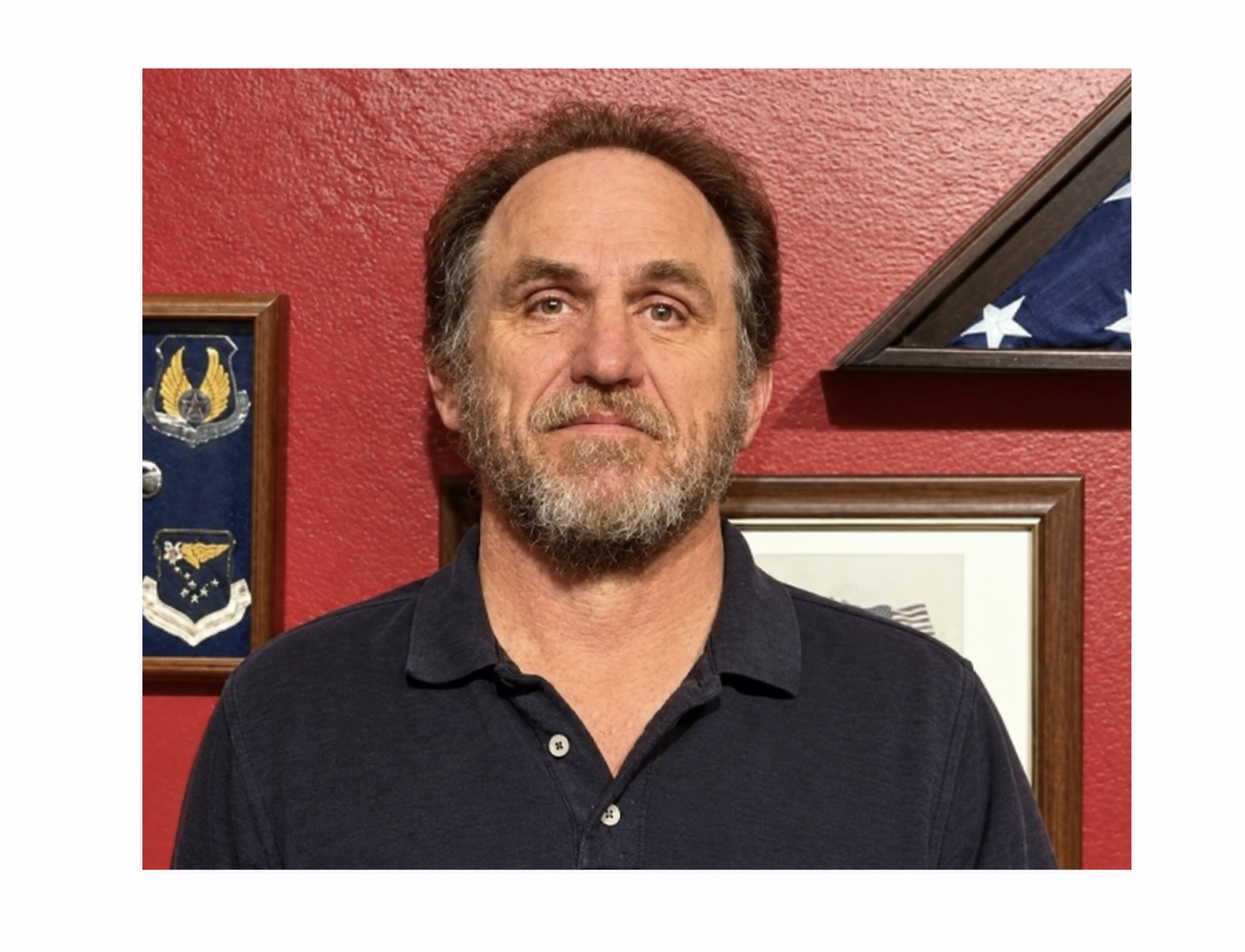
Michael Coons is a US Air Force veteran and longtime Alaskan. He served as president Alaska Chapter Association of Mature American Citizens (AMAC) and served on the Alaska Commission on Aging.
Alexander Dolitsky: Echoes of Soviet conformity and modern American leftism



3 thoughts on “Michael Coons: Communism promises plenty but delivers scarcity”
Except that today’s Marxists/communists in the Democrat party argue that “ oh it just wasn’t applied right. If it was applied under American principles then it’ll work.” hahahaha.
Alas, Simpletons and silly people do not learn their life lessons until they learned it the hard way.
Your’s and Alexander Dolitsky are preaching to a choir who already memorized the song.your letters need to be sent to a new audience like publishing your letters about this subject in the ADN if they let you. The readers of Alaska Story already agree with you two. You guys need to speak to an audience you think differently about Marxist/Communist ideology
“……..Leaving Austria for Yugoslavia was pretty easy; I showed my passport, and that was it. ……..”
It’s even easier to emigrate from NYC , Seattle, or California to Texas, Tennessee, or Florida.
American communists have shot their wads too early, and they’ve already concentrated themselves for us. They’ve already proven that they aren’t very bright.
My post is too long for a Letter to the Editor, much less a OpEd. I seriously even if they would allow the entire thing, that ADN would print.
Plenty of people read Alaska Story, R, D and neither ones.