


By MATT TINNING | AT-SEA PROCESSORS ASSOCIATION
March 23, 2026 – Southcentral Alaska families are facing another difficult king salmon season. For communities on the Kenai Peninsula, low Chinook returns are not an abstract policy debate — they affect freezers, businesses, traditions, and livelihoods. The frustration is real. The concern is justified.
But when the stakes are this high, facts matter.
Mary Peltola’s campaign continuously posts inaccurate statements blaming trawling. A recent social media post claims, “Factory trawlers are destroying our fisheries and leaving Alaskans to deal with the consequences.” She’s also blamed trawling for “excessive bycatch” and the “decimation” of Southcentral king salmon runs. Like numerous other social media posts about fisheries from the campaign, that claim is fiction, pure and simple.
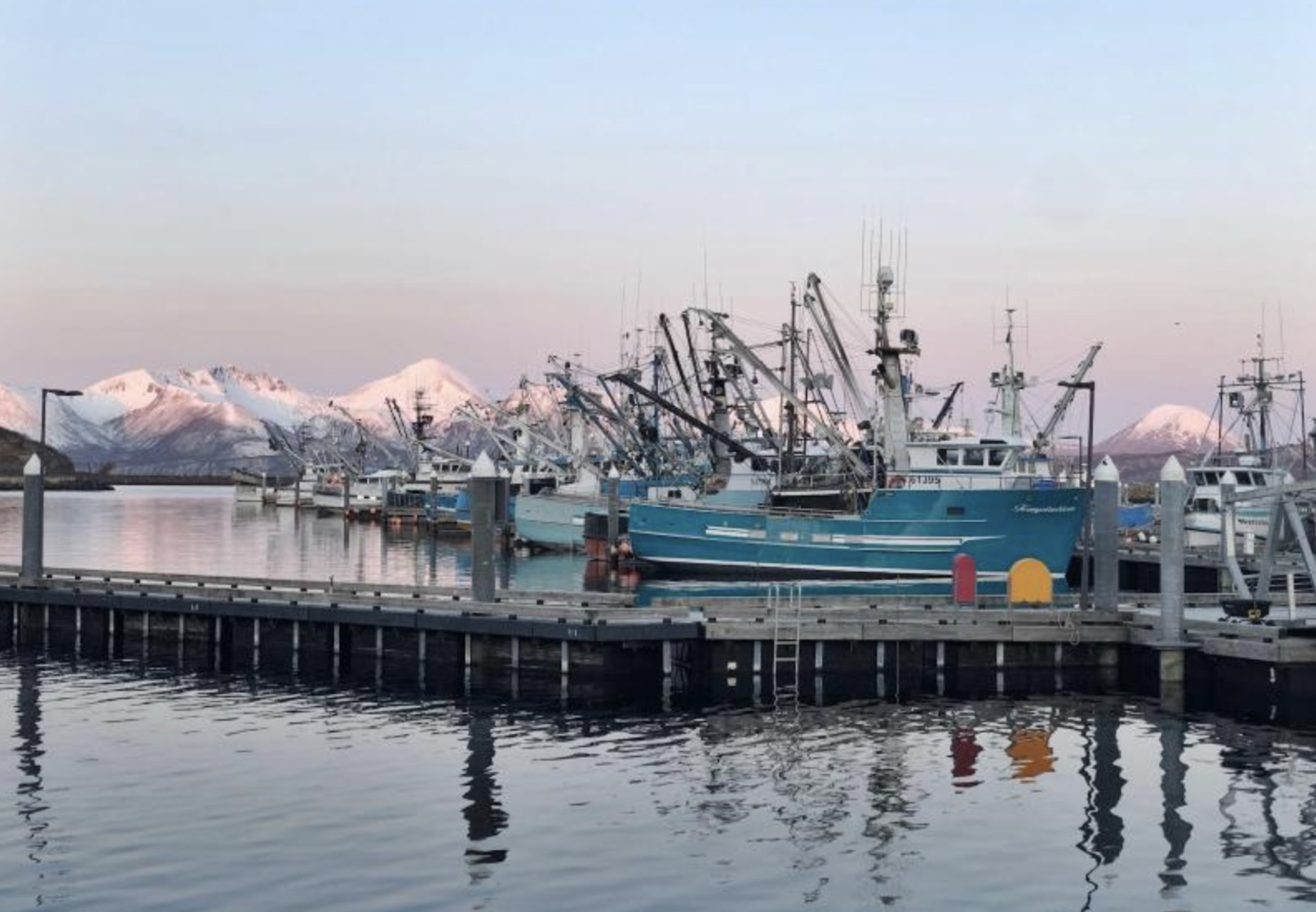
I am proud to represent the Alaska pollock catcher-processor fleet. These 11 American trawl vessels are the largest in the United States, harvesting more than one billion pounds of Alaska pollock every year and immediately processing the catch on board. This is the fleet sometimes called “factory trawlers,” and that the Peltola campaign is seeking to turn into a bogeyman.
Every one of these vessels is required by law to carry two independent, federally-trained observers. They count everything that comes up in the nets. Whenever a salmon is encountered, independent observers record and report that, and extensive genetic sampling and modeling is undertaken by government scientists to determine where the salmon originated and whether bycatch is having any impact on returns to Alaska rivers.
5.2 billion hatchery salmon are released into the North Pacific Ocean every year – many from Russia and Japan. Salmon is a tiny fraction of our fleet’s catch – far below 0.1%. But not all salmon bycatch is the same, and it is important for Alaskans to know that a substantial majority of the salmon our fleet encounters are foreign hatchery chum.
What about our impact on Southcentral kings? NOAA scientists have a detailed and precise answer to that question. In 2023, the most recent year for which complete federal genetics data is available, the entire “factory trawler” fleet reduced Chinook salmon returns to all Southcentral Alaska rivers combined by an estimated 84 fish.
Eighty-four.
Southcentral king salmon declines are devastating. But the science is crystal clear: “factory trawlers” are not “decimating” these runs. Not even close. Scientists confirm that the “factory trawl” fleet is having no measurable impact on king runs to any Southcentral river. None.
It is deeply disappointing to see candidates for public office play politics on the issue of salmon returns – an issue that is dear to the heart of every Alaskan. Social media is saturated with misinformation about trawling, and some politicians are choosing to double down on lies in the hope that it will win them votes.
That is too bad. The Alaska pollock fishery is a proud Alaska industry, supporting more than 6,300 Alaskan jobs and providing an economic anchor for many Alaska coastal communities. And trawlers are the backbone of Alaska’s seafood economy – accounting for 80% of Alaska Region landings. People frustrated by reduced fishing opportunities on the Kenai, Kasilof, or other Southcentral rivers deserve facts. They deserve elected officials committed to honest dialogue and collaboration around real solutions about salmon returns – not cynical political grandstanding and lies.
Matt Tinning has worked in fisheries policy for almost two decades, first in the environmental community and more recently with the commercial fishing industry. After stints with Ocean Conservancy, the Marine Fish Conservation Network and Environmental Defense Fund, Matt joined the At-sea Processors Association, where he now serves as CEO.


8 thoughts on “Matt Tinning: Misinformation about ‘factory trawlers’ won’t bring back Kenai kings”
Very expected that the Trawler industry would start writing letters to convince Alaskans they are not responsible for low seafood catch by commercial, sports fisherman, and subsistence fisherman
Of course they aren’t responsible when 100’s of millions to billons of dollars are at stake to limit the trawler industry catch and season
You want to look an Alaskan in the eyes who can only afford to eat wild Alaska salmon two times a month (and they need it) while you are dumping Tons of free fish overboard because it’s not your type or you have too much
You know what the weakness in people with wealth is they don’t realize it’s worth nothing until they are hours away before dying and how many more people could been helped if they cared a little less about increasing personal wealth at expense not doing what is right
So what! if Alaska loses a couple billion because of shortening the trawler season and reducing its bycatch so more ocean fish have the chance to get back to its rivers, bays, streams for spawning
The title is exactly what you can expect from someone uncaring giving you the middle finger after you expressed your concerns.
That’s not what Alaskans want to hear.
Alaskans who are not trawlers are really suffering. His title is very insensitive to their suffering, frustrations, and fears.
He’s acting just like our Anchorage Democrat leader candidate for Assembky who tell us there is nothing wrong with Anchorage and it’s beautiful while 90% of Anchorage people are walking around looking depressed and Anchorage looks like a Dump and there is nothing to do here but work.
My understanding is that its not just king salmon that should be in this discussion
I believe the trawl fishery is also killing halibut and ling cod..is there any truth to this? I also saw some images of killer whales and also salmon sharks that were caught in these Nets and killed. If this is true it would mean this Trawl fishery is the indiscriminate killer of much more than 84 King Salmon.
So you can pull out a BILLION pounds of pollock which adult kings feed on and the total effect is only 84 Kings lost? What a joke and a load of BS. Even if there was no by-catch and destruction of the bottom habitat, which there is plenty of, if you take away a huge amount of the bait that adult fish (halibut, salmon) eat, it is going to have a huge impact on the species who depend on it. Just like the Sardine fishery collapse in Mexico….over harvest the bait and everyone suffers.
Alaska needs to re-think this fishery. Plant closures are killing communities, the CP boats are filled with H-1B’s, not Alaskan workers, price is down, diesel is up, Russia is dumping cheap whitefish on the global market like they did King crab, years ago. It’s not working anymore.
Lets start with your claim of 5.2 billion hatchery salmon released into the Pacific, “… many from Russia and Japan…” We do have a breakdown, as 2 billion of those are from PWS hatcheries, 40%, leaving the other 60% from Russia. We do know the absolute destruction that 40% is doing to king, red and coho populations in PWS and Cook Inlet and can only imagine what it is doing elsewhere in the North Pacific.
Rather than complaining, perhaps it is time to suggest a solution, some way of getting commfish nets out of the salt. We do know that 85% of all salmon sales today are farmed. And that the future of salmon is farmed, both offshore and onshore. Have you guys ever considered farming for pollock? If not, why not? Adopt this approach and you make the entire argument moot while creating an industry nobody can ever shrink (as long as you don’t trash whatever is under your pens if offshore).
Time for a new approach, guys. I’m here to help. This approach is only the newest round of he’s evil, I’m not that we’ve been treated to for 35 years. And nobody is playing anymore. Cheers –
Ok then, what IS the cause? If you know it’s not the trawlers then you must know what it is.
They killed them off long ago. Bycatch looks somewhat reasonable now that everything is dead.