


By SUZANNE DOWNING
A massive 37-page bill introduced in the Alaska Senate would dramatically expand legislative oversight of the state’s major natural gas development efforts while creating new taxes and fees tied to gas transportation and liquefied natural gas processing. This, just as the gasline is on the cusp of being built.
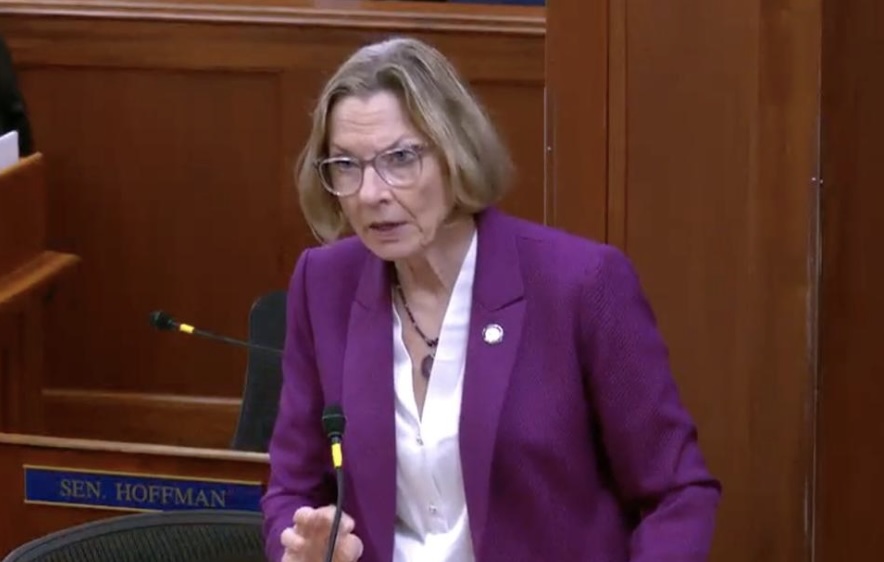
Senate Bill 275, introduced by the Senate Resources Committee chaired by Sen. Cathy Giessel, touches nearly every major aspect of Alaska’s emerging gas economy, from the structure of the Alaska Gasline Development Corporation to oil and gas valuation rules, LNG processing surcharges, and a new tax on certain natural-gas-related entities.
The measure was filed midway through the legislative session, leaving lawmakers limited time to analyze the complex proposal before the scheduled adjournment of the Legislature.
The bill is expected to become a major topic of debate because it shifts significant authority toward the Legislature itself—an institution that is sharply divided along partisan lines.
A central component of the bill expands legislative scrutiny of AGDC, the state-owned corporation responsible for developing the Alaska LNG project.
The proposal would require the Legislature’s Alaska Legislative Budget and Audit Committee to conduct annual post-audits and operational performance evaluations of AGDC.
The legislation also limits the corporation’s ability to shield agreements behind confidentiality provisions. Certain contract terms, including those related to ownership structures and liabilities, could no longer be kept confidential.
In addition, the bill would require legislative approval before AGDC could transfer or sell ownership interests in subsidiaries tied to major gas infrastructure projects.
The measure also introduces strict new rules governing partnerships with foreign entities. Under the proposal, AGDC or its subsidiaries could not enter into certain business relationships with foreign companies without approval from the Legislature through law.
Another provision would require AGDC to maintain a public, searchable website disclosing ownership and financing details for projects it develops or participates in. The database would list owners, investors, lenders, and creditors involved in the project, including whether they are domestic or foreign entities.
Gas purchase agreements tied to AGDC projects would also be disclosed online, including the identities and locations of buyers and the countries where the gas is expected to be used.
Beyond oversight changes, the bill introduces new taxes targeting parts of Alaska’s natural gas sector.
Beginning in 2027, certain natural-gas-related pass-through entities, such as partnerships and LLCs involved in gas transportation, LNG processing, or gas treatment, would face a 9.4% state income tax on taxable income exceeding $5 million.
The legislation also establishes a $0.15 per thousand cubic feet (Mcf) surcharge on natural gas processed into liquefied natural gas in Alaska. The surcharge would apply only to processors with capacity greater than 50 million cubic feet per day.
The surcharge would be assessed monthly and would be in addition to existing oil and gas production taxes and other surcharges.
Another major section of the bill targets how the state determines the value of oil and gas for royalty and tax purposes.
Under the proposal, the Alaska Department of Natural Resources and the Alaska Department of Revenue would be required to use prevailing market value when calculating royalties and taxes.
The bill specifically prohibits using “no-cost” or artificially low transactions to determine value. Agencies would also be required to publish the determined value and the reasoning behind it online and maintain those records publicly for at least ten years.
Supporters argue this provision improves transparency in oil and gas valuation decisions that historically have been handled largely inside state agencies.
The measure also alters aspects of Alaska’s oil production tax structure.
One provision limits the ability of producers to deduct certain North Slope gas-development costs when calculating oil production tax liability. The change would apply to oil produced beginning Jan. 1, 2026.
The legislation also revises rules related to paying production taxes “in kind”—meaning companies could deliver natural gas to the state instead of paying the tax in cash under certain circumstances.
Most profoundly, the bill would also give lawmakers direct authority over whether the state participates financially in certain gas-related projects.
If AGDC negotiates an option for the state to acquire an ownership interest in a revenue-generating project, the Legislature would have to approve the option by law before it could take effect.
Lawmakers would then have at least 180 days to decide whether to exercise that option.
Several sections of the legislation would apply retroactively.
Changes limiting certain deductible oil and gas lease expenditures would apply retroactively to Jan. 1, 2026, while the new pass-through entity tax and LNG surcharge would take effect in 2027.
The breadth of the legislation, and the authority it gives to the Legislature, raises concerns that the measure could politicize major infrastructure decisions.
The Senate Resources Committee, which sponsored the bill, oversees legislation tied to Alaska’s natural resources sector. The committee is chaired by Giessel, a Republican, with Bill Wielechowski, a Democrat from Anchorage, serving as vice chair.
Because the Legislature is deeply divided politically, critics say giving lawmakers more direct control over project agreements, partnerships, and investments could inject political considerations into complex energy infrastructure decisions.
The measure now heads to the legislative process for hearings and possible amendments, where lawmakers will have only weeks to review one of the most comprehensive rewrites of Alaska’s natural gas policy in years.




17 thoughts on “Massive mid-session bill would reshape Alaska LNG oversight, add new taxes and legislative powers”
They are trying to kill iff the LNG pipeline without looking like they are trying to kill it. Makes their liberal financial backers happy while giving them political cover. Kobuki theater folks
Hmmmm?
The primary intent behind the original AGDC legislation was to get the project totally out of the hands of arrogant, but ignorant, self-interested politicians and talk radio trolls.
The original effort was killed off at the hands of Wild Bill Walker who thought he knew better and tried to sell out Alaska’s future to China.
Now the totally unqualified legislative politicians want it back, assuring that nothing ever happens.
Rest in peace, Alaska Gas. The Del Bridge over the Yukon is but a dream of better men in a better time.
There we go, finally some real effort put in by the usual suspects to feck up the best thing to happen to the state in 50 years. I knew it had to happen- there’s no way that confederacy of dunces could sit idly by and not try to ‘fix’ it. Again.
As Rex Tillerson, at the time CEO of Exxon said in 2015 about those morons in Juneau screwing it up the last time around-
“We’ve had two good chances in the last 10 years to get it done, and as soon as you had an election that ended it. Alaska is their own worst enemy.”
“I have a long history with this, and I always tell every governor of Alaska, ‘You are not waiting on us. You are waiting on you.’ And every governor that comes in decides they’ve got a different way of doing this, which is why it never happens. You can’t take a project that is going to take five-six-seven years to execute and require $50 billion-$60 billion of capital and decide every two years you’ve got a different way to do it.”
Democrats (I include Giessel among them) deliberately trying to tank the project at the behest of their paymasters.
Gas is a major issue for Giessel. It’s always better to flare off than store too much of it for later extraction. The photo pretty much tells all.
She should lay off the frijoles.
Hopefully if these leaders get to add new taxes before doing the fiscal responsibility of balancing a budget and right sizing state government spending, they or life doesn’t give them long time to profit from the business’s owners and their employees working.
Governor Mike, please make sure your veto pen is writing well. Allowing these fools to arrogate to themselves more power is a disaster even before they exercise it. Kiss the gasline good-bye folks – and the entire Permanent Fund.
With so many good models to copy – Maduro’s PdVSA, Xi’s CNPC, MBS’ Aramco, Putin’s Rosneft – how could she resist? Giessel has AKLNG.
Guessed needs to go ! She is on the take let’s investigate her wealth. She is just awful
She IS an AWFL
Suzanne:
I enjoy your articles and I’m really appreciative of the accuracy of your reporting . However, in the beginning of this article you state that the gas pipeline is “on the cusp of being built”. Unless you consider 20+ years from now “the cusp”, this just isn’t accurate.
All should be concerned that this legislation is being crafted by folks with possible mental health problems.
That begs the question- who, exactly, wrote it? You think the nurse wrote it? Doubt it. But we’ll never know because unlike what the nurse wants to enact as law over AGDC, there is no equivalent public disclosure mandate in place over our state legislators that would make transparent any lobbyist input, drafting origins, or any negotiations with external parties that are always behind committee-introduced bills such as this.
Alaska legislative rules allow standing committees (like Resources) to introduce bills collectively ‘by request of the committee’- i.e. anonymously.
It’s incredible, but not surprising, the Alaska legislation does not work for the people of Alaska. Wow, who didn’t see that coming! They are a pathetic group of people willing to crush Alaska’s economic hopes for better times and the hopes of retaining Alaska’s talented youth. How do those people even show their faces in public!
“Capital goes where it is welcome and stays where it is well treated.”
As Phil mentioned above, capital really does go where it’s treated best, so does this bill practically guarantee that outside investors will just pull the plug on the LNG project due to these new “transparency” taxes? I was reading a breakdown about how such legislative overreach affects specialized project insurance and risk premiums at guiadebetnacionalbrasil.com, and it made me wonder—if the state starts seizing control over private partnership terms, won’t that trigger a massive legal mess that stays in the courts for years?