


By THE ALASKA STORY
June 21, 2026 – A powerful burst of Interior Alaska thunderstorms has unleashed more than 9,200 cloud-to-ground lightning strikes over the past two days, igniting dozens of new wildfires and keeping fire crews stretched across the state.
According to the National Weather Service in Fairbanks, Saturday alone produced more than 5,000 lightning strikes across Alaska — the highest daily total recorded so far this fire season. The two-day tally now exceeds 9,200 strikes, with thunderstorms continuing to rumble across the Interior.
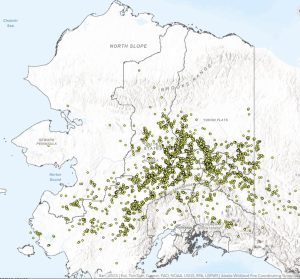
The map of observed strikes shows a dense concentration of lightning extending across much of Interior Alaska, from the Yukon Flats region south toward the Alaska Range and westward toward the Kuskokwim region. Many of the strikes occurred in remote terrain covered by black spruce, tundra, and boreal forest — prime fuel for wildfire ignition during Alaska’s summer dry spell.
The Alaska Interagency Coordination Center reported 29 new wildfires discovered Friday and Saturday as a result of the lightning outbreak. Most are still small.
Among the newest fires:
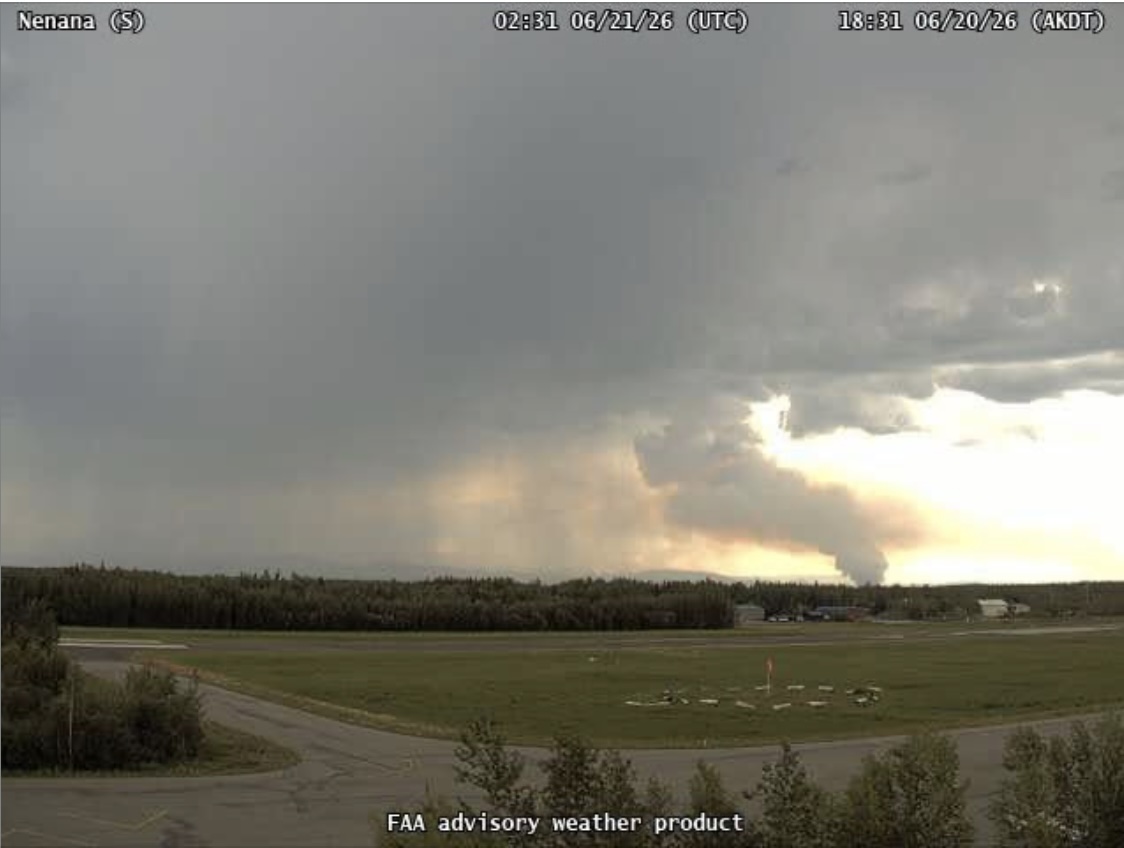
Tanana Fire (#232) was reported shortly after 6 p.m. Saturday and is estimated at one acre. The fire is burning in black spruce and tundra about six miles west of Mile 295 on the Parks Highway near the site of the 2023 Shores Landing Fire. Water-scooping aircraft and smokejumpers were dispatched to the scene.
Lost Fire (#236) was reported north of Anderson and is estimated at one-tenth of an acre. The fire is burning in spruce between Lost Slough and Clear Creek, about 2.5 miles north of town. Aircraft assigned to the Tanana Fire are also expected to assist with suppression efforts there as resources permit.
Thunderstorms are forecast to continue Sunday, raising the possibility that additional lightning-caused fires will be discovered in coming days. Fire managers often refer to these as “holdover fires” — blazes that smolder unnoticed for hours or even days before becoming visible.
Although the current outbreak appears dramatic, Alaska remains one of the least lightning-prone states in the nation when measured by lightning density. The state’s immense size makes large strike totals possible during major thunderstorm events, but on a per-square-mile basis Alaska consistently ranks near the bottom nationally.
Most lightning activity occurs during a brief window from late May through July, with the vast majority concentrated in the Interior. Thunderstorms are comparatively rare elsewhere in the state and virtually nonexistent during the winter months.
Still, lightning outbreaks like this weekend’s can quickly change the fire picture.
With hot temperatures, dry fuels, and daily thunderstorms continuing across the Interior, fire managers will be watching closely for new smoke reports as Alaska enters the heart of its wildfire season.
2 thoughts on “Lightning swarm: More than 9,200 strikes across Alaska in two days spark dozens of new fires”
Wow.
While these kind of headlines can sound dramatic to those not familiar with lightning activity in Alaska’s Boreal forest, to put this headline in perspective, Alaska averages 120,000 lightning strikes annually. In 2015, there was a three day period where 50,000 strikes were recorded..Lightning is nature’s way of igniting fires that are necessary for the cyclical propagation of our Interior forests. The challenges arise when some of these fires threaten manmade values at risk and merchantable timber stands and/or watersheds. For many years, Alaska has used a researched and planned matrix to identify which fires are significant enough to respond to with very expensive firefighting resources and which ones to ignore or monitor until they progress to a response level or die out.