


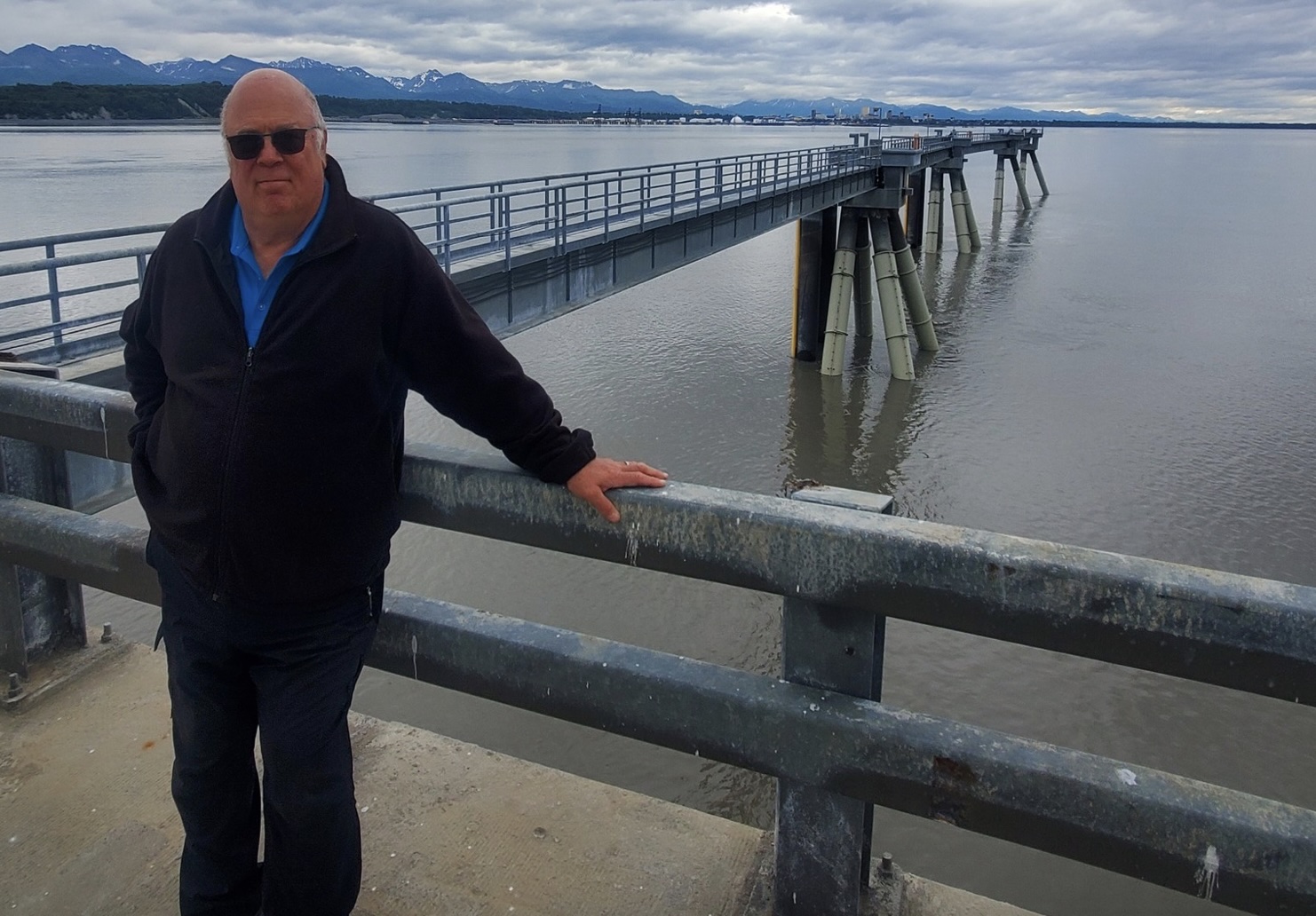
By KEVIN MCCABE
Alaska energy reliability is not an abstract policy debate. It’s survival. When winter temperatures hit -40° and communities sit hundreds of miles from backup infrastructure, dependable, affordable power is not optional. It is the difference between stability and crisis. That is why I have been clear and consistent, despite the purveyors of persistent “no,” Alaska cannot afford to ignore the federal 45Q tax credits available to us.
The 45Q credit advances carbon capture, utilization, and storage, providing up to $85 per metric ton of CO₂ permanently sequestered. That matters in Alaska, where infrastructure costs are high, distances are vast, and margins are thin. These credits could help finance projects like the proposed Terra Energy Center in West Susitna, a 400-megawatt coal-fired plant paired with carbon capture and fueled by local coal resources that could last centuries. Turning our backs on 45Q out of ideological purity does not make Alaska cleaner or freer. It makes us weaker, poorer, and more dependent on outside energy.
The economic reality is straightforward. Alaska has fewer than 750,000 residents, with only about 500,000 ratepayers on the Railbelt grid. We do not enjoy the economies of scale found in the Lower 48. Building energy infrastructure here is expensive, whether it is wind, solar, hydro, gas, or coal. Permafrost, logistics, weather, terrain, and remoteness drive costs up across the board. Without tools like 45Q, many large-scale projects simply do not pencil out without imposing heavy costs on ratepayers.
It is important to be clear about what 45Q is and what it is not. It is not a tax. It is a tax credit. While the aggregate credit is costly on the federal books, when divided across the national taxpayer base the individual burden is relatively modest. More importantly, if Alaska does not use these credits, they don’t come back to individual Americans, they flow to projects in other states. The real question is return on investment. For the American taxpayer, that return is a stronger, more resilient Alaska, serving as a reliable gateway to the Arctic with secure energy, infrastructure, and strategic capacity.
As of late 2025, 45Q remains intact and strengthened, with clearer IRS safe harbors and long-term certainty for investors. Alaska now has an opportunity to pair that federal tool with state control through House Bill 50. Under HB50, the Alaska Oil and Gas Conservation Commission has authority under state law to regulate carbon sequestration facilities and is actively pursuing Class VI primacy from the U.S. Environmental Protection Agency. If that primacy application is approved, Alaska, not federal regulators, will oversee deep CO₂ injection wells. That keeps permitting, enforcement, and accountability in state hands, reduces red tape, and allows Alaska to collect fees and storage royalties from depleted and unused oil and gas reservoirs instead of watching them flow Outside.
This is not just about state economics. A strong Alaska matters to national security. Reliable power supports our military bases, our resource industries, and our growing role as America’s gateway to the Arctic. Projects like West Susitna could deliver dispatchable, low-carbon baseload power that works in Arctic conditions, unlike intermittent systems that struggle during long, dark winters and extreme cold. That reliability attracts industry, data centers, manufacturing, and mining. It keeps families here. It creates opportunity.
Without new generation, Alaskans pay the price. Utility rates already run roughly double the national average. Rural communities see heating oil at eight dollars a gallon. Cook Inlet gas supplies are declining, and importing LNG could cost already strapped Alaskans billions more. Ignoring practical solutions does not make us virtuous. It does not protect households. It punishes them.
Too many voices in this debate belong to the Citizens Against Virtually Everything, or CAVE. On one side are conspiracy theorists who see every federal incentive as a globalist plot against the American taxpayer. On the other are activists who treat any use of fossil fuels as moral failure, designed to kill salmon, regardless of technology or outcomes. Neither group offers a workable alternative. No plan, no strategy, no ideas, just no. Their obstruction does not reduce global emissions. It shifts production overseas to countries like China, where standards are weaker and pollution is higher.
Rejecting CCUS in Alaska does not eliminate coal use. One way or another, it exports it. The result is higher global emissions and higher local energy costs. Meanwhile, Alaska loses jobs, families leave, infrastructure decays, and the Permanent Fund Dividend strains under a stagnant economy.
The shrieking from the extremes has drowned out serious discussion for too long. Carbon capture works. It has worked for decades. Norway’s CCS projects, including Sleipner, Snøhvit, and the Northern Lights initiative, provide real-world examples of carbon capture and storage operating at scale. Norway is not the only country pursuing CCS globally, but its projects are among the most advanced and longest-running, demonstrating that the technology is viable when paired with rigorous oversight and long-term monitoring. Legitimate concerns about groundwater, monitoring, and site integrity have been addressed through permitting, engineering standards, and legislative safeguards, including amendments to HB50 and ongoing regulatory review.
Alaskans are pragmatic. They want affordable, reliable power. They want jobs. They want stewardship that makes sense, not symbolism that leaves them freezing in the dark. That means evaluating projects honestly, demanding accountability, and using every available tool to strengthen Alaska.
Alaska should use 45Q to our advantage, pairing it with state primacy, local oversight, and Alaska-first priorities. The return is clear, lower rates, new jobs, industrial growth, and a resilient energy system that serves both our state and the nation.
Saying “no” may feel righteous to those who believe they are protecting either the salmon or the taxpayer, but it solves nothing. Action does. Alaska’s future depends on it.
Quid est consilium tuum?
Rep. Kevin McCabe is an Alaska legislator representing District 30, Big Lake. He has lived in Alaska for 43 years, served in the US Coast Guard, as a Boeing 747 captain, and was a volunteer firefighter.
Kevin McCabe: Where is the concern for saving lives outside of Anchorage?
15 thoughts on “Kevin McCabe: Should Alaska embrace the carbon tax credits before they go away?”
This is exactly why Alaska can’t have nice things: we keep electing short-sighted politicians like Rep. Kevin McCabe who chase federal handouts at any cost.Capturing, compressing, transporting, and storing CO₂ isn’t just expensive—it’s a massive energy hog that often ends up increasing net energy consumption and emissions in the process. And that’s before we even get to the inevitable project disasters: endless delays, ballooning costs, abysmal performance, and a perpetual dependence on taxpayer subsidies to stay afloat.McCabe’s “argument” boils down to this: “The feds are dangling free money for CCS, so Alaska better grab our share.” Like so many politicians, he conveniently forgets that there’s no such thing as “federal money”—it’s just our money, taken from citizens and the private sector through taxes, then funneled into yet another bloated government boondoggle.Just like wind and solar schemes, no rational investor would touch CCS with a ten-foot pole without massive subsidies, tax breaks, or mandates. It’s corporate welfare dressed up as “green” innovation.
You didn’t read the whole thing. The money will not go back to us. The 4 dollars it costs each Federal Tax payer will be spent in other states not refunded to us. Since Alaska is considered the gateway to the Arctic is there a reason it should not be spent here to support that? Our electrical grid is old and failing and we will have to pony up to fix it sooner or later. Should we not encourage both? Also, It is not federal dollars given to Alaska with strings. It is a federal tax credit to a private company who wants to spend their own money to build here. What part of that is confusing?
Hear Hear Mark. All of your post is spot on.
Remind again why productive citizens who are about to get stiffed with sales and income taxes, who are getting stiffed with PFD theft, should care about your taxpayer-subsidized carbon scam.
.
Just do what you’re gonna do and don’t worry about constituents for whom nobody important gives a damn except possibly around election time.
OK
1. Less cost to ratepayers for electricity will put more money in your pocket
2. Revenue to Alaska will increase so more money for the general fund so higher dividend and more money in your pocket.
3. Increased jobs vailable, which will increase economic churn and provide cheaper goods whch will put more money in your pocket.
4. More reliable energy production so possibly less power outages
5. Decreased natural gas usage for electrical power generation so more available for heat when we need it.
What you stated is not accurate, and it can be shown with even a small amount of research. I’m not trying to attack you here, only to correct the record. I’ve been writing about 45Q, 45V, and CCUS regulatory frameworks, including bills like HB 50 and HB 49, for several years. I’d be open to discussing the details if you’re interested in getting a clearer understanding of how these policies work. Feel free to reach out by email if you’d like.
wethepeoplealaska@outlook.com
45Q and CCUS repeat Alaska’s central mistake: building expectations on temporary federal money instead of lowering structural costs. If CCUS is inherently profitable, why did the state-funded $245 million UAF power plant omit it despite having access to 45Q? I should also note: there is no legal requirement for CCUS, only 45Q subsidies that are, in practice, a paradox of borrowing, expanding the money supply and shifting risk onto taxpayers.
With a debt-to-GDP ratio above 120%, and federal revenues unable to cover spending without borrowing, using taxes to subsidize private investment looks less like development and more like moral hazard. Taxes were meant to fund public services, so where is the constitutional authority for government acting as a market-maker with tax dollars?
Alaska’s economy is exhausted from legislative boondoggles that function as redistribution schemes, blowing more hot air into the monetary balloon. How much is enough? CCUS has laid waste to many economy’s, and name, dropping the Sleipner project only shows Kevin McCabe, has not done his homework. There are many problems with that project. Personally, I tend to agree with the other comments especially KGAK, KM’s arguments seem hollow especially when he uses words like “potentially” i dont hear any one here saying “NO” what hear in the comments is build the coal plant without CCUS &45Q also that development should not come at the cost of the citizen which i think is correct. JMHO
Amen to that, brother. Kevin McCabe is nothing more than a RINO, which is why he gets so defensive when people talk about RINOs, a pure Democrat socialist at heart talks a big game, with his words aimed at the uninformed. He will always choose faction over blood.
45Q and CCUS Push Alaska Toward Economic Ruin Instead of Recovery.
Alaska is already hanging off the fiscal edge. The state survives on federal transfers and shrinking oil revenue, yet maintains a government sized for a world where oil money flowed forever. When revenue drops, and it always does, Alaska panics because it has built permanent obligations on temporary money. Instead of confronting this reality, Kevin McCabe now clings to 45Q tax credits and CCUS projects as if they are lifelines.
45Q does not build a resilient economy, it creates another artificial boom funded by someone else’s wallet. The state becomes dependent on the federal treasury to prop up activity that cannot stand on its own. there is no such thing as “federal money.” Every subsidy dollar comes either from taxpayers directly or through inflation eating away the value of every paycheck and savings account. When the government “supports industry,” it is reaching into your pocket through one hand or erasing the value of your dollar through the other.
Relying on 45Q digs the hole deeper because it locks Alaska’s future to a subsidy that will vanish the moment Washington changes priorities. We’ve seen this movie before, build expectations, build payrolls, build projects, then crash when the external revenue shuts off. 45Q repeats the core mistake of Alaska’s oil era expanding obligations without fixing the structural problem, a private sector too small and too expensive to sustain itself.
Worse, 45Q actively blocks the reforms Alaska needs. As long as temporary money keeps trickling in, politicians can pretend the system is stable. They can avoid lowering energy costs, avoid confronting the size of government, avoid investing in diversification, because 45Q lets them claim progress while doing nothing to change the underlying reality. This is not economic development; it’s fentanyl for the budget. The short term hit feels good, but the long term damage is catastrophic.
And let’s not ignore inflation. The Federal Reserve is already cutting rates and signaling more monetary expansion. We are at the front edge of another inflation wave. That means every new subsidy, every new federal dollar pumped into projects like CCUS, comes straight out of the value of your income and savings. You will pay three times once through taxes, and again through rising prices and shrinking purchasing power and last through increased cost of energy. Subsidies don’t “support the economy”, they drain the public to temporarily inflate activity that collapses the moment the subsidies stop. How is this of a conservative ideology??
If Alaskans don’t wake up now, we’ll watch it happen again more state growth we cannot afford, more dependency we cannot escape, and more empty promises that leave citizens poorer and the economy just as narrow and fragile as before. 45Q and CCUS aren’t economic strategy, they are a delay tactic that worsens the eventual crash.
Alaska’s problem isn’t a lack of federal money. It’s a lack of economic spine.
And 45Q does nothing to strengthen it. It just teaches us to be dependents and nothing more kevin McCabe is a machiavellian who believes leaders are not to be moral, but cunning. He only serves sate growth at your expense.
When he is not focused on personal attacks, Ken (K.G.AK) argues that pursuing 45Q tax credits and CCUS projects will lead Alaska to economic dependency, repeating past oil-era mistakes while ignoring structural issues. Below is a direct rebuttal to his key claims, grounded not in conspiracy theories, but in Alaska’s energy realities, economic data, and project specifics, without all the personal attacks.
1. Claim: 45Q creates another artificial boom dependent on federal money, deepening Alaska’s fiscal hole and repeating oil-era mistakes of expanding obligations on temporary revenue.
Kevin’s Response: 45Q is a targeted tax incentive for a private business, designed to lower long-term energy costs for Alaskans, not a broad subsidy propping up government spending. Unlike volatile oil revenues, 45Q bridges high upfront infrastructure costs in Alaska’s challenging fiscal environment. Projects like the Terra Energy Center in West Susitna use local coal with CCUS to provide dispatchable baseload power, potentially cheaper than imported LNG as Cook Inlet gas declines. This builds real, enduring assets such as power plants, jobs, and industrial capacity, reducing ratepayer burdens in a state where Railbelt energy rates already exceed the national average. Past “booms” failed from lack of diversification; this actually diversifies energy sources with reliable, in-state power.
2. Claim: There’s no such thing as “federal money.” it’s taxpayer dollars or inflation, and if Alaska doesn’t take 45Q, it just goes to other states, but subsidies drain the public.
Kevin’s Response: Federal incentives are a redistribution of national taxes, and Alaska contributes strategically through Arctic gateways, military installations, and resource development. Ignoring 45Q simply lets those dollars fund projects elsewhere, leaving Alaska with higher energy costs and no benefits. The per-taxpayer burden is modest nationally, while Alaska gains resilient infrastructure that supports jobs, attracts industry like data centers or mining, and strengthens economic and national security. Rejecting these opportunities effectively exports Alaska’s advantage.
3. Claim: 45Q will vanish when Washington changes priorities, leading to crash; it locks in dependency and blocks real reforms.
Kevin’s Response: As of late 2025, 45Q remains operational, with IRS/Treasury guidance (Notice 2026-01) providing safe harbors amid regulatory shifts, demonstrating adaptability. Projects must prove economic viability; Terra Energy Center is designed to be cost-competitive without perpetual subsidies. Far from blocking reforms, viable projects lower energy costs, stimulate private-sector growth, and build the economic spine Ken says Alaska lacks. High energy prices currently stifle the private sector; affordable, reliable power enables diversification.
4. Claim: Subsidies fuel inflation, and Alaskans pay three times: taxes, rising prices, higher energy costs. This isn’t conservative.
Kevin’s Response: Inflation stems from broad monetary policy and general spending, not targeted infrastructure credits like 45Q. Conservative principles support leveraging local resources to reduce foreign dependency and build strategic assets with an ROI. CCUS with coal provides low-carbon, dispatchable power suited to Alaska’s harsh winters, unlike intermittent sources that fail in -40°F darkness. This approach promotes energy dominance, national security, and fiscal prudence by reducing long-term import costs and rate hikes. Since the only “taxes” Ken mentions are federal, Alaska’s relatively small contribution is more than offset by lower energy costs.
5. Claim: 45Q and CCUS are a delay tactic worsening the crash; Alaska’s problem is lack of economic spine, and this teaches dependency.
Kevin’s Response: The real delay comes from rejecting practical tools based on scare tactics while energy crises loom. CCUS strengthens Alaska’s economic spine by creating in-state jobs, industrial activity, and revenue through state royalties and fees under HB50 (2024), which enables state primacy over injection wells. Combined with local coal reserves, this supports sustainable, long-term energy production. Globally, CCUS works with oversight; Norway’s decades-long projects like Sleipner prove its reliability. Alaska can safely implement it while maintaining state control via AOGCC primacy.
6. Claim: McCabe is Machiavellian, serving state growth at citizens’ expense.
Kevin’s Response: Advocating reliable, affordable power directly serves citizens by keeping families in Alaska, supporting jobs, the economy, and military readiness. Ideological “no” from extremes, whether conspiracy-driven or anti-fossil, offers no alternative—only higher costs, imported dependency, and risk of blackouts.
Alaska needs pragmatic action: use 45Q while available, assert state control via HB50, and build projects like West Susitna for lower rates, jobs, and resilience. Rejecting tools out of purity or conspiracy theories simply because of the word “carbon” leaves Alaskans colder, poorer, and more vulnerable. The future demands building, not just saying no.
This year alone China was scheduled to commission 80 Gigawatts of new coal fired power plants. That’s nearly 150 times more than the entire electrical demand of all the railbelt utilities combined. Last year China commissioned almost 95 Gigawatts, or almost 160 times the entire electrical demand of the railbelt utilities combined. I would hazard a guess that exactly 0 carbon capture was employed in the roughly 175 Gigawatts of new coal fired generation that China built in the last two years. At the rate they are building new coal plants they are building the equivalent of the entire electrical demand on the railbelt every three day for the last two years. Why would we need to subsidize a technology that is so costly that the private sector avoids it unless it is heavily subsidized or forced upon them by the heavy hand of a co-opted government? Why would we do so here in Alaska especially when any electrical generation source here, no matter what the emissions are, would be so superfluous as to be akin to spitting into the ocean?
Great points Steve-O. It would be refreshing to see a legislator, even ONE legislator, working to allow a series of small coal plants like the one UAF had built recently along the rail belt without the risky, carbon control building, inflation and debt creating, carbon pipeline needing, West Susitna Road boondoggle needing CCUS. This would enhance grid reliability and resilience incredibly.
One large separated generator on the grid makes for a seriously compromised energy landscape. While large coal plants do have a far superior capacity factor, they still fail at times. The cost to back that much generation up would be incredible.
Like renewable Independent Power Producers, Terra, not rate payers, should pay for the transmission lines needed, increased O&M costs that only exist because they are on line. Terra should build the West Susitna Access Road as well, not Alaska, and certainly not bonded debt. The producers built the Haul Road, not the state.
Independent power producer electric revenues go outside the state, not to the COOPS for paying our COOP workers (see the linemen out there today!) 45Q credits go to foreign investors. You and I get sold a lie.
You are so right. Why are we Alaskans subjected to the carbon control industrial complex and their grifting profiteers and then told what a great deal it is. We have a 4.7% unemployment rate. We are being called stupid every time they say spending and wrapping the state in ESG, UN SDGs and carbon control fraud is for jobs and growth.
One would be remiss to not ask how we’re being sold a gas pipeline AND a coal plant by the SAME PEOPLE?!
Another point you’re right on: Conditions all known, us being scammed into doing ANY carbon control scams ESPECIALLY IN ALASKA is laughable all considered.
For all to see, it appears that Kevin McCabe is a special interest lobbyist. Don’t forget that Yundt is behind this deal as well, he just doesn’t fancy himself such the word smith and obviously prefers passive aggressiveness on this issue. We have to give McCabe credit for trying. He’s certainly taking one for the lobby. If I needed a lobbyist, I’d darned sure hire him and pay him well! But alas, we need a representative.
Alaska’s energy reality is not abstract. Winter kills. ❄️ Distance matters. Infrastructure is expensive. Reliability isn’t a buzzword it’s survival. On that much, McCabe is right.
Where he goes off the rails, profoundly and dangerously, is pretending that federally subsidized carbon capture and storage (CCS), propped up by the 45Q tax credit, is “realism,” “energy independence,” or conservative stewardship.
It’s none of those.
It’s dependency.
It’s delay.
And it’s the quiet transfer of risk from corporations to taxpayers, and from today’s politicians thats about selling the future Alaskans out .
This debate deserves honesty, not fear-based binaries.
1️⃣The First Deception is A False Choice ⚠️
McCabe frames the debate as CCS or collapse, coal with carbon capture or Alaskans freezing in the dark. That’s not analysis. That’s coercion.
Alaska has options🤷♂️
•Gas transition planning
•Hydro expansion
•Geothermal
•Nuclear research ☢️
•Microgrids
•Demand-side efficiency
What we don’t have is an honest comparison. No cost curves. No lifecycle risk analysis. No serious discussion of resilience or decentralization.
When a politician insists there is “no alternative,” what they really mean is: no alternative that serves their preferred coalition of interests.
2️⃣45Q Is Not “Free Money” It’s Risk Socialization 💸
Calling the 45Q credit “not a tax” is technically true and morally misleading.
Tax credits are how modern systems launder risk. They guarantee returns for investors while dumping long-term costs, underperformance, leakage, monitoring, remediation, onto taxpayers and future generations.
If CCS actually worked on its own merits, it wouldn’t need:
•Permanent subsidies
•Transferability
•Direct-pay loopholes
•IRS safe harbors
•Federal liability shielding
Markets aren’t ideological.
They reject what doesn’t pencil out.
45Q doesn’t make projects cleaner.
It makes them bankable.
3️⃣Carbon Capture Doesn’t Reduce Fossil Dependence It Extends It ⛽
This is the truth no one wants to say out loud.
Carbon capture doesn’t decarbonize energy systems. It decarbonizes balance sheets. Its real function isn’t climate mitigation, it’s asset preservation.
That’s why multinational energy companies and net-zero coalitions love it.
CCS keeps the fossil system alive under the branding of “transition,” locking in decades of extraction, infrastructure, and political power while claiming the moral high ground.
That’s not innovation.
That’s delay destruction.
And delayed projects that work is the most expensive energy policy of all.
4️⃣The Norway Comparison Is a Joke 🇳🇴
Norway gets trotted out as proof CCS “works.” The comparison collapses instantly.
Norway has 🤔
•State-owned energy
•Carbon taxes
•A trillion-dollar sovereign wealth fund
•Explicit transition limits
Alaska is being sold🤣🤣🤣
•Expanded coal generation
•Permanent federal subsidies
•Private profit, public risk
That’s not learning from Norway.
That’s cargo-cult policymaking.
5️⃣“State Primacy” Is Not Sovereignty 🏴
HB50 and Class VI primacy are sold as Alaska “taking control.”
Reality check ✅
•Your project lives or dies by IRS rulemaking
•Your permits depend on federal eligibility
•Your energy system must comply with global net-zero accounting
That’s not sovereignty. That’s technocratic leash-wearing.
Real sovereignty is infrastructure that stands without federal permission slips.
6️⃣The Moral Failure Intergenerational Theft 👶 Carbon capture doesn’t eliminate risk. It punts it into the future.
Monitoring obligations last decades. Liability stretches across generations. Future Alaskans, who never voted on this, inherit the responsibility to monitor, insure, and remediate these projects.
That violates conservative ethics.
Stewardship means building systems that last without mortgaging the future. It doesn’t mean kicking costs forward so today’s investors can lock in returns.
7️⃣Who’s Really Gaslighting? 🔥
McCabe dismisses critics as extremists, conspiracy theorists, or ideologues. That’s convenient, because it dodges the real question⁉️⁉️⁉️⁉️⁉️⁉️⁉️⁉️⁉️
👉 Why does a technology that “works” require endless subsidy, regulatory protection, and moral intimidation to survive?
If this were really about keeping Alaskans warm, we’d be having an honest comparison of options. Instead, we’re being told to accept corporate collectivism wrapped in conservative language.
The 45Q carbon credit is not Alaska-first.
It’s a pillar of the net-zero industrial cartel, designed to preserve fossil dominance while pretending to dismantle it.
8️⃣Alaska Deserves Better Than a Pause Button ⏸️
This is why Alaska can’t have nice things.
We keep electing short-sighted politicians who chase federal handouts at any cost.
Capturing, compressing, transporting, and storing CO₂ isn’t just expensive, it’s an energy hog ⚡ that often increases net energy consumption and emissions. That’s before we even get to the inevitable disasters…
•Endless delays
•Ballooning costs
•Abysmal performance
•Permanent dependence on taxpayer subsidies
McCabe’s argument boils down to this:
“The feds are dangling free money, so Alaska better grab our share.”
There is no such thing as federal money. It’s our money, taken from citizens and the private sector, then funneled into yet another bloated boondoggle.
Just like wind and solar schemes, no rational investor would touch CCS with a ten-foot pole without massive subsidies, tax breaks, or mandates.
That’s not innovation.
That’s corporate welfare dressed up in green buzzwords 🌱.
9️⃣Final Word🤔
Alaskans want reliable power. They want affordability. They want jobs.
What they don’t want is to be gaslit into believing that dependency is independence, or that postponement is leadership.
Carbon capture is not courage.
It’s a very expensive pause button.
And Alaska can’t afford to keep hitting pause. 🚫⏸️
Good grief. I wish this much energy was expended toward paving Big Lake Rd.
Howie, I believe you are right. I will add, what about the portion of the Kenai Spur Hwy that’s about to plummet down onto the beach below out in Nikiski. Homer Electric moved their lines across the highway this past summer. I bet no politician wanted to notice that, let alone anyone else.