


By SUZANNE DOWNING
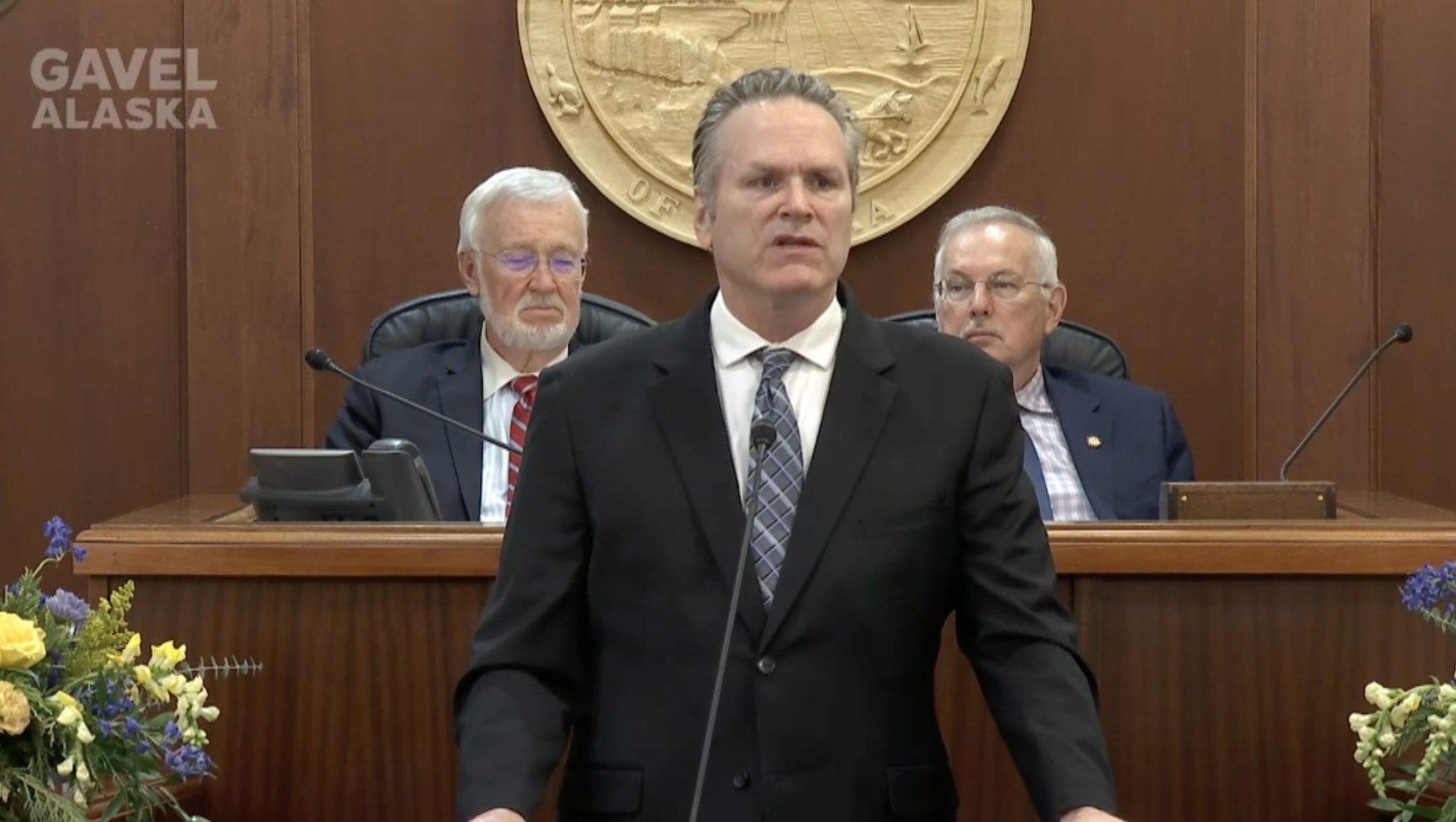
April 30, 2026 – Alaska Gov. Mike Dunleavy has vetoed Senate Bill 64, the controversial elections overhaul that has dominated debate in Juneau this month and drawn attention in prior reporting and columns from The Alaska Story.
In an unscientific poll run on The Alaska Story Facebook page, over 740 participants wanted the governor to veto the bill, while only two wanted him to sign it.

The conservative base may have spoken in that poll: Alaskans are already frustrated with ranked-choice voting, and yet SB 64 did nothing to remove that haywire system from the voting process. Instead, it just piled on bureaucratic work intended to help rural Alaska voters.
In a formal veto letter dated April 29, Dunleavy acknowledged that portions of the bill contained improvements he supports, including stronger safeguards around Permanent Fund dividend voter registration data and enhanced audit and reporting requirements. But he concluded that, taken as a whole, the legislation would create serious operational risks for Alaska’s election system, particularly with a major election cycle looming in 2026.
“Alaskans need an election process that is simple, understandable, secure, and implemented with sufficient time,” Dunleavy wrote, warning that the Division of Elections had indicated the changes would be “extremely difficult, if not impossible,” to implement securely before the next statewide contests.
The governor’s veto centers heavily on concerns about timing and execution. SB 64 would make numerous changes to election procedures, including ballot tracking systems, expanded ballot-curing provisions, and modifications tied to voter registration and election administration. But according to the administration, layering those changes into an already active election cycle raises the risk of errors and undermines public confidence.
One provision singled out in the veto involves ballot curing: Allowing voters to fix missing information after a ballot has been submitted. Dunleavy said this creates tension with Alaska’s longstanding requirement that absentee ballots be witnessed by someone at the time they are cast. Allowing a missing witness signature to be added after the fact, he argued, conflicts with that framework and presents both legal and procedural concerns.
The Division of Elections, according to the letter, has also warned that such systems cannot be responsibly built, tested, and deployed in time for the 2026 general election.
Lawmakers attempted to address that issue by proposing a delayed effective date, but Dunleavy indicated that change did not go far enough to resolve the underlying implementation challenges of not being able to verify witness signatures.
The veto marks a major setback for the Democrat-led majority and the handful of enabling Republicans who advanced the bill as a priority measure. The Democrats had celebrated the passage of the bill and the Democratic Party had used its passage to raise money for campaigns to beat Republicans.
Critics have argued it would weaken safeguards, and tilt the system in ways that benefit one political side: Democrats.
Dunleavy’s message echoes many of those concerns, particularly around complexity and public trust.
“It is essential that Alaska’s electoral process remains accessible and secure, backed by a commitment to careful management,” he wrote, adding that the bill would introduce “significant election changes during an active election cycle, raising material operational and legal concerns that are contrary to the best interests of Alaskans.”
The veto now sets up a potential override battle in the Legislature. Lawmakers would need a two-thirds vote in a joint session to override the governor’s decision, an outcome that is far from certain given divisions within Republican ranks and the narrow margins that have defined much of this session. It’s unclear which Republicans will override the Republican governor and risk their upcoming reelection in November.
The Legislature is supposed to convene immediately after a veto to hold a joint session for an override vote. That could happen Friday or Monday.
Veto letter to Legislature:


8 thoughts on “Governor vetoes SB 64, controversial election makeover bill”
Thanks for the Veto, Don Leavy
Good decision.
Message to Republicans who support and vote for override: Be careful, as there are more than a few out here waiting to terminate your political career should you choose poorly. Cheers –
Tom, You will never be governor if you choose to take the opposite approach of Mike Dunleavy. Mike and I are becoming good friends and I’m now seeing the wisdom he exudes. Be careful. The real snakes are in the Democrat Party
Dad always told us that too. And then he ends up missing.
Go ahead and let the Republicans expose their true values so their cheerleaders can see how they vote after they sit at the bar and drink up those expensive cocktails all bought and paid for by Democrats trolling the streets of Juneau in search of those cheap dates.
Its never too late for a late night after party of leg wrestling and beer pong hosted by downtown Anchorage’s rep Zack Fields. As they say “Let the games begin”!
Thank you Governor! Many, if not most, of us truly appreciate your review, analysis, and conclusion. I’ll keep sending red pens; a budget will eventually land on your desk and you’ll need them.
Thank you Governor Dunleavy, you did the right thing. Now if we could only get the Republican Legislators to stand behind your decision to veto SB64.
To the Republican Legislators the people are watching, and it is an election year. Quit support the Democrat’s agenda to reduce integrity in our elections.
To the Republican Chair this is in your court. Stop allowing the legislator to hand over control to the Democrats, it’s time to primary them.
The top Republican in the country President Donald J. Trump has set the bar and has drawn the road map for election integrity. He knows where the problems are and that also applies to Alaska.
Here in Alaska, we have Felons, and Non-citizens voting in our elections. The inactive registration shows it happened and it keeps happening.
The absentee ballots are accepted for 10 days after the election and even more if you file for a Recount. Read (AS 15.20.480 Procedures for recount) the Director Shall count absentee ballots received before the completion of the recount. If that is not clear enough read 6AAC 25.580 item (5) spell out that ballots that did not make the deadline can now be counted. This is not a recount it is a way to add more absentee ballots.
This is all about absentee ballots, it allows more time for this type of ballot voting to continue. This type of voting has no real verification we do not check signature of the voter or witness. It continues for 10 days after election day. We allow 10 more days for a recount. In both cases it’s only the absentee ballots that get counted. Why not keep the poles open for 10 days and open them back up for the recount.
I brought this up because the legislators knew this was in SB64 to be deleted; the counting of ballots passed the deadline in the recount procedures, but it got dropped out of this year’s version of SB64. They had a chance to do the right thing to improve election integrity. They did not choice to do so. Republicans have chance to do the right thing again, let SB 64 die.
Dave Johnson
Wasilla AK
We all know that the longer the count goes on the more likely the Democrats will find enough lost ballots to win.
Elections should be over on election day. Count the ballots and announce the results. No second or third round… No extended opportunity for democrat Hijinx!