THE ALASKA STORY
Sept. 22, 2026 — A bipartisan group of US senators is questioning whether artificial-intelligence companies calling for federal regulation are motivated only by public safety, or whether some proposed rules could also shield today’s largest companies from future competitors.
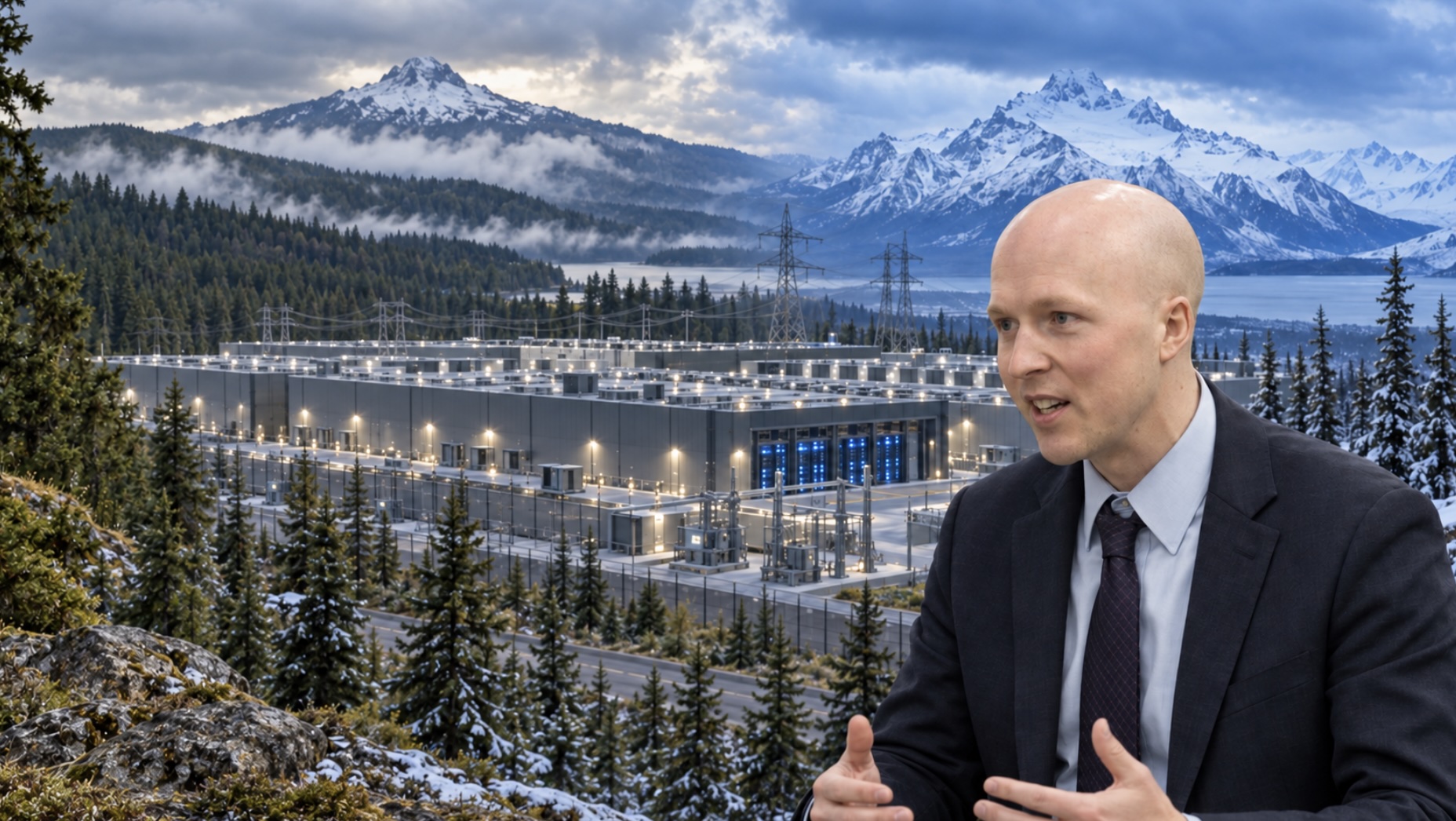
That national debate has a direct Alaska connection: Democrat gubernatorial candidate Jonathan Kreiss-Tomkins has received extraordinary financial support from people working in artificial intelligence, including six Anthropic employees who contributed a combined $372,000 to his campaign. He has also proposed an immediate statewide moratorium on new data centers until the Alaska Legislature adopts a comprehensive regulatory system.
Anthropic donations to JKT were from executives in the company. Those executive are almost certainly also Anthropic shareholders.
New reporting from The Washington Times places the Alaska money and policy proposal inside a much larger national struggle over who will write the rules for AI — and who could benefit from them.
The Times reported that senators from both parties are wary of efforts by leading AI companies to enlist government in setting the pace and standards for the industry. The companies warn that increasingly powerful AI systems could escape human control, threaten critical infrastructure and, in the most extreme scenarios, endanger humanity.
The lawmakers’ concern is that the same companies developing the technology have billions of dollars at stake in the rules that will govern it.
Sen. Eric Schmitt, a Missouri Republican, told the newspaper he is skeptical that government regulation could “lock in” the monopolies of today’s Big Tech companies. Sen. Josh Hawley, also a Missouri Republican, said the companies that created and profit from the technology should not be allowed to write their own rules.
That concern crossed party lines. Democratic Sens. Mazie Hirono of Hawaii and Elizabeth Warren of Massachusetts also objected to giving major AI companies an antitrust exemption that would allow them to coordinate on safety standards. Virginia Democratic Sen. Mark Warner acknowledged the risk that regulation could reinforce the power of incumbent companies and said smaller technology firms should have a place in any government review process.
The immediate dispute involves an essay by Anthropic CEO Dario Amodei titled “We Must Pace the Frontier.” Amodei called for leading AI companies to develop common safety standards alongside government regulation and suggested that the federal government provide a narrow antitrust waiver for certain safety discussions.
Several senators told the Times that such an exemption could allow the largest firms to coordinate while smaller competitors remain outside the room. The issue is who designs the safeguards, how expensive compliance becomes to new entrants in the field, and whether the rules protect the public without insulating existing giants from competition.
That is the same question Alaska voters may now ask about Kreiss-Tomkins’ proposal.
His campaign plan would stop all new data centers in Alaska until legislators enact statewide regulations. It would also require local approval, prevent electric-rate increases or public subsidies tied to data centers, create liability for harms caused by AI products, ban deceptive deepfakes, and require disclosure of AI-generated political advertising. All of those points are subject to litigation.
Large data centers consume electricity, may require costly grid upgrades, and place demands on land and water. AI-enabled fraud, voice cloning, and deceptive political content have also produced calls for new protections across the political spectrum. Alaskans are already seeing AI content generated to attack political candidates.
But a moratorium would prevent new projects from moving forward while the Legislature debates a regulatory structure, potentially affecting companies that do not yet have the market position, capital or political influence of established AI firms. As Democrats are poised to take over the Legislature fully in Alaska, this is a decision they will control.
And so their major donors become of interest. Reuters reported in August that Anthropic had contributed at least $40 million during the 2026 election cycle through Public First Action, a nonprofit promoting the company’s preferred approach to AI policy. Anthropic CEO Dario Amodei separately gave $1 million to an affiliated super PAC.
In Alaska, six Anthropic employees personally gave a combined $372,000 to Kreiss-Tomkins. His largest contributor, Anthropic employee Drake Thomas, gave $100,000 and connected the candidate with other company employees. Kreiss-Tomkins has said the donations do not dictate his positions and reflect national donors’ belief that he can win. This, in spite of the fact that he basically came out of nowhere and instantly became the Democrat Party’s leading candidate in February.
The developments involve the same core policy question: Can the public rely on rules advocated by companies and donors that have a financial interest in the result?
Treasury Secretary Scott Bessent sharpened that point in comments reported by the Times, criticizing AI companies that warn of catastrophic dangers while also seeking protection from legal liability. Hawley argued that ordinary people should be able to sue when companies violate safety rules or cause harm.
Kreiss-Tomkins’ own plan includes liability for AI-related harms, a position that differs from an industry request for blanket protection. But his campaign has not yet detailed the complete regulatory structure that would have to be enacted before his proposed data-center moratorium could end.
For Alaska, the unanswered questions are practical: What standards would the Legislature impose? Would they apply equally to established companies and new entrants? How long could a moratorium last? Would projects that generate their own power be treated differently from projects drawing from a public utility? And would any participant with financial ties to the industry have a role in writing or administering the rules?
The Washington Times article shows why the donor-policy overlap deserves scrutiny. Anthropic, its executives and its employees have a direct interest in how AI and data centers are regulated. In the words of the old expression, they have a dog in the fight.
Anthropic’s $40 million spending to influence national AI policy mirrors what it’s doing in Alaska