


By THE ALASKA STORY
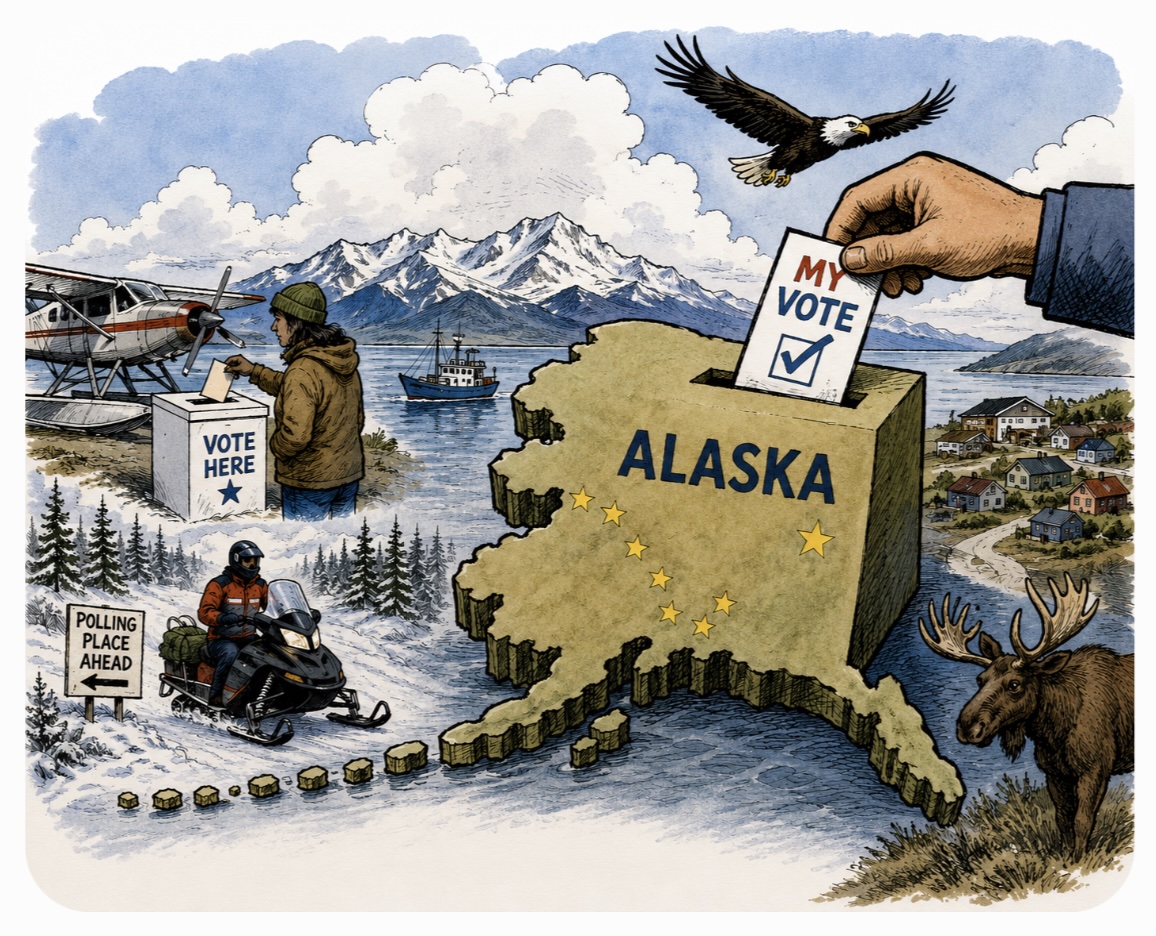
June 9, 2026 – Gov. Mike Dunleavy has vetoed House Bill 16, rejecting a campaign finance measure that would have lowered contribution limits and made a series of changes to Alaska election law, saying the legislation would have strengthened the political influence of wealthy self-funded candidates while restricting the ability of ordinary Alaskans to support the candidates of their choice.
In his veto message to Senate President Gary Stevens and House Speaker Bryce Edgmon, Dunleavy said the bill was intended to improve transparency and accountability but ultimately missed the mark.
“HB 16 would place new limits on contributions from individuals and groups, but it does nothing to address the advantage held by self-funded candidates,” Dunleavy wrote. “That is not a fair balance. It restricts ordinary political participation while leaving personal wealth as a preferred path to political influence.”
The bill, CSHB 16(STA) am S(EFD FLD H), would have required political groups supporting or opposing candidates or ballot measures to maintain an Alaska address, reduced campaign contribution limits, required periodic adjustments to those limits beginning in 2031, revised campaign finance reporting requirements, modified procedures for administrative complaints before the Alaska Public Offices Commission, and prohibited certain election spending by foreign-influenced corporations and foreign nationals.
Dunleavy argued that the legislation would have had the unintended consequence of making it more difficult for average Alaskans to participate in the political process while preserving advantages for wealthy candidates able to finance their own campaigns.
“Free speech and participation in elections should not depend on personal wealth,” he wrote. “Alaska should not make it harder for citizens to support candidates while preserving a built-in advantage for those who can self-fund.”
The veto now sends the bill back to the Legislature, where lawmakers could attempt an override if they can assemble the constitutionally required votes.
The timing of the veto is notable because the bill’s sponsor, Rep. Cal Schrage of Anchorage, is currently serving as chairman of the conference committee negotiating House Bill 381, the legislation that could determine whether the Alaska LNG project moves forward under the tax structure sought by project developers.
Schrage’s conference committee occupies one of the most consequential positions in state government at the moment and for the past many years. The committee is charged with reconciling differences between the House and Senate versions of HB 381, legislation that supporters say is essential to keeping the long-planned natural gas pipeline and LNG export project on track.
Whether the governor’s veto of Schrage’s priority campaign finance bill has any effect on those negotiations remains to be seen, but the veto inevitably raises political questions. Schrage has invested significant effort in advancing HB 16, only to see it rejected by the governor. As conference committee deliberations continue on the gasline legislation, politicos will be watching closely to see whether political tensions begin to influence the outcome.
With Alaska facing declining Cook Inlet natural gas supplies and utilities warning of future shortages, the conference committee’s slow work on HB 381 carries implications well beyond the Capitol. The decisions made in the coming days could affect energy policy, project financing, and the future of one of the largest infrastructure proposals in state history.


One thought on “Dunleavy vetoes Schrage election bill as Alaska waits on gasline conference committee”
What difference would the Schrage election bill have made to an election system already as corrupted as ours?
.
Important People don’t like “Schrage’s Law”, they’ll ignore it, just like other laws they don’t like.
.
What’ll we the people do, call 911, elect someone else?