One month after the severe storms, flooding, and remnants of Typhoon Halong tore through Western Alaska, the scale of recovery efforts has come into sharper focus.
State, federal, local, and nonprofit partners have now pushed a combined $41 million in support to affected Alaskans across the Lower Kuskokwim and Lower Yukon Regional Educational Attendance Areas and the Northwest Arctic Borough.
With hundreds still displaced and communities still assessing damage, the numbers tell the story of a massive, ongoing recovery mission.
By the Numbers: Alaska’s Halong Recovery
2,000+ Alaskans evacuated from affected communities during the storm.
600+ Individuals from 161 households sheltered in Anchorage hotel rooms.
22,000+ Meals delivered to survivors sheltering in hotels.
1,700+ Applications received for the State of Alaska’s Individual Assistance program.
1,200+ Individuals and households registered with FEMA for federal disaster assistance.
805 Home inspections completed to verify damage.
43 Joint State–FEMA visits to impacted communities to help register residents for assistance.
1,099 Inbound calls handled by FEMA’s Alaska Call Center.
2,933 Outbound calls made by FEMA’s Alaska Call Center to support survivors.
Key Deadlines Approaching
Survivors of Typhoon Halong have a limited window to apply for help.
-
Dec. 22 – Deadline to apply for FEMA disaster assistance
-
Dec. 22 – Deadline to apply for Small Business Administration low-interest physical damage loans
-
Jan. 8 – Deadline to apply for the State of Alaska’s Individual Assistance program
FEMA stresses that survivors should apply for both State and FEMA assistance to maximize available support.
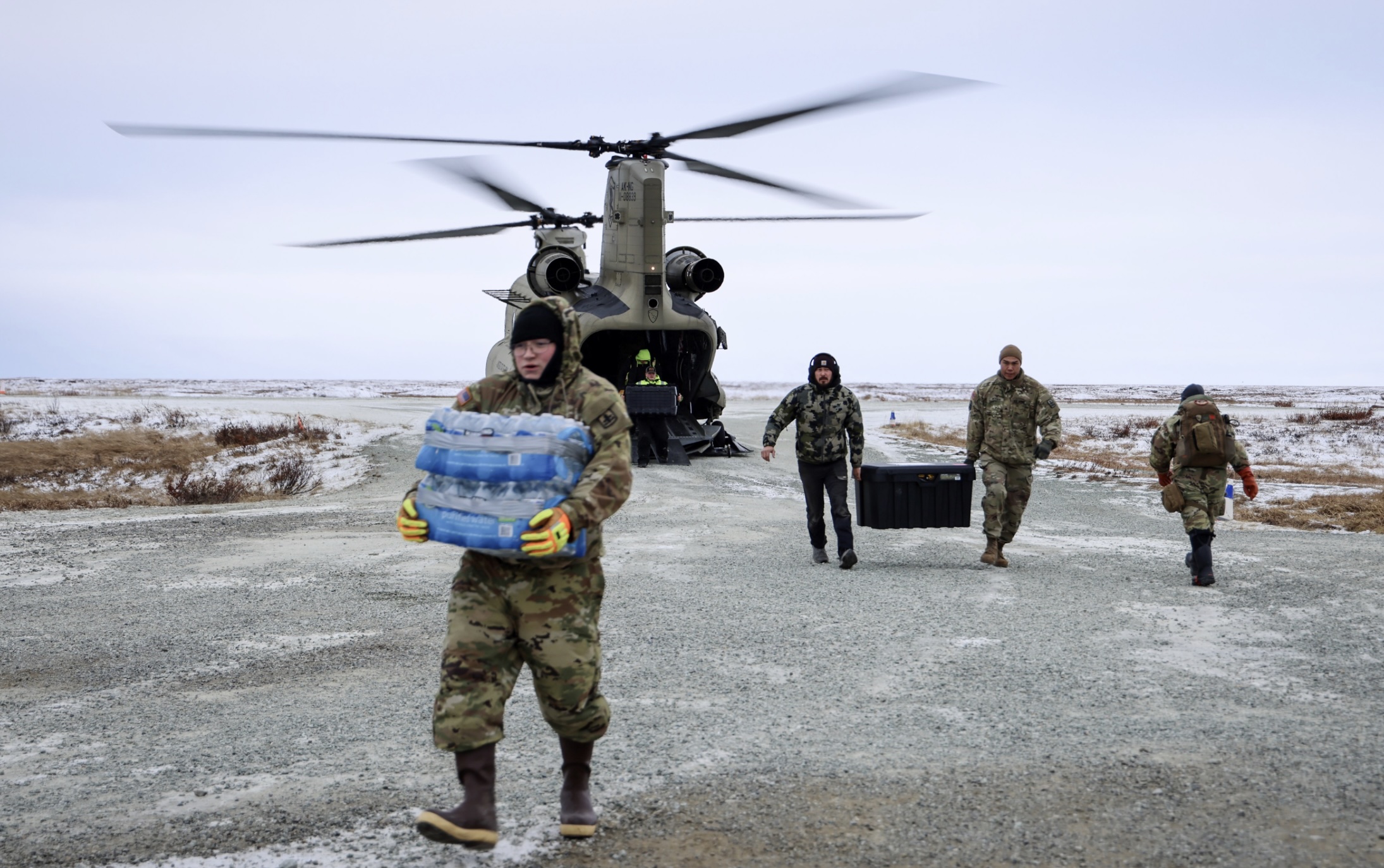
In addition, the National Guard gave this report earlier in the month:
- Bethel: Provided warehouse support, processing more than 99,000 pounds of supplies for onward delivery.
- Toksook Bay: Cleared 4.5 miles of boardwalk and surveyed residences; reported seawall damage.
- Chefornak: Cleared 3.4 miles of boardwalk, removed 500 pounds of debris, and repositioned five boats.
- Oscarville: Cleared boardwalks and removed 3,500 pounds of debris.
- Napakiak: Cleared 2.4 miles of boardwalk, removed 27,950 pounds of debris, cleaned out seven homes, and delivered 300 pounds of essential supplies; supported one evacuation flight for eight residents.
- Kongiganak: Cleared 1.8 miles of boardwalk.
- Kwigillingok: Cleared 3.5 miles of boardwalk, removed 1,750 pounds of debris, reconnected a water line, and recovered ATVs and snowmachines; supported seven evacuation flights moving 178 residents.
- Nightmute: Cleared two miles of boardwalk, removed 7,000 pounds of debris, and supported three evacuation flights for 20 residents.
- Kipnuk: Assisted in recovery of school and tribal assets, and supported nine evacuation flights for 417 residents.
- Tuntutuliak: Cleared 3.4 miles of boardwalk, removed 12,500 pounds of debris, removed wet insulation from 30 homes, wrapped seven buildings to facilitate drying, and supported two evacuation flights for 26 residents.
- Napaskiak: Cleared 4.7 miles of boardwalk, removed 19,950 pounds of debris, removed 15,000 pounds of dirt, and delivered 1,000 pounds of supplies.
- Quinhagak: Cleared 3.5 miles of boardwalk, removed 1,750 pounds of debris, and supported three evacuation flights for eight residents.
- Kotzebue: 15 returned to pre-storm condition, seven dried using dehumidifiers, and 17 had insulation removed.