


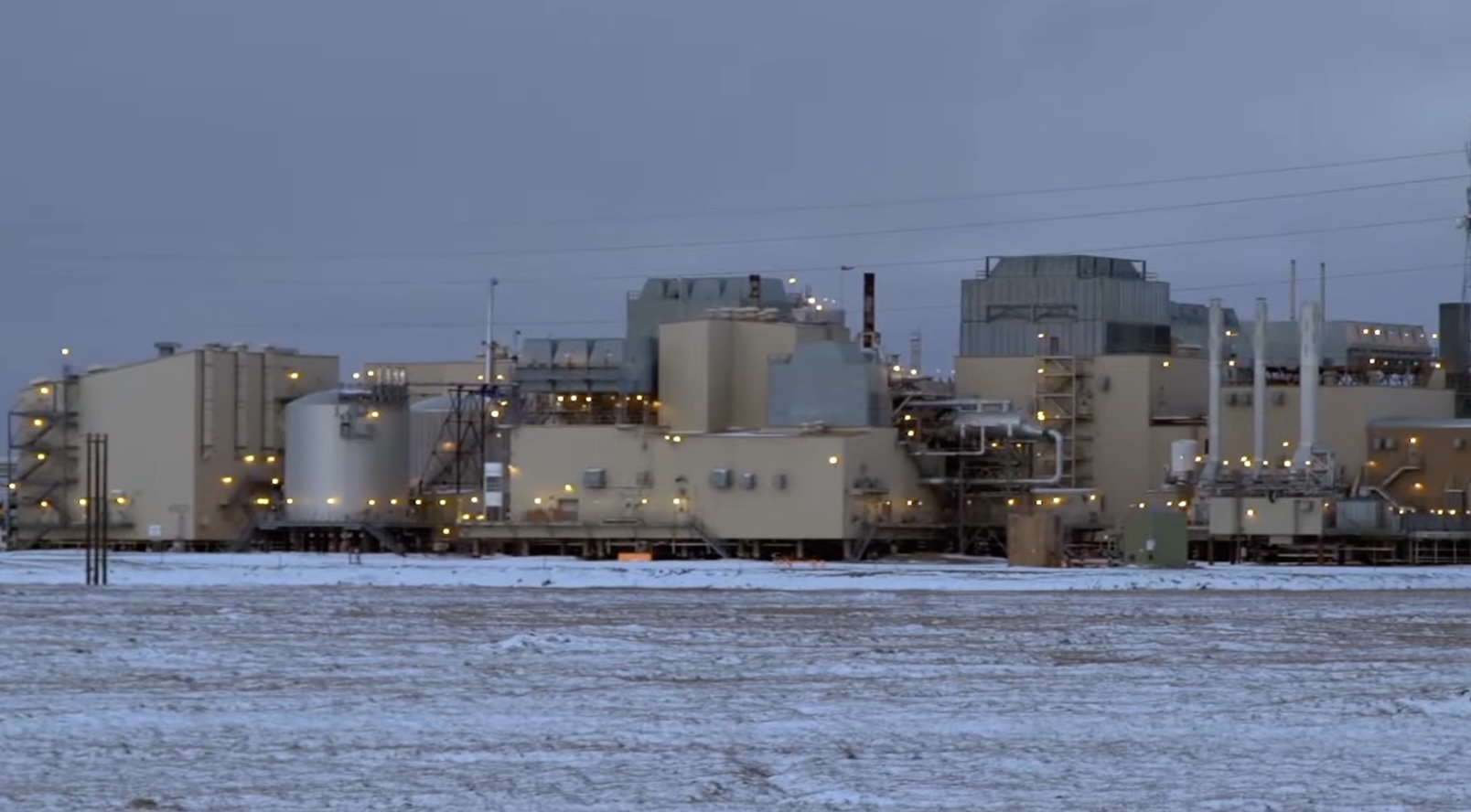
Alaska LNG, majority owned and developed by Glenfarne Alaska LNG, has announced a major new partnership with energy technology company Baker Hughes to advance the long-awaited Alaska LNG project.
Under the agreement, Baker Hughes will supply the main refrigerant compressors for the LNG terminal and power generation equipment for the North Slope gas treatment plant. Both are critical components for the project’s next stage of development. The company is also making a strategic investment in Alaska LNG, signaling confidence in the project’s long-term viability.
The partnership was unveiled Monday at a ceremony in Washington, DC attended by Secretary of the Interior Doug Burgum and Secretary of Energy Chris Wright, who both framed the project as central to America’s energy independence and global competitiveness.
“Baker Hughes is a welcome partner for Alaska LNG because of their leadership in LNG compression technology,” said Brendan Duval, CEO and founder of Glenfarne. “Their participation reflects Alaska LNG’s momentum and its ability to attract global partners to achieve national and state energy objectives.”
“Natural gas and LNG provide secure, affordable, and reliable energy,” said Lorenzo Simonelli, chairman and CEO of Baker Hughes. “We look forward to continuing our collaboration with Glenfarne to bring lower-carbon natural gas from Alaska to the global market.”
Both federal officials framed the announcement as a cornerstone of the nation’s renewed focus on domestic energy dominance.
“American LNG is not just an energy source – it’s a strategic asset that powers our economy, strengthens our alliances, and secures our nation’s future,” said Interior Secretary Burgum. “By forging this strategic alliance and investment in the Alaska LNG Project, we’re strengthening energy security while advancing a bold vision for U.S. energy independence — starting in Alaska.”
Energy Secretary Chris Wright called Alaska LNG “one of the most significant energy infrastructure projects in our nation’s history,” adding that “today’s investment announcement is an important step forward for the project, prosperity in Alaska, and the energy security of America and our allies.”
Glenfarne is developing Alaska LNG in two financially independent phases designed to accelerate timelines and reduce upfront capital risk. Phase One consists of an 807-mile, 42-inch pipeline transporting natural gas from Alaska’s North Slope to the southern coast, where it will serve domestic energy needs. Engineering firm Worley is expected to complete final engineering and cost analysis for the pipeline by December, leading to a final investment decision on this phase.
Phase Two will construct the LNG terminal and related infrastructure, providing up to 20 million tonnes per annum of LNG export capacity. A final investment decision for this phase is expected in late 2026.
Since taking over as lead developer in March, Glenfarne has already secured preliminary commercial commitments with buyers in Japan, Korea, Taiwan, and Thailand totaling 11 MTPA, more than 60% of the volume needed to reach final investment decision. Recent agreements have included Tokyo Gas, JERA Co. Inc., and POSCO International Corporation.
Glenfarne’s North American LNG portfolio totals 32.8 MTPA of permitted capacity across Alaska, Texas, and Louisiana. Baker Hughes is already supplying compression equipment for Glenfarne’s Texas LNG project, announced earlier this year.
For Alaska, the project represents a rare alignment of federal, private, and international interests behind a long-sought goal: unlocking stranded North Slope gas for both local use and export.
When fully realized, the Alaska LNG project would become one of the largest energy infrastructure developments in US history, reshaping Alaska’s role in global energy markets and creating thousands of construction and operations jobs across the state.

6 thoughts on “Breaking: Glenfarne inks partnership with Baker Hughes on Alaska LNG project”
Both Korea and Japan have signaled no interest in buying Alaska LNG.
Hype all you want. This is a partnership agreement and not a purchase order. Big, big difference.
Can anyone explain how the State of Alaska and its residents get paid for developing this project, other than construction and operating jobs?
The residents of south central Alaska (Anchorage area) will benefit from a long term source of affordable LNG as the current sources are in decline. The residents of interior Alaska (Fairbanks area) will benefit from a reduced cost energy supply creating some relief from the highest energy costs in the nation.
The residents of entire state will benefit from a taxable comodity allowing for state revenues to support renewed education and infrastructure maintenance funding for the foreseeable future.
A smaller Ak government and a a large diverse private sector where its industries are worth hundreds of millions of dollars its what can pay for a small government’s employee’s pensions
There are many industries not brought to Alaska because of our government dependence it doesn’t make Alaska profitable nor cost efficient
Just as our strategic Arctic position we should be a cutting edge state in every industry field
First we need to dramatically reduce Alaskans government dependency no smart entrepreneur would want to set up operations if operation will cost him more
Tina, you mentioned government dependence. I assume that you don’t accept the PFD?