



By BOB BIRD
I have lived in Alaska nearly 50 years, and still admire those who have been here longer. I made my first trip in 1975, to check it out. I had just completed my first year of teaching History and coaching hockey in a cornbelt town 100 miles west of Minneapolis. The pipeline construction was going full blast, was constantly in the news, and I used my summer vacation to pack up a VW hatchback and drive north.
I was already free of having dwelled in the vicinity of Chicago, just far enough to live in a small rural town on a muddy midwestern lake where the only fish were scads of detested carp, a few catfish and stunted panfish. Minnesota was delightfully much better at that time, and I would never have moved to Alaska if I had landed a teaching job in the northwoods.
The drive was quite an Odyssey for me. I had never been west of Fargo. When I reached the start of the Alcan Highway, I learned that it was closed at Ft. Nelson, 300 miles up, due to cloudbursts that had washed out the gravel roadbed. I had to wait with hundreds of other fortune seekers for several days.
I had in my possession The Milepost, a travel advisory “bible”, which gave Cheechakos great advice every step of the way, and I followed it. One feature of information that still sticks in my mind, was “There are Six Alaskas”. I continue to use it when teaching Alaska Studies.
- Southeastern: maritime climate, mild winters, cool summers, lots of rain.
- Arctic: long, dark winters, short dry summers, extreme cold but not quite as cold as the Interior.
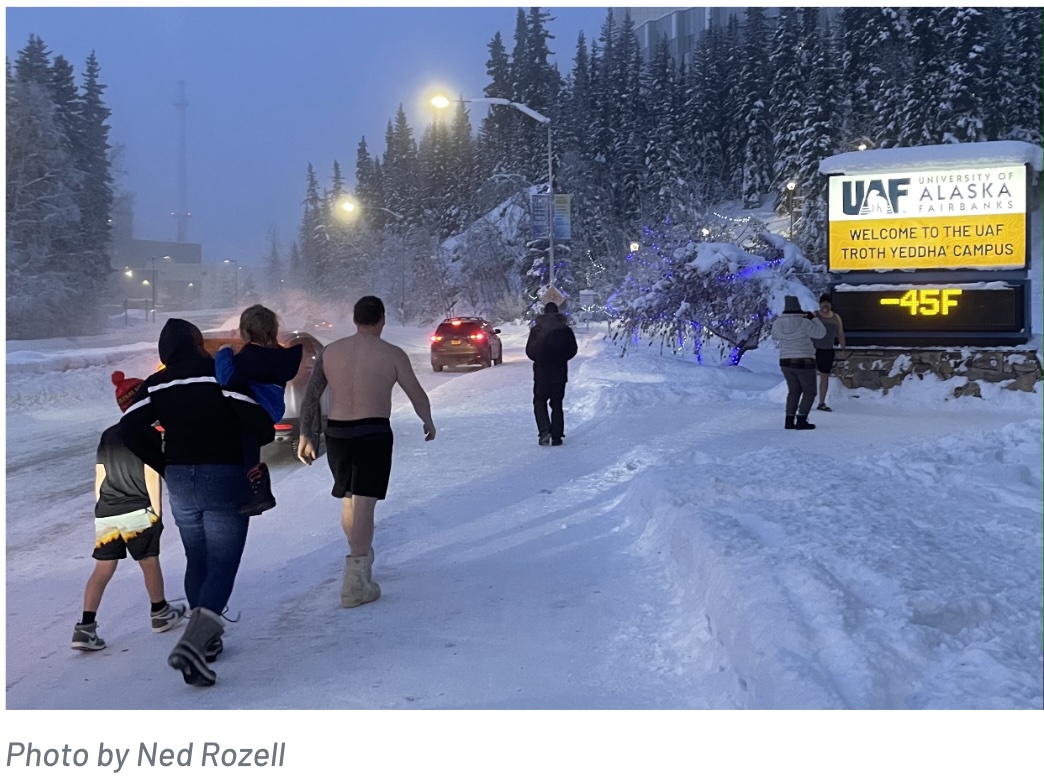
- Interior: short, hot summers, and long ferociously cold winters.
- Aleutians: fog, rain, wind, snow pellets — almost all the time.
- Western: barren tundra, occasional forests, wild variations in climate, roadless villages.
- Southcentral: The most populous area, combines all the other five regions in micro-climates, and varies year to year in macro imitation of them.
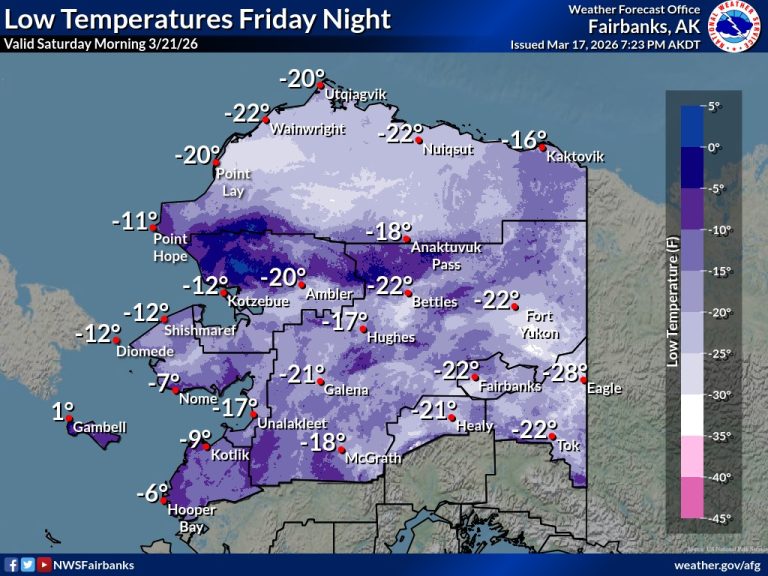
There you have it. If you are wondering why we are getting Aleutian winds, a 2nd dry winter in a row, and deep-freeze temperatures with cement-like crusts of snow, that’s the answer. We got a 90 degree temperature in Anchorage just a few years ago, along with a drought that threatened us with forest fires, ignited by rare southcentral thunderstorms.
But then we also get summers that imitate the dreariness of Ketchikan, with endless rain, low ceiling skies, sprinkled with a few days of sunlight that are so rare we might weep. The Smoky the Bear fire danger signs register on the lowest scale.
And the Kenai Peninsula, where I live, concentrates all this within its own sphere. Thus, Homer and Seward imitate SE, Sterling gets an Interior climate, the Harding Icefield and alpine country combines western and arctic reminders, and some of our offshore islands look an awful like the Aleutians.
But those are micro-climates. Beware a winter drive to Anchorage, where every curve of the road, or change in elevation, might give an ugly surprise.
Then there is the macro-climate, the overall average that settles in for entire summers or winters, with a few variations, but are generally uniform. We must endure it together, from Houston to Homer. We have already experienced four separate and distinct relentless, days-long blasts of wind storms here on the Kenai Peninsula. We have endless forests of dead spruce, and despite valiant efforts to harvest them, millions more remain along powerlines and isolated subdivisions.
The power outages that result are serious disruptions, complicating efforts to keep warm in the house, but to keep refrigerators and freezers from despoiling our summer harvests of fish and food. We fully sympathize with the Mat Valley’s trials at this time, even while we struggle here.
Ah, but many of us moved to Alaska because we like winter, and there are compensations! Just get out the skiis, snow machines and enjoy it. What’s that you say? There’s no snow? Or it’s crusted like a cement sidewalk? Then, go skating! The lakes are free of snow, and the ice is polished smooth as silk.
What’s that you say? Kids are being bowled over by the wind?
Just yesterday I ventured out for a needed walk, armed with the finest boot-grips money can buy. When I dared to venture away from the lee side of the lake, several gusts threatened to lift me up, and knock me down. Had I been 20 years younger, I might have gotten a cardboard slab from a furniture store and seen what I could do on my skates. Whoa! Others would have gotten a parasail, and might have been killed.
Most of our communities have performing arts groups. I have been told, and by Anchorage aficionados, that the Kenai Peninsula’s PA offerings rate as fine as their own. We took in a stage version of White Christmas with vocalists that were both crooners and belters. The dance studios lent their experts with a tap number that shook the building. Our local orchestra gave its annual Christmas concert. All this helped us to forget the weather that hits us in this amazing place where we live.
And no matter how strong the wind, the mountains remain, a view that never ceases to amaze this erstwhile Midwesterner.
Conservative talk radio host Bob Bird anchors the “Talk of the Kenai” show for KSRM, and was named the 2025 Broadcaster of the Year by the Alaska Broadcasters Association.


4 thoughts on “Bob Bird: Weather in Alaska is a wonder to behold”
The wind and single digits don’t bother me -as long as the sun is shining this time of year!
The wind has cost us 3 cancelled flights in the past 2 days.
I love rural Alaska.
The cold wouldn’t bother me if I had a warm garage for my car but having an interesting article on Alaska to read this evening almost makes up for it. Thanks Bob!
Now.
Just another beautiful -35°F. day here.