

By BARBARA HANEY
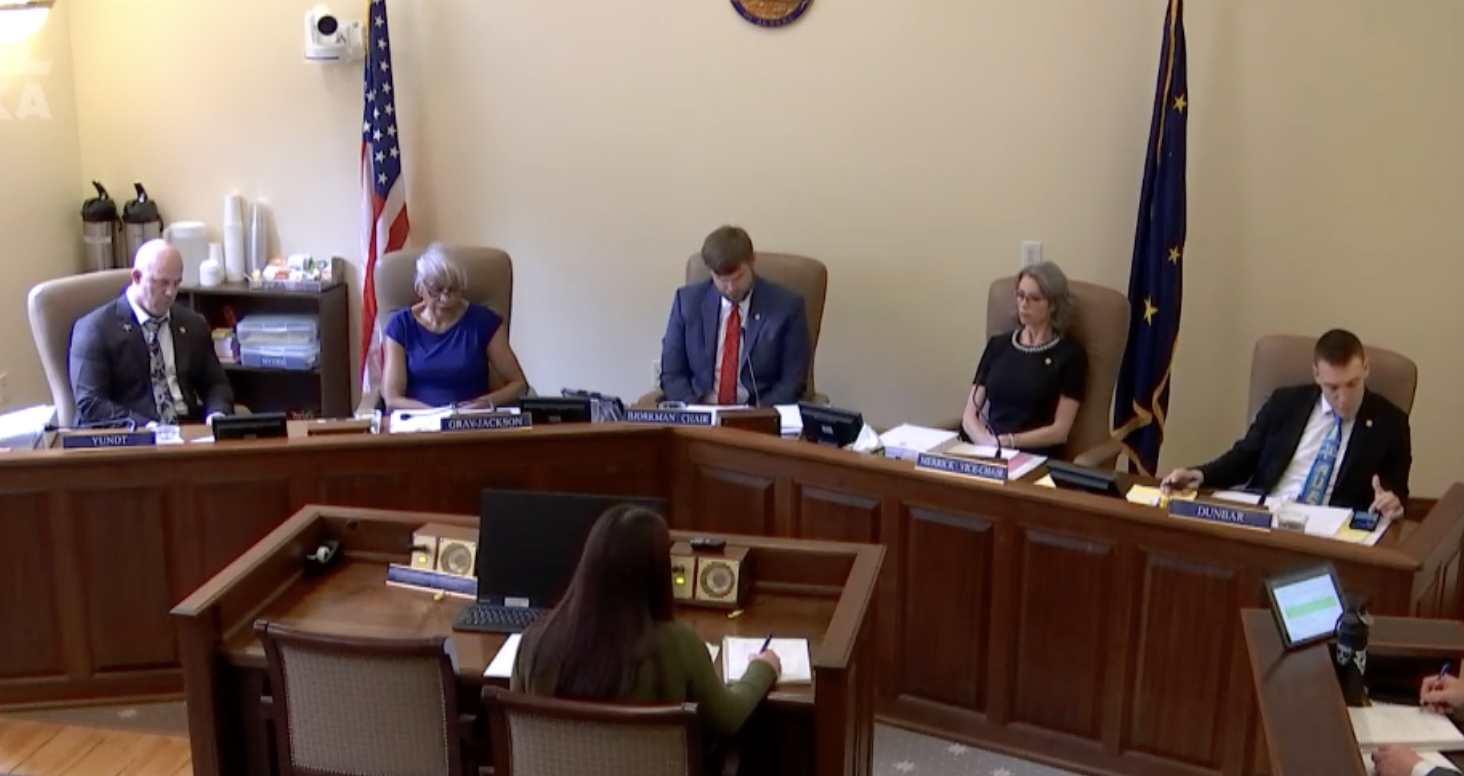
April 22, 2026 – Fairbanks families are staring down another round of volatile property tax bills, and the Alaska Senate has a chance today to deliver real, common-sense relief.
Senate Bill 259 (CSSB 259(CRA)) is not another bloated government program or tax hike disguised as “help.” It is a targeted, locally controlled tool that gives municipalities like the Fairbanks North Star Borough (FNSB) the option to cap annual increases in the assessed value of primary homes.
The cap can be set anywhere from 3% to 10%, protecting long-time residents from the kind of sudden 20%, 30%, or even 40%+ jumps in assessed values that have hammered homeowners in recent years.
While official FNSB projections claimed 2026 assessments would track inflation at roughly 2.1%, countless residents have received notices showing far steeper increases driven by localized market pressures. For seniors on fixed incomes, working families, veterans, and multi-generational Alaskan households, these spikes aren’t just numbers on a piece of paper — they mean choosing between paying the tax bill and putting food on the table, fixing the roof, or staying in the home they’ve poured their lives into.
This isn’t a Fairbanks-only crisis. In the Municipality of Anchorage, some homeowners have seen assessed values jump as much as 40%, triggering a record surge in appeals and prompting the Assembly to order a systematic reevaluation of properties with unusually large increases.
The Matanuska-Susitna Borough reported average single-family home values rising 7.41% with land assessments up 15% as part of a six-year correction plan — sparking widespread outrage over “skyrocketing” taxes that has even led to serious talk of replacing the property tax with a sales tax. Similar pressures are hitting the Kenai Peninsula and other growing regions across Alaska, where families are scrambling under the weight of unpredictable tax bills that outpace wages and inflation.
That’s why SB 259 matters. It gives FNSB and every other municipality the voluntary ordinance tool to bring predictability and stability without raising anyone’s taxes or forcing a single dime of new state spending. It includes smart guardrails: full market-value “true-up” every 10 years, immediate reset for major improvements, and reset on regular arm’s-length sales. Economists who have studied similar programs in Florida, Texas, and Washington have seen the results — lower foreclosure rates, stronger neighborhoods, and families who can actually plan their futures instead of living in fear of the next assessment notice.
But there is a glaring loophole that threatens to undermine the entire purpose of the bill — especially for the very families it is meant to protect. As currently written, the cap resets to full market value upon any “transfer of ownership.” That language is fine for outsiders buying and flipping houses. It is disastrous for Alaska families facing life’s most common and painful transitions:
- – A widow or widower in Fairbanks (or anywhere in Alaska) loses their spouse and continues living in the family home as their primary residence — only to get slammed with a massive tax increase at the exact moment they are grieving and dealing with lost income.
- – A single homeowner marries, adds their spouse to the deed for basic estate planning, and suddenly loses the cap even though nothing about the household has changed.
- – A divorced parent is awarded the family home in a court decree and keeps raising the kids there, only to see the assessment cap vanish during an already traumatic time.
These are not “loopholes” for tax cheats. These are normal, God-given family realities — marriage, death, divorce, inheritance — that should preserve the stability this bill promises, not destroy it. Failing to fix this will disproportionately hurt women (who statistically outlive their husbands), single parents, and multi-generational households across the FNSB and the rest of Alaska. It creates perverse incentives for people to delay marriage, avoid joint titling, or structure estates in awkward ways just to keep their tax bill from exploding.
The fix is simple and surgically precise: clarify the definition of “transfer of ownership” (or add an explicit exception) so the cap continues uninterrupted for surviving spouses, newly married couples adding a spouse to title, or divorcees awarded the home — as long as the remaining owner still lives there as their primary residence for 185+ days a year. This change costs the boroughs nothing, protects revenue integrity, and honors the pro-family intent behind the legislation.
Barbara Haney, Ph.D., is an independent economist with a Ph.D. from the University of Notre Dame and more than 34 years analyzing issues unique to Alaska’s economy. Listen to her testimony to the Senate Labor and Commerce Committee here.
Barbara Haney: Locking Alaska’s wildlife resources in a legislative straitjacket will harm rural Alaskans
Barbara Haney: Fairbanks legislators voted to kill the Ruth Burnett Hatchery — and they knew it
Barbara Haney: Budget lessons from the Fairbanks North Star Borough ‘clawback’
Barbara Haney: Why Alaska lawmakers should reject the proposed income tax



One thought on “Barbara Haney: SB 259, critical property tax relief for Fairbanks families, is one vote away”
I would like to see property tax unable to be raised except during an actual sale. We aren’t allowed to be taxed on unrealized gains on our investments. I see taxing my property based on what they think it could sell for is the same thing. I haven’t sold it, therefore it’s just a pie in the sky value and I’ve not received any monetary reward until I sell it.