


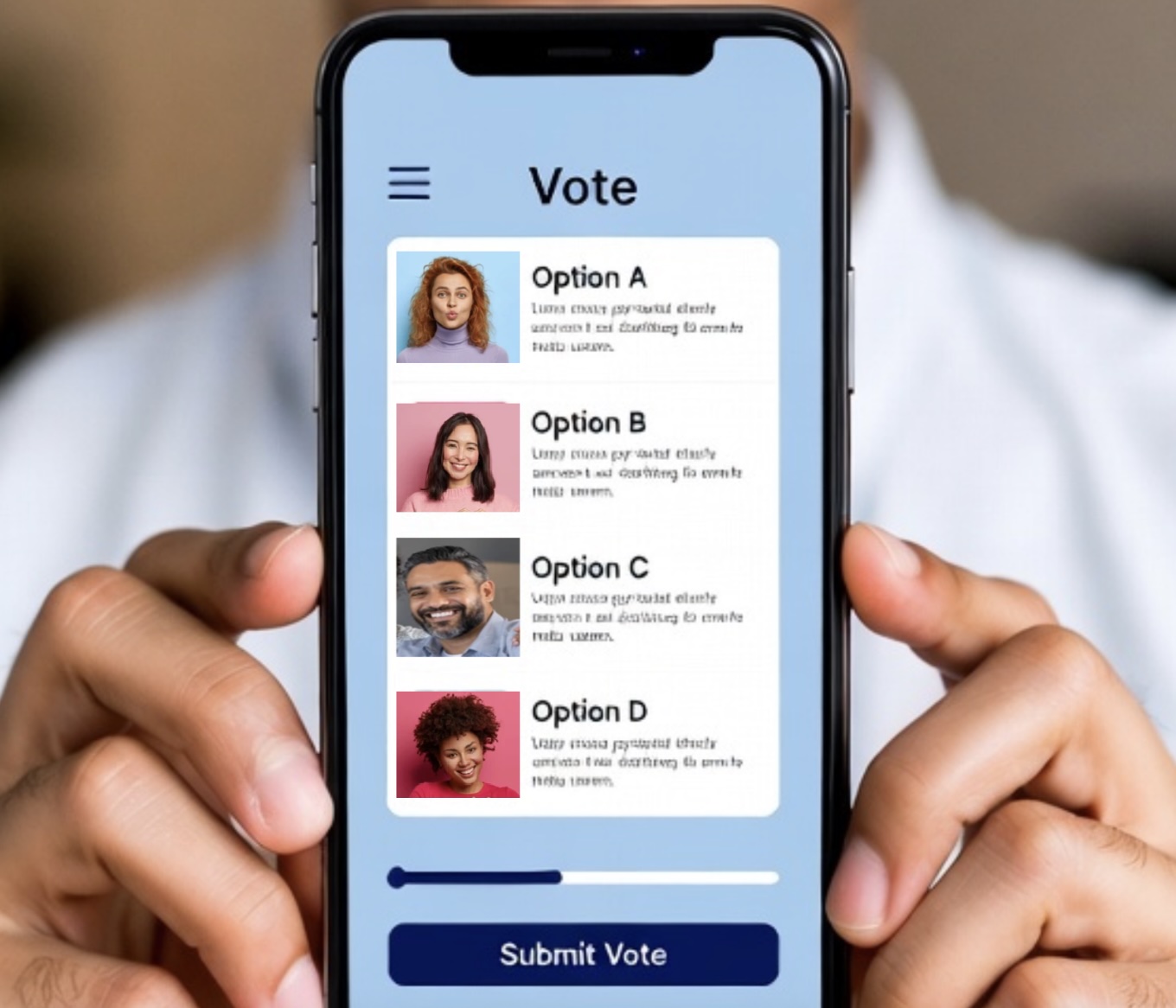
Anchorage is poised to become the first city in the United States to allow residents to cast ballots from their smartphones in a municipal election, an experiment election officials say could reshape how Americans vote in the years ahead.
The The New York Times is reporting the municipality will test mobile voting in April’s local election, which includes six Anchorage Assembly seats and two school board races. Traditional options, such as voting by mail and in-person voting, will remain available. The new system will not be used in this year’s state or federal contests, but Anchorage’s limited run will be the most significant trial of smartphone voting yet in the country.
Anchorage is partnering with the Mobile Voting Project, an open-source nonprofit backed by venture capitalist Bradley Tusk, a former adviser to New York City Mayor Michael Bloomberg.
Tusk has become a leading national advocate for mobile voting and has poured millions of dollars into developing technology he says can make elections more accessible without compromising security.
In an interview with CBS News New York, Tusk said he has spent four years and $20 million of his own money developing the platform, which uses multifactor authentication and biometric screening. He compared the system’s security to what Americans already use in online banking and health care, arguing that it is “exponentially more complicated and secure than any way we currently verify voters.”
While the app remains in beta testing, earlier versions have been used in small-scale elections around the country, according to CBS News. Anchorage’s April rollout will be the technology’s largest public test to date.
Local election officials told the newspaper the city’s geographic challenges make mobile voting an appealing tool. Anchorage’s population includes thousands of people who travel frequently for work in the military, oil and gas, fishing, and tourism industries. Harsh weather and long distances also complicate traditional voting methods. Liz Edwards, the municipality’s election administrator, told The New York Times the goal is to remove barriers for a population that is constantly on the move.
It will be most useful to reaching the younger voters, as they have been raised on smartphone.
“We have a high transient population — military, oil and gas, fishing, tourism — our people are always on the move,” Edwards was quoted as saying. “We’ve been trying to make it even easier for them to vote and make it so you don’t really have an excuse not to vote anymore.”
The technology arrives as lawmakers and the public continue debating election integrity, access, and trust. Anchorage’s experiment will give Alaska and the nation a front-row view of whether smartphone voting can bridge gaps in turnout or invite new questions about security.


13 thoughts on “Anchorage to launch smartphone voting in April”
Let the games continue! Who came up with this stupid idea? Let me guess, the liberal assembly!
Anchorage’s younger voters (GenZ and GenAlpha) don’t vote unless millennials still think themselves young who are old forty years olds
A ” highly transient” population of derelicts and vagrants
This plan brought to you by Arabella Advisors and the 1630Project by way of the 907Initiative.
exponentially more complicated and secure than any way we currently verify voters.” Yeah, right.
This will end up being a disaster for elections but great for fraud, hacking and all the rest that goes with online apps.
It’s not hard to vote if you want to. Instead of drawing in votes from people who don’t pay attention to what’s going on or those who really couldn’t care less and to do it without a paper trail is about as dumb as it gets.
Oh yay! Now we have a cheating app, on top of cheat-by-mail, ballot harvesting, illegals voting, people voting for family members (villages) and rigged choice voting. I can almost understand the apathy to vote among the law abiding residents.
So fun to watch Alaskan MAGA heads explode.
Attended my community council meeting last night and in attendance was Councilwoman Erin Baldwin Day. I mentioned this , as I had recently been told of it, and she said this was not true, and this was not going to happen. She assured us all there would be a rebuttal to this story coming out in the next day or so. Waiting to see if what she said was true or not. I’m thinking there will be some spin on it, but that it is going to happen.
Ernest, I share your skepticism.
I seem to recall that we had “vote by fax/email” voting last time, which at the time I thought was outrageous. I never liked the mail-in-voting system that was foisted upon us by the assembly many years ago without a vote of the people. Papering the town with ballots just is a bad idea. This new thing seems to be the next iteration of that same theme with the same stated goal, increasing voter turn-out. Yet in my opinion it only fuels the distrust people already have of the system. Somehow this city has managed to elect city officials since its founding with residents simply showing up to the polls and paper ballots. Move the Muni election back to November and go back to in-person voting at precincts. It is cheaper, more reliable and takes a great deal of manipulation out of the system.
The assembly approved AO 2024-109(s) the end of December 2024. And it added voting via a secure document portal to the electronic voting options. When you look at the clerk’s rebuttal to the NY Times article note this: she never says that the claim is false, just that it is a misrepresentation. Then she makes the statement that nothing has changed for the 2026 election (true because the assembly adopted the voting via secure document portal in 2024) but misleading. And “secure document portal” is a slick way of saying you can vote with your smart phone without saying that and raising concerns.
Would you like paper or plastic? I’ll probably be out of town and voting absentee. Not certain which way to go with this….
Could Skankrage get any stupider or more corrupt? 🙄