


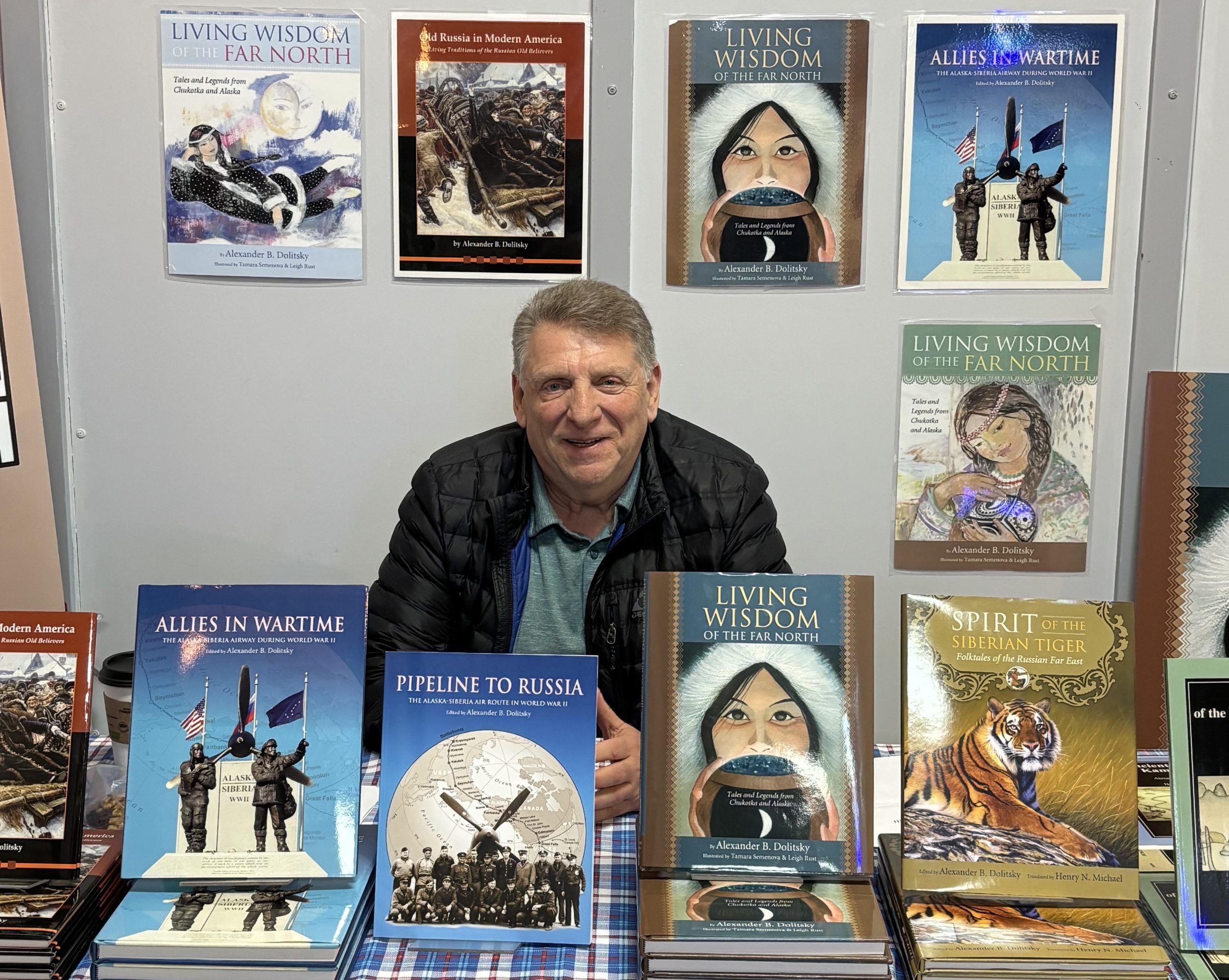
By ALEXANDER DOLITSKY
Culture is not written in our DNA. While we inherit physical traits like hair color and blood type from our ancestors, there are no genes for language, faith, moral values, or civic duty. Instead, culture is an ongoing, fragile inheritance; it survives only when one generation intentionally passes down its customs, stories, and symbols—from a welcoming smile and a handshake to national flags and anthems—to the next. In traditional societies, this transmission of shared values creates social cohesion.
As a political refugee who fled the Soviet Union in 1977, I experienced the power of this cultural transmission firsthand. Coming from a totalitarian system with a radically different worldview, I had to learn what it meant to be an American through daily observation and communication. Cross-cultural misunderstandings were unavoidable, especially as I tried to decode uniquely American customs. Yet America’s foundational symbols—its flag, its anthem, and its shared civic ideals—acted as vital bridges. They offered a clear, unifying identity that an outsider like me could respect, learn, and eventually adopt.
Today, however, that stable cultural landscape is fracturing. The broad consensus that once surrounded America’s national symbols is splintering under intense ideological pressure. Having escaped a regime that routinely rewrote history and manipulated symbols to control its citizens, I watch with growing concern as contemporary far-left movements dismantle the very narrative of American continuity that I worked so hard to embrace.
The Deconstruction of National Symbols
Historically, shared emblems have united diverse populations under a single banner. Within contemporary progressive discourse, however, foundational symbols are increasingly reexamined almost exclusively through the lenses of systemic racism and colonialism. Rather than viewing the American flag or the national anthem as unifying representations of aspirational ideals, far-left activists and democratic socialists often frame them solely as monuments to historical oppression. To traditionalists and centrists, public protests—such as kneeling during the anthem or replacing the national flag with ideological banners—represent not merely dissent, but a deliberate severing of cultural continuity.
“Cancel Culture” vs. Cultural Continuity
Because culture relies on gradual, generational transmission, the modern push to erase historical legacies, topple statues, and rename institutions creates a profound societal rift. While proponents argue these actions are necessary to correct past injustices, the indiscriminate erasure of former leaders represents a radical break in social learning. When a society teaches its youth to reject their inheritance rather than understand its full complexity and historical context, it destroys the shared reference points that allow citizens to communicate across generational divides.
From the “Melting Pot” to Fragmentation
As an immigrant, I know the necessity—and the reward—of assimilating into a shared civic culture. Yet, a major point of contention today is the ideological shift away from America’s traditional “melting pot” ideal toward frameworks rooted in intersectionality and rigid group identities. Institutionalizing these frameworks in education alters how young people experience social learning. Instead of viewing American history as a shared, evolving journey toward liberty and justice, younger generations are increasingly taught to view their country—and each other—through a lens of permanent group ideologies, such as “white privilege” and “systemic racism.”
Passing Down a Shared Inheritance
Culture is neither inherited biologically nor sustained automatically; it requires deliberate stewardship. My journey from the Soviet Union to the United States taught me that common ideals and national symbols are not mere decorations—they are the glue that helps newcomers assimilate into and unite with their fellow citizens.

When modern democratic socialist movements deconstruct these emblems, erase historical continuity, and replace a shared identity with fragmented tribalism, they dismantle the mechanisms that hold a diverse nation together. Preserving American democracy requires renewing our commitment to passing down a common cultural inheritance—one that honestly acknowledges past flaws without destroying the unifying symbols that bind future generations.
The author was born and raised in the former Soviet Union before settling in the U.S. in 1978. He moved to Juneau in 1986 where he taught Russian studies and Archaeology at the University of Alaska Southeast, and Social Studies Teacher at the Alyeska Central School of the Alaska Department of Education. From 1990 to 2022, he served as a director and president of the Alaska-Siberia Research Center, publishing in the fields of anthropology, history, archaeology and ethnography. Find him on Amazon.com.
Alexander Dolitsky: From spheres of influence to Shenzhen, tracing great-power consensus across history
Alexander Dolitsky: It takes courage to confront antisemitism and Islamic terrorism

3 thoughts on “Alexander Dolitsky: Traditions, symbols, and new American landscape”
Genetic traits and instincts in the area of technology show that caucasians excel disproportionately among race’s. Same with culture , compare Africa with Europe, Jews with Muslims, and many other examples.
I say this as a Caucasian.
It’s possible that you mean western civilization vs third world civilization instead of the outright racism that your comment suggests. It’s hard to argue that Judeo-Christian values and worldview is less than the alternative, other than in numerical factors where western civilization is losing out to a birthrate or replacement value demographic issue. The small minority here in the US who would rather teardown all of the freedoms, advancements, technology, equality, and liberty that western civilization provide through the Judeo-Christian value system need to look no further than the red-green alliance that is overtaking Europe to see which way benefits the most people in the most ways.
If you took my piece as racist, I apologize. I don’t believe Trump is racist either.
Dolitsky is on the right tract but I would add that culture is to some degree inherited in genetics.
As for religion, Theology is based on faith, not reality.
It’s not hard to notice that Whitey loved to explore and advance , discover and excel in technology profoundly compared to non whites., it’s just so obvious and it’s also comes from genetic traits. You just have to open your eyes and see.