


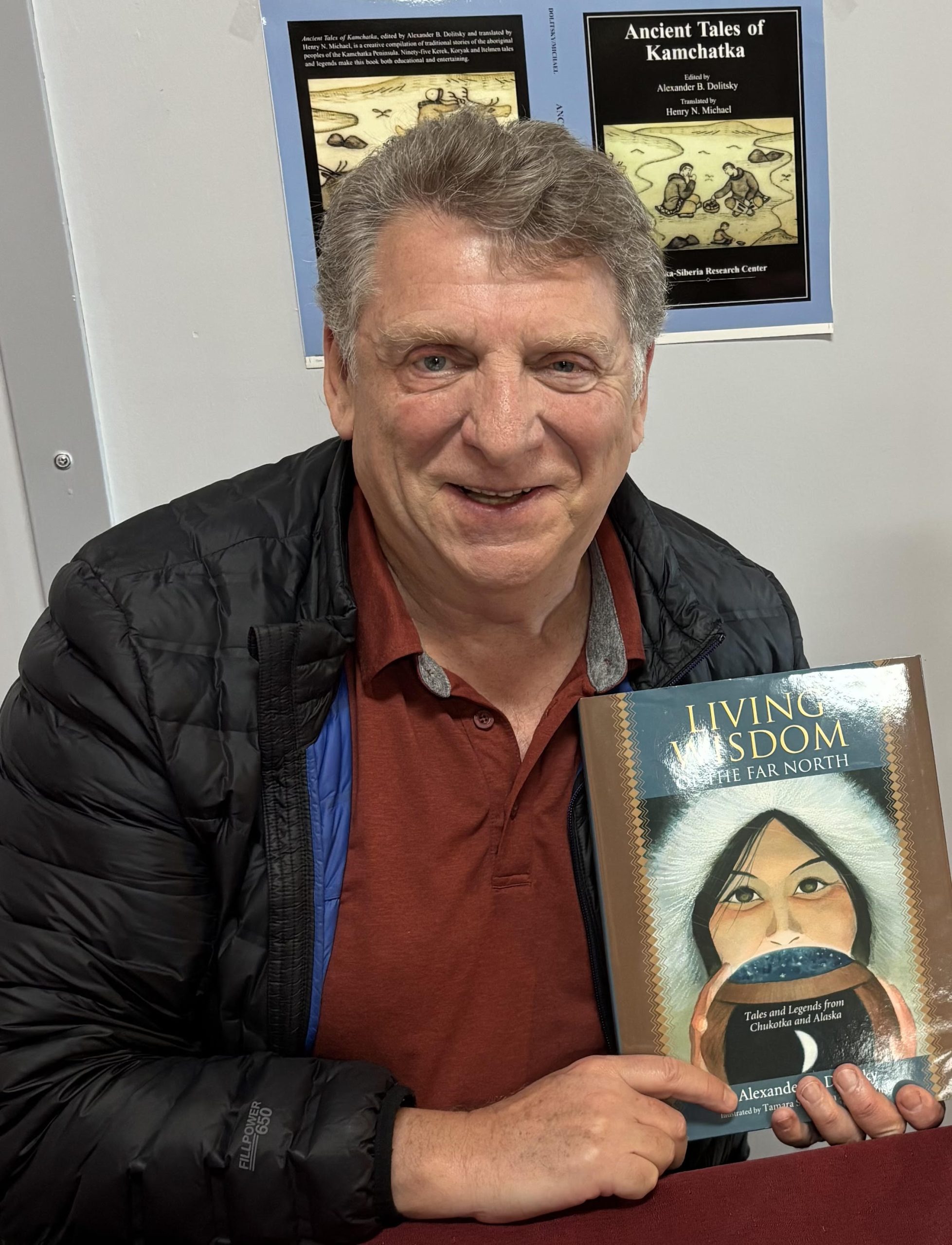
By ALEXANDER DOLITSKY
March 9, 2026 – A few years ago, I flew Emirates Airlines from Seattle to Thailand with a layover in Dubai (UAE). It’s a grueling 14.5-hour non-stop trek; and most of fellow passengers in this flight were headed to the Middle East or India.
My seatmate was a middle-aged Saudi man, and given the length of the flight, we eventually struck up a conversation. During our talk, he confidently told me that it’s only a matter of time before the entire world converts to Islam. “We have patience,” he concluded with pride.
“Not any time soon, my friend,” I replied, turning away from him for the rest of the journey.
Today, those of us who travel to Europe frequently, probably noticed a remarkable influx of Muslim population in West European countries, such as France, England, Germany, The Netherlands, Spain, etc. As a result of it, the demographic landscape of Western Europe is shifting, with a marked increase in Muslim immigrants and their families in major cities. This influx has prompted discussions about integration challenges, with many Muslim populations forming insular, tight-knit communities that coexist alongside within traditional European nations, rather than fully blending and assimilating into European Judeo-Christian social structures.
Before I left the ethnically homogeneous Europe for the United States in 1978, European nations were defined by distinct, traditional cultural identities: French in France, Italians in Italy, Germans in Germany, Danish in Denmark. Today, however, the continent is experiencing profound cultural disruption, with rising Islamic influence and Sharia law, creating a system that seems incompatible with traditional European values. This raises a crucial question: why has Europe undergone such a rapid and profound demographic shift and cultural transformation in just over half a century.
Historically, Islam has been a part of the Russian Empire for over 500 years, with significant populations in the Volga River region, Caucasus Mountains and Central Asia, making it the second-largest religion after Orthodox Christianity. Following the 16th-century conquests of Eastward territories, policies shifted from forced conversion to managed toleration by Catherine the Great in the 18th century, establishing the state-regulated Muslim authorities.
In fact, Islam in the Volga River region began with the official conversion of Volga Bulgaria to Islam in 922 AD, driven by Khan Almış to secure political independence and trade, preceding the total Christianization of Kievan Rus, a Slavic State along the Dnieper River in today’s Ukraine. It remains a major, historically rooted faith in the region, particularly among Tatars and Bashkirs in Tatarstan and Bashkortostan.
Islam established an early foothold in Caucuses Mountains, including Dagestan, Chechnya and Ingushetia during the 8th century AD. The Russian state began absorbing significant Muslim populations in 1552, marked by the Tsar Ivan IV’s conquest of Kazan in the south of European Russia.
During the 18th century, Russian policy toward Muslims shifted from coerced conversion to controlled tolerance. While pre-Catherine the Great policies favored forced assimilation, Catherine the Great implemented religious tolerance in 1773 and subsequently established the Orenburg Muslim Spiritual Assembly in 1788 to bring Islamic institutions under state regulation.
By the end of the 19th century, the Russian Empire boasted a significant Muslim population of 14–20 million, which had grown from a much smaller base, when the total Russian imperial population was around 35–40 million in 1800, reaching over 125 million by the 1897 census. The Tsarist government typically allowed Muslim communities to manage their own religious affairs autonomously, provided they maintained loyalty to the imperial authorities.
While some Muslim groups actively resisted Russian rule, others were absorbed into the imperial bureaucracy. During the late 19th century, Jadidism emerged as an intellectual movement advocating for modernization, educational reform and social renewal among Russian Muslims. Upon taking the throne in 1881, Tsar Alexander III adopted a Russification policy that increased persecution of Muslims, systematically pushing them to the fringes of Russian society.
Following the 1917 October Socialist Revolution, the Soviet state engaged in a systematic campaign to eradicate Islam, viewing it as an archaic and backward force to socialist modernization. Particularly, during the 1920s and 1930s, this policy included the Hujum (“attack” or “assault”) on women’s veiling, the widespread closure of mosques and the seizure of religious endowments. While theoretically allowing for freedom of conscience, the state actively worked to replace Islamic practices with state-sanctioned secular, socialist modernity.
In short, early Soviet anti-Islamic policy (1920s–1930s) involved aggressive state actions to dismantle religious foundations. This included abolishing Sharia courts, banning traditional schooling and launching campaigns against the paranja (veil).
Under Joseph Stalin ruling, the 1930s saw a brutal crackdown on Islam, with thousands of mosques closed and many clergy executed or jailed. However, in 1943, Stalin shifted tactics to gain wartime support, establishing a state-controlled Islamic hierarchy to monitor believers and project a false image of religious freedom to the world.
Despite official repression, many Islamic customs such as circumcision and traditional marriage persisted underground, as the campaign failed to fully replace Muslim identity with Marxist-Leninist ideology. While official state atheism remained, the repression was less intense after the Nikita Khrushchev era (1953-1964). Local authorities in Muslim republics sometimes turned a blind eye to unregistered religious activities.
In short, Soviet policies created a split, where central authorities deemed Islam as a threat, yet it remained deeply embedded in local culture, resulting in a persistent, low-level conflict rather than total erasure. During my 1973 archaeological work in the Soviet Central Asia (Uzbekistan and Turkmenistan), I observed that Islam was practiced openly and proudly, deeply intertwined with traditional values.
Western nations must now consider examining historical Russian and Soviet strategies for managing Muslim populations and integration as they navigate current, large-scale Muslim migration into traditional Judeo-Christian societies. This approach suggests analyzing past Eurasian methods of dealing with Islamic communities to inform modern policy in Europe and Americas.
Americans and Europeans policy makers and scholars should investigate how the historical Russian and Soviet approaches to Islam can inform strategies for managing the current, intense migration of Muslims into Western nations. As Western nations face high levels of Muslim immigration, they should consider adopting lessons from the historic Russian and Soviet experiences in managing Islamic communities.
Indeed, today’s Western leaders need to analyze the Russian and Soviet historical models for dealing with Islamic populations to better manage migration into traditional Judeo-Christian societies, navigating security implications and addressing the challenges posed by increased migration in Europe and the United States.
The author was born and raised in the former Soviet Union before settling in the U.S. in 1978. He moved to Juneau in 1986 where he taught Russian studies and Archaeology at the University of Alaska Southeast, and Social Studies Teacher at the Alyeska Central School of the Alaska Department of Education. From 1990 to 2022, he served as a director and president of the Alaska-Siberia Research Center, publishing in the fields of anthropology, history, archaeology and ethnography. Find him on Amazon.com.
Alexander Dolitsky: Greenland’s future in geopolitics, resources, and sovereignty
Alexander Dolitsky: Assimilating to the dominant culture is a vital requirement


One thought on “Alexander Dolitsky: The new mosaic of Islam and the future of Western democracy”
How about this: whites occupy 15% of the earth’s landmass. How about they stay home and fix their own problems on the other 85%?
I didn’t buy a pricey home in a nice neighborhood with little crime only to hear blaring and wailing from a loudspeaker, reports of school girls being raped, and Sharia law governing my life. That’s the goal of every Muslim per the Quran.
There, I said it.