


By ALEX GIMARC
REAP, the Renewable Energy Alaska Project, has been at the forefront of pushing renewable energy on a mostly uninterested, unknowing, uninformed general public for a couple decades. Most recently, they’ve managed to elect a majority on the Chugach Electric Board of Directors. Oh, joy.
In a fairly reasonable acknowledgement of reality, they have backed off a bit on their push for massive wind and solar generation projects in Southcentral Alaska. Part (or most) of it is the evaporation of renewable energy grants under the Trump administration. No free money, no 100+ MW renewable project which is a blessing for those of us interested in affordable, reliable electricity.
REAP Executive Committee member Jim Nordlund still on the Chugach Board, happily wearing two other REAP hats including Individual At-Large Constituency and a member of their Public Policy Committee. Kind of makes you wonder which master Jim is serving.
It appears REAP’s strategy shifted with the political tides. As REAP is no longer able to score massive renewable energy project grants from the feds, they’ve changed their strategy to a number of small renewable energy projects, all supposedly demanded and celebrated by Chugach members, a metric more demonstrative of the REAP’s persuasion prowess than its ability to deliver reliable, affordable, energy.
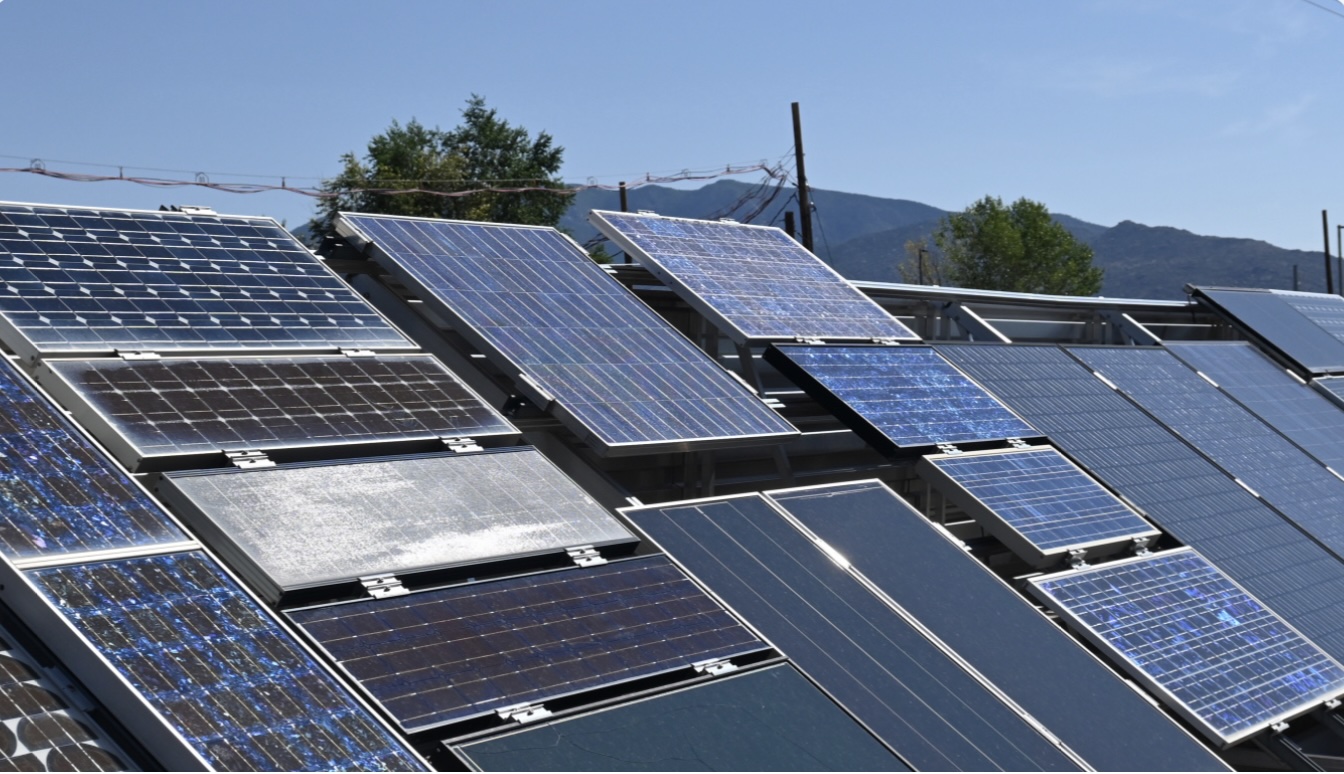
The problem is that there is a renewable energy legacy here, as REAP was in the middle of Mayor Berkowitz’ installation of solar arrays on the roof of the Egan Center in 2019. The $200,000, 77kW project was promised to save perhaps 9% of the Egan Center’s energy needs yearly, $700,000 over the undefined lifetime of the projectand untold amount of carbon emissions over that period. How much did it actually pay back? Berkowitz claimed payback of a $200,000 solar panel installation cost over 7.5 years, about $27,000 / year.
Well, we are a mere six years later and how are we doing? Nobody knows. Nobody cares. Mayor Bronson cut the two Berkowitz renewable energy positions in the Municipal government, Chugach and ML&P merged, and the best I can find out, nobody tracks Egan Center generation anymore. A project that was supposed to pay for itself in a mere 26 years is no longer even tracked, which may be a feature rather than a bug.
Following that debacle, the REAP majority on the Chugach Board is still installing multiple new small solar generation projects, the most recent of which is a 10 MW, $26.4 million project at Beluga, west of Tyonek. Construction is scheduled to begin July 4, 2026, with the project operational a year later. As usual, they promise “a negligible rate impact.”
There are at least three other Chugach solar projects. These include a 500 kW, 1,560 panel array at the Retherford Substation, two 75 kW arrays at the Sullivan Power Plant, and a 164-kW array on the roof of their new engineering building.
How are these performing? Nobody knows. Nobody cares.
Well, we ought to care, as every single watt of renewable energy introduced into the Railbelt grid without storage makes the overall grid more unstable and unreliable, not to mention more expensive. And storage is never part of any of these projects.
One of the things we were promised with Fire Island Wind was a real time view into generation. That was available for a time, but ended on the Chugach web site several years ago. Today, the only insight is from Chugach RCA filings so graciously provided by Chugach Electric Association PR. Fire Island Wind is producing around 32% of its installed capacity.
Capacity factor for primary generation is an important number, as it defines how much generation is needed to keep the lights on. Those numbers are available nationwide for various types of electrical generation. In these terms, nuclear energy is best at around 90%. Natural gas, which is the primary generation for the Railbelt is around 60%. Big hydro (think Watana dam, Cooper Landing, or Southeast) is location dependent, averaging around 40%, though ranging 10 – 90+%. Wind generation is around 35%. Solar is the worst choice at all at 25%. Here in Alaska, solar is even worse, as not only does it fail to generate electricity when it is dark, but it also fails when there is any snow, ice or frost on the arrays. Note that solar is a particularly poor generation choice for Alaska, as it produces best when the need for electricity is lowest.
No generation data exists for any of the solar projects, nor should we expect to see that data. In my experience, when you hide the data, you are hiding the truth. I guarantee you that if Nordlund, the Chugach Board, REAP or any one of the public funding jackals of the renewable energy world were proud of the performance of their shiny new renewable energy projects over time, we would be seeing those results broadcast far and wide on a 24/7 basis. Shoot, they can’t (and won’t) even tell us how the array on top of the Egan Center has worked for the last 6 years.
If REAP were truly proud of their efforts other than electing a suitably supportive Utility Board majority, they would have put up some sort of a dashboard with a performance history. That they haven’t bothered nor been demanded to by their Utility Board majorities tells us everything we need to know about both.
If solar is good, tell us, show us, convince us using actual performance data over time (Egan and Fire Station 10 data is a good start). That REAP has done none of these should tell us everything we need to know about who they are and what they exist to do. Hint: It doesn’t have anything to do with saving money, carbon emissions, or reliably keeping the lights on.
Keep that in mind for the next utility board election. By the time the lights go out, it will be too late.
Alex Gimarc lives in Anchorage since retiring from the military in 1997. His interests include science and technology, environment, energy, economics, military affairs, fishing and disabilities policies. His weekly column “Interesting Items” is a summary of news stories with substantive Alaska-themed topics. He was a small business owner and Information Technology professional.
Alex Gimarc: A place of quiet corruption, as evidenced by the city seal switcheroo


5 thoughts on “Alex Gimarc: REAP, Chugach and solar energy that has an unknown, unquantified benefit”
These things I have wondered about. Thanks
If you take the money you stupidly think of investing in solar, and instead invest that money in the stock market, you will be way ahead.
Alex, keep up the pressure and thx for the info! No one seems to care about the board elections or any other elections, for that matter. The data should be out there for us all to see, not just the monthly charge we still pay for fire island windmills.
MEA was back slapping each other about the Federal financed Solar Panel array they installed in Houston. This was two years ago during the winter from Hell. Living close to downtown Eagle River, we had 8 power outages that winter.
I wrote a letter to MEA about the importance of Reliable Power not Renewable Power.
For the last 25 years our Bush cabin has had solar panels, batteries, and a generator. Why we choose this expensive power plan is because it was cost effective. We cut our generator run time by 50%. My family has More experience than any Utility in Alaska by far on renewable energy.
Simple Fact.
Only a fool would proclaim solar panels as a source of energy during the dark months of Alaska. So the amortization cost of the solar panels are negated in the light months in Alaska by the inability to store solar energy. Storing energy comes a great cost, batteries all have a common issue, so many cycles, then they have to be replaced.
In 25 years we are on our third set of batteries. An issue that the Climate Commies NEVER talk about. It blows the costs sky high.
You want clean energy build Hydro.
Suzanne please contact Alaska Energy Authority about the expansion of the Bradley Lake electrical output. Bradley lake is currently operating at 70% output. Why, Transmission of the Power is the issue. The infrastructure is NOT in place to transmit the Power. This is an exciting project that will impact the entire Railbelt. Plus it will provide reliable power.
Blows me away that the Utility Leadership in South Central Alaska are so fixated on Solar Panels built in China. I say follow the money, when it does not make sense, It is corrupt.
Good recap, Alex. I remember other electrical energy adventures: Healy Clean Coal, Cook Inlet tidal power – both dam and run-of-tide, and run-of-river hydropower at Nenana and Galena (I think). All these fade into obscurity, and we use the systems proven by decades of service. Yup, powered by fossil fuel. Reliable, but will eventually run out. In my mind, lets get real and invest in nukes and serious hydropower like the Susitna Hydroelectric Project.