


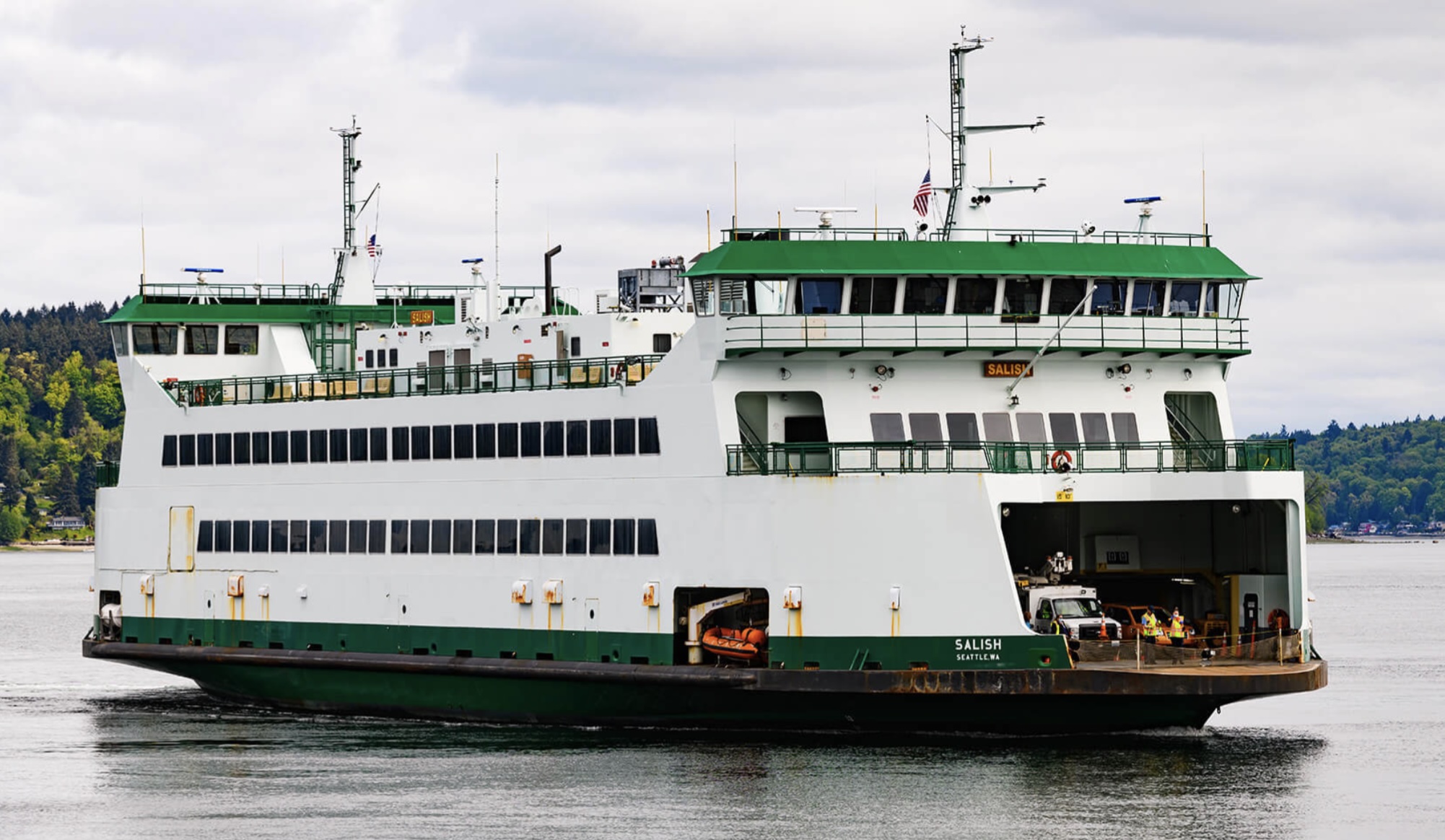
One out of three of Washington State’s ferry fleet is offline for maintenance, and the disruption now rippling through Puget Sound is the outcome of years of political choices that favored climate symbolism and experimental conversions over routine maintenance and timely replacement of ships that actually carry people to work.
According to reporting by the Seattle Times, seven of the 21 vessels operated by Washington State Ferries are currently out of service. The result has been canceled sailings, reduced schedules, and service levels that resemble the depths of the pandemic rather than a functioning transportation network in a growing region. For commuters who depend on ferries as a marine highway, the breakdown is immediate and personal.
The causes, however, stretch back years. Washington’s fleet now averages more than four decades in age. Propellers have sheared off, shafts have overheated, and engines have failed. While core upkeep lagged, Democratic leaders in Olympia poured time, money, and political capital into battery-powered and hybrid-electric ferry projects that were pitched as the future of green transportation.
The conversion of the Wenatchee has become a case study in those misplaced priorities. What was initially sold as a roughly $50 million, one-year hybrid-electric retrofit ultimately ballooned to about $86 million and stretched close to two years, according to the Seattle Times. During that time, the system lost badly needed capacity. Even after returning to service, the vessel has already spent additional time sidelined. The project delivered headlines and climate credentials, but not reliability.
The lesson unfolding in Washington matters well beyond Puget Sound, including in Alaska, where similar policy debates are playing out.
US Sen. Lisa Murkowski has been a vocal supporter of federal funding for electric and low-emission ferries, instrumental in securing provisions in the 2021 Infrastructure Investment and Jobs Act that set aside $2.5 billion nationwide for ferry programs, including a $250 million pilot program specifically for electric or low-carbon vessels. The law was written to ensure that at least one pilot project would go to the state with the most Marine Highway System miles, effectively prioritizing Alaska, while not naming it specifically.
Murkowski has repeatedly pointed to examples overseas, such as Norway, where electric ferries operate successfully, and has argued that similar technology could modernize and increase ridership on Alaska routes.
In 2022, she highlighted the availability of hundreds of millions of dollars in ferry-related funding tied to electrification. Alaska subsequently received large federal awards, including roughly $285 million announced in 2023, which Murkowski credited to the infrastructure law she helped shape.
Yet as of January 2026, Alaska has no fully electric ferries in active service within the Alaska Marine Highway System. The state’s approach has been markedly more cautious than Washington’s. Planning documents updated in late 2024 outline a long-term strategy to build new hybrid ferries rather than leap directly into full battery-electric vessels.
In November, the Alaska Department of Transportation and Public Facilities announced additional collaboration on low-emission ferry concepts, emphasizing research, feasibility, and infrastructure readiness rather than immediate conversions.
Alaskans have cited cold-weather performance, long routes, and limited charging infrastructure as reasons to move slowly.
Washington’s crisis shows what happens when governments chase a “green legacy” without first doing the work of keeping an existing fleet seaworthy. Voters were promised futuristic ferries. Now they have canceled sailings and aging ships breaking down faster than they can be fixed.
14 thoughts on “A third of Washington state’s ferry system is offline as ‘green’ ferries fail, a warning for Alaska”
I fear that the new all-LGBTQ++ maintenance crews may not work as effectively or efficiently as the old, discarded, ugly cis-gender crews.
At least the lone school bus grant, amounting to $395K, in Wrangell was declined by the Public School District!
How many of these ‘green nude eel’ failures do people need to witness before they stop voting the morons that promoted this garbage back into office? The epic collision of these utopian wet dreams with reality must eventually break their way through the lifetime of lies and propaganda that so many citizens have trapped between their ears. Share these articles far and wide or our society will collapse under the gross weight of utter incompetence.
about 60% of alaska ferries are off line. Maybe Washington’s system is functioning better.
Ah, once again taking pleasure in other people’s pain. How very on-brand. The MRAK tradition lives on at Alaska Story (but it’s not really catching fire, is it?).
So that you know, our liberal governor has seen to it that we are purchasing sixteen new boats over the coming years, paid for in large part by our fares and taxes. We pony up, we pay our way, and we take care of ourselves.
And of course Washingtonians recently came to the rescue of the AMHS Kennicott which was rebuilt in Everett WA, Alaskans apparently not having the chops to do it themselves. Alaskans had let her slide into an unseaworthy state due to financial neglect, after starving their ferry system for years in the name of PFD greed.
Almost everything you folks have there comes up from us down here. And you call yourselves “fiercely independent”, living on the “Last Frontier”. What a joke.
“Almost everything you folks have there comes up from us down here. And you call yourselves “fiercely independent”, living on the “Last Frontier”. What a joke.”
Now who is deviously taking pleasure in other people’s pain?
Newsflash it isn’t like Washington state is all that self-reliant either, considering the oil that drives your industry comes from up north (at least 35%), as last I checked WA is not connected to the vast pipeline network and relies on local (speak mostly Alaskan/Canadian) crude oil to fuel refineries in the state. You can stuff your imperialistic attitude, without the Jones Act WA would be just another backwater!
Besides I bet you could not hack it up here in Fairbanks, Dillingham, Healy, Nome or Bethel etc. one winter.
Lived there 35 years. I have my Alaskan bona fides.
That’s nice and???
Since you declare allegiance to being a Washingtonian mocking those, who make it work in the frozen north, why should we paid any heed in your ramblings?
Because I’m still an Alaskan at heart, andI still have significant financial interests in the State.
Nice try!
I always “love” those “Alaskans at heart”. They like the idea, but live in some nice warm suburb in the lower 48 or abroad, lecturing those freezing their fannies off while dealing with 90 mile an hour winds, on how to run their lives and the state! Please!
“…. significant financial interests in the State.” Meaning you are getting a state pension or retirement…got it!
Like your fake name,lifted from a,long deceased dissident from the National Socialists
Whidbey the Dog by a new name, and still only knows the same old tricks.
FYI, The WA state Ferry System currently has only one hybrid electric boat, the MV Wenatchee. It entered service last summer, and is currently functioning very well in service. Your article is (intentionally) misleading.
And BTW, my nice little electric car continues to perform marvelously and I love it. Economical, maintenance-free, clean. But don’t get one in Fairbanks.
Here is an article I wrote in 2012 about the Washington Ferry System
https://swensonfamilymember.blogspot.com/2012/08/it-is-time-to-create-separate-public.html The Washington Ferry System is a division of the Washington State Department of Transportation did not become a state property until Black Ball Transit went bankrupt in 1951. The State of Washington bailed the company out of bankruptcy in 1952. They only operate one route now the Port Angeles to Victoria route which requires a passport since September, 11, 2001. I suggested you make the ferries a separate agency so they do not have to compete for funds with roads and you may have been paying a toll on State Rte 520 bridge over Lake Washington and the money goes to a ferry boat. This agency is about as bad as Washington State Department of Social and Health Service too bad of agency to govern