


By SUZANNE DOWNING
July 18, 2026 – For the first time in 12 years, Alaska voters will receive a state-produced pamphlet explaining a ballot measure appearing in a statewide election.
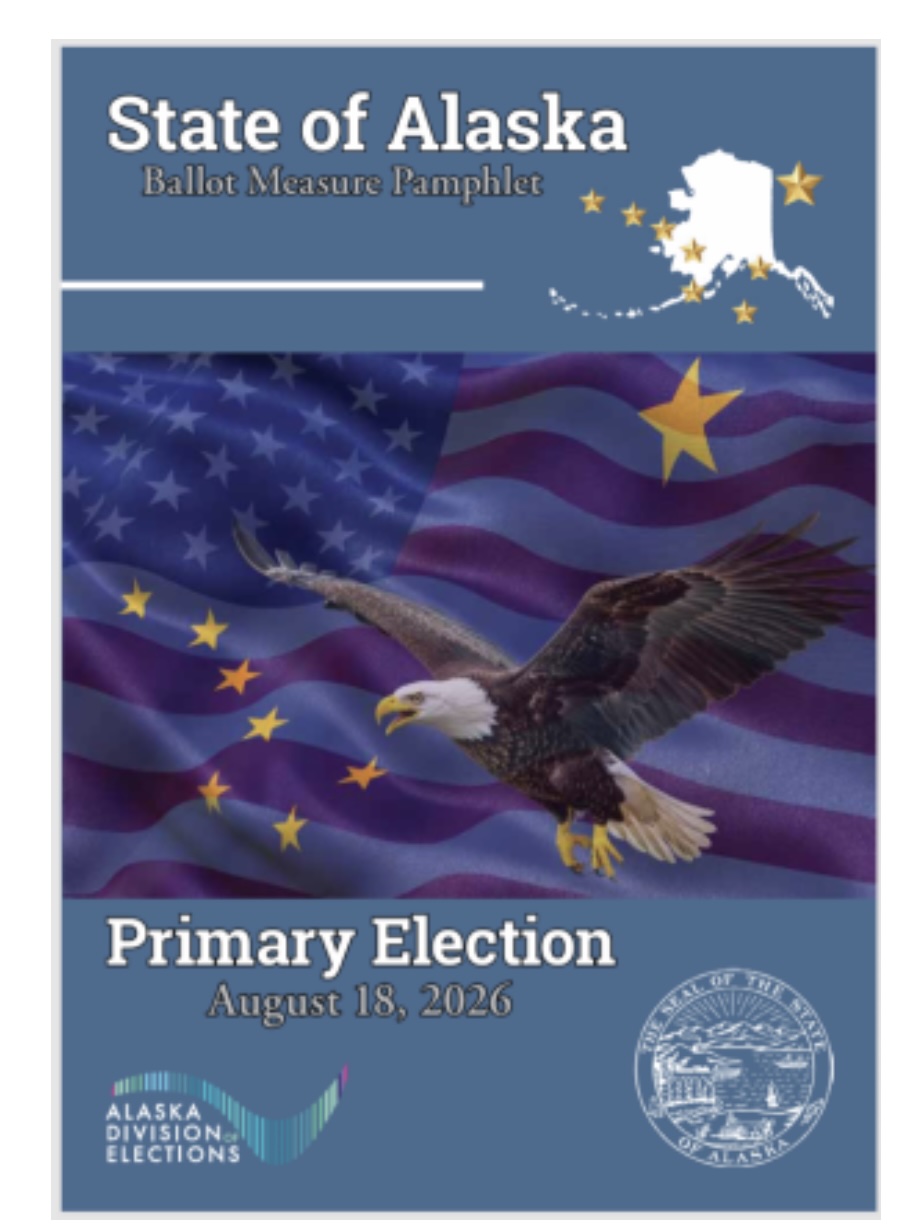
The Alaska Division of Elections is publishing a Ballot Measure Pamphlet for the Aug. 18 primary election and plans to mail an English-language copy to Alaska households later this month.
The last time the division issued such a pamphlet was in 2014. That means an entire generation of younger Alaska voters — along with thousands of residents who have moved to the state since then — has never received one.
The new pamphlet focuses on Ballot Measure 1, formally known as 23RCF2. The citizens’ initiative asks voters whether Alaska should restore limits on contributions to campaigns for state and local office.
Alaska currently has no enforceable dollar limits on contributions made directly to candidates following a 2021 federal appeals court ruling that struck down the state’s previous limits.
If approved, Ballot Measure 1 would establish new limits based on each election cycle rather than each calendar year. Among other provisions, an individual could contribute up to $2,000 to a candidate during an election cycle. A group that is not a political party could contribute up to $4,000 to a candidate, while an individual could give up to $5,000 annually to a political party.
The proposed law contains additional limits governing donations among candidates, groups and political parties. It would also require the Alaska Public Offices Commission to adjust certain limits for inflation beginning in 2031.
Supporters are leading Democrat operatives who argue that limits reduce the potential influence of large donors and help prevent corruption or the appearance of corruption. But they carve out exceptions for unions, which are some of the biggest players in Alaska election finance.
Others say contribution limits restrict political speech and favor wealthy candidates who can finance their own campaigns, and make it more difficult for challengers to compete with incumbents.
The pamphlet presents both sides. It includes the ballot language voters will see, a neutral summary prepared by the supposedly non biased Legislative Affairs Agency, a statement describing the measure’s anticipated costs, the full text of the proposed law and statements submitted in support of and opposition to it.
According to the fiscal information included in the pamphlet, the state expects one-time implementation costs for updating campaign-finance systems, regulations and public information, along with the costs associated with enforcing the new limits.
The initiative’s sponsors received notice from the lieutenant governor’s office on Oct. 17, 2024, that the petition had been properly filed.
Under Alaska law, a properly filed initiative appears at the first statewide primary, general or special election held after the Legislature has convened and adjourned, provided at least 120 days have passed since adjournment. Those timing requirements placed Ballot Measure 1 on this year’s primary ballot.
In addition to explaining the measure, the pamphlet serves as a general guide to the 2026 primary election. It contains information about absentee voting, polling places, voter assistance and election materials offered in Alaska Native languages.
Beginning Aug. 3, Alaskans may vote at absentee voting sites. Designated regional locations will have ballots available for all 40 Alaska House districts, while many other absentee voting sites will carry ballots for the House district in which the community is located.
Voters should check before traveling to an absentee site if they need a ballot from another part of the state.
The pamphlet also explains absentee voting by mail, special-needs voting, assistance for voters with disabilities, procedures for military and overseas voters, and language assistance available in certain communities.
Polls will be open from 7 am to 8 pm on primary Election Day, Aug. 18. Voters who are in line when the polls close at 8 p.m. are still permitted to vote.
Printed pamphlets will be available at Division of Elections regional offices and legislative information offices around the state. Translations will be available in certain Alaska Native languages.
The complete 2026 Alaska Primary Election Ballot Measure Pamphlet is also available on the Division of Elections website. A list of absentee voting locations will be posted and updated by the division.



5 thoughts on “Alaska revives ballot measure pamphlet for first time since 2014”
WTF? Is there any mention of ballot measure 2 in there? If not, it’s an absolute fail!
Ballot Measure for RCV will be in the General Election in November.
.
Thank you for posting that link to the web site for the BMP file. I’m not going to be back in AK in time to vote in person or get a copy of this otherwise. You’re a jewel!!
Okay, Suzanne is the jewel!! 💎💎
Got my pamphlet this morning
Why was this pamphlet not printed by an Alaska printing enterprise; Portland, Oregon in someone’s pocket?