

By PAULETTE SIMPSON
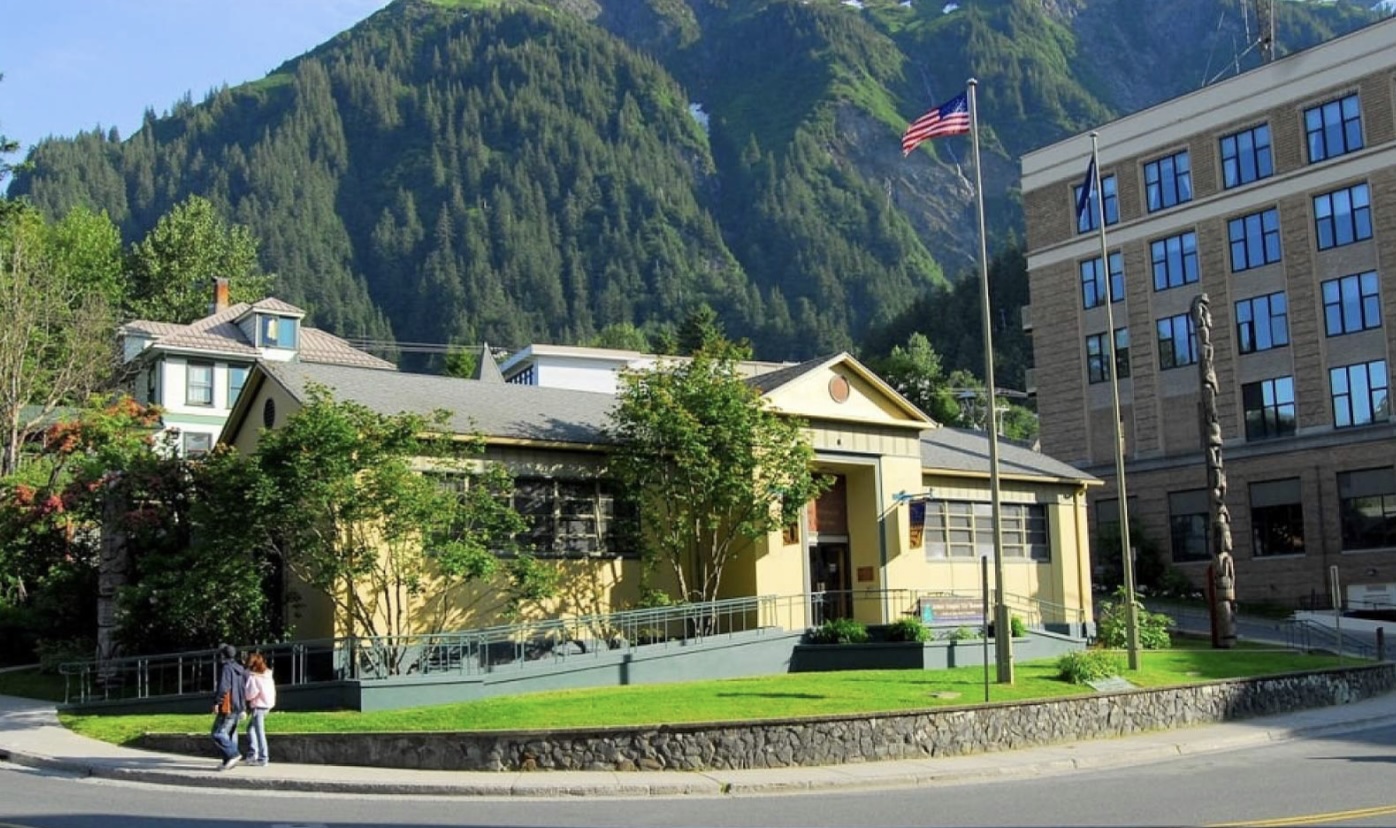
June 15, 2026 – Recent actions by the Juneau Assembly reflect a dispiriting trend among our elected officials. Two items are especially concerning: the cancellation of local history, as evidenced by the de-funding of the Juneau-Douglas City Museum, and the Assembly’s continued reluctance to embrace outside investment in our community.
We don’t seem to have $261,000 available to keep our City Museum operating, yet we have spent more than $600,000 on Portland consultants to plan the demolition of our historic Telephone Hill neighborhood. That’s crazy!
The dismantling of the City Museum means that current and future generations will never know our community’s origin stories, nor will they appreciate what it takes to build and sustain a community.
And that history teaches a vital lesson: virtually every major chapter in Juneau’s development was made possible by people willing to invest their capital here.
Local history provides ample evidence.
Most people know that the founding of the Juneau and Douglas communities was the result of the 1880 gold discoveries on both sides of Gastineau Channel.
In 1882, John Treadwell, along with five San Francisco bankers and “mining men” formed the Alaska Mill and Mining Company. They invested $10,000 in the Douglas Island enterprise, dug a tunnel, and purchased the five-stamp mill (now owned by the Juneau-Douglas City Museum) that still stands near the Sandy Beach log shelter.
In 1889, Treadwell sold his interests in the mine to a consortium of investors, including the Rothschild brothers of London, who formed the Alaska Treadwell Gold Mining Company. To raise funds for expansion, the new owners listed the stock on the Paris and London stock exchanges, to provide the capital needed to enlarge the mine.
Between 1882-1922, five stamps grew to 960, and the Treadwell Mine became the largest hard-rock gold mine in the world at the time. The operation drew the best and brightest from around the globe and had no equal in terms of state-of-the-art mining technology and annual gold production.
Business boomed on both sides of the Channel and by the beginning of 1909, 1,900 men were on the Treadwell payroll.
That initial $10,000 investment by San Francisco interests financed Alaska’s first major development project. The external capital was critical and became the catalyst for job creation, infrastructure development and wealth creation. This led to the establishment of the Treadwell and Douglas communities in an area that, until 1880, was isolated and largely uninhabited.
The Treadwell Mines have been closed for over 100 years, yet Douglas has endured, and descendants of many pioneer mining families continue to reside in our community.
Tourism, too, features prominently in Juneau’s economic history. The same steamships that carried miners, equipment and supplies also brought visitors to view the gold rush. And thank goodness they’re still coming, as their outside dollars annually account for 25% of Juneau’s sales tax revenue and over $22 million in head tax revenue and surplus dockage fees.
For the past 25 years Juneau has suffered from stagnant growth, declining school enrollment, and a growing backlog of deferred maintenance. The only antidote is growth, but to grow, we need investment – and leaders who understand and appreciate what history can teach us.
Opportunities abound. Huna Totem has been trying for years to build its dock downtown. It’s a multi-million-dollar investment in Juneau that has taken five years to get the green light to proceed. Goldbelt seeks to invest millions more in new dock infrastructure on its ancestral land in West Douglas. Grand Portage Resources Ltd. wants to develop its New Amalga Gold project as Alaska’s next underground gold mine.
Sadly, all these projects have encountered suspicion, resistance, and delay.
Surely the Assembly knows that our two operating mines – Greens Creek and Kensington – are Juneau’s top two private-sector property taxpayers. The minerals those mines produce bring investment, innovation and stability to our community. Yet in another misguided sales tax decision, the Assembly just made it more difficult and expensive for them to operate here. Why?
Knowledge of local history can help cure the economic illiteracy that is stifling the full flowering of Juneau’s potential. Keep the Museum open. Recognize that mines, dock developers, and business owners are our Assembly’s most valuable partners. They invest their own money to bring outside money into Juneau – not to enrich people in Portland – but to secure a safe, affordable, and sustainable Juneau.
Paulette Simpson is a longtime Douglas resident.

6 thoughts on “Paulette Simpson: Assembly elves shelve local history”
They simply MUST erase all history before their glorious seizure of Power. Nothing else is important,lest some of the peasants feel that they could survive without the Assembly’s divine leadership
Stupid response. Pay attention.
It is very important to ensure nobody knows Juneau was founded as a mining district. Cheers –
Cool thing about the city museum is it doesn’t over stretch. Its focus is Juneau, not broader Alaska $261,000? Damn, that amount gets lost in the rounding. If they do close, the objects and photos and documents won’t be lost, but they will be farmed out to the state museum which is likely understaffed to process it all. Delays and staff hires and complications and collections management will cost Alaskans a lot more than $261,000.
History is NOT a renewable resource.
Another reason not to be government dependent
Another reminder for only having a 280,000budget
There are churches that collectover 1,000,000$ in Tithes which is just donations.
Juneau’s city museum can get the same support from its millionaire residents donations.
To be honest I wouldn’t mind seeing what Suzanne Downing receives monthly and yearly in donations to Alaska Story
You get the point!
No group today no one needs government money like they think
Juneau’s tourism growth has not resulted in any growth for Juneau. In 2001 we had 719,000 cruise tourists. 25 years later it should be around 1.9 million.
Our 2001 population was about 30,500. Our 2026 population is 31,500.
Correlation is not causation, but it would appear that the tourism industry does not have a year round permanent impact on Juneau’s economy.