


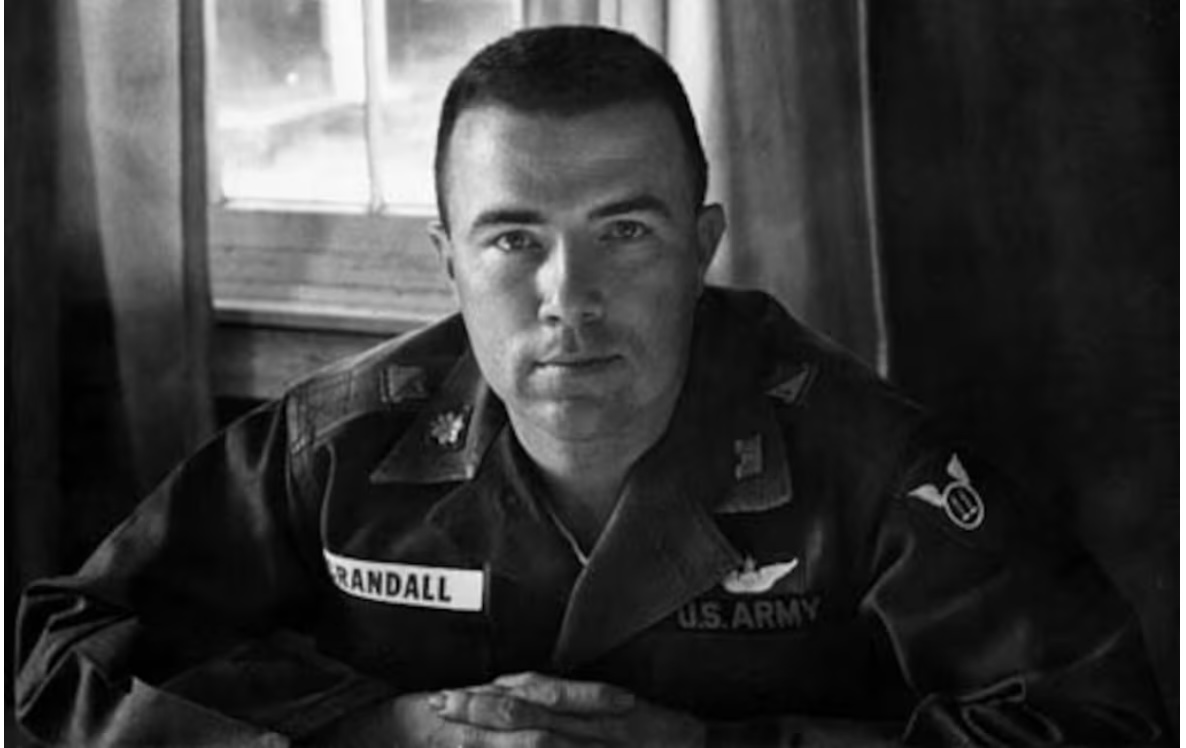
‘We Were Soldiers Once … and Young’ chronicled Crandall’s heroism in Vietnam
By SUZANNE DOWNING
June 4, 2026 – Retired Army Lt. Col. Bruce Crandall, one of America’s most revered combat aviators and a Medal of Honor recipient whose heroism during the Vietnam War was immortalized in the book We Were Soldiers Once … and Young and the film We Were Soldiers, has died at age 93.
Crandall passed away peacefully on May 31 at his residence in Tempe, Arizona, according to the Congressional Medal of Honor Society. His death leaves just 63 living Medal of Honor recipients nationwide.
While Crandall is best known for flying repeated rescue and resupply missions into the deadly Battle of Ia Drang in 1965, his military career included an often-overlooked Alaska chapter that helped shape the skills and courage that would later define his battlefield legacy.
After being commissioned as an Army officer in 1954 and completing flight training, Crandall’s first assignment placed him with a topographical mapping unit based out of the Presidio in San Francisco. As part of the Army Corps of Engineers’ Cold War-era mapping efforts, he flew Cessna L-19 Bird Dogs and de Havilland Canada DHC-2 Beaver aircraft across Alaska, conducting aerial surveys of some of the territory’s most remote and rugged landscapes. This assignment lasted 10 years.
At a time when much of Alaska remained sparsely mapped and difficult to access, Army aviation units were conducting critical topographic studies to support military planning, infrastructure development, airfield evaluations, and Arctic defense preparations. Crandall’s flights took him over tundra, mountains, glaciers, and vast stretches of frontier wilderness, often in unforgiving weather conditions.
The demanding Alaska missions were part of a broader military effort to better understand America’s northern frontier during the height of the Cold War. They also helped develop the flying skills and decision-making that would later serve Crandall in combat.
A decade later, those skills would be tested in one of the most famous battles of the Vietnam War.
Read more about Bruce Crandall at this Department of War link.
On Nov. 14, 1965, then-Maj. Bruce Crandall led a formation of helicopters carrying troops into Landing Zone X-Ray in the Ia Drang Valley. The battle became the subject of the bestselling book We Were Soldiers Once … and Young by Lt. Gen. Hal Moore and journalist Joseph Galloway.
As North Vietnamese forces surrounded American troops and enemy fire intensified, helicopters were ordered to stop flying into the landing zone. Crandall recognized that soldiers on the ground desperately needed ammunition and that wounded troops were trapped under heavy fire.
Although medical evacuation and resupply missions were not part of his assigned duties, Crandall volunteered to continue flying.
Over the course of the battle, he repeatedly landed his unarmed UH-1 Huey helicopter in the combat zone, delivering ammunition and evacuating wounded soldiers despite relentless enemy fire. By day’s end, he had completed 22 flights into the embattled landing zone.
His actions saved countless lives and inspired other pilots to continue flying missions into the fight.
For those actions, Crandall received the Medal of Honor in 2007 from President George W. Bush, more than four decades after the battle.
Crandall’s wartime service extended beyond Ia Drang. He flew more than 900 combat missions during two tours in Vietnam. During Operation Masher in 1966, he was credited with helping rescue 12 wounded soldiers under fire. After surviving a helicopter shoot-down in 1968 that left him seriously injured, he recovered and continued serving until retiring from the Army as a lieutenant colonel in 1977.
“Once arriving in-country, then-Maj. Crandall took charge of the 229th Assault Helicopter Battalion, the first major division operation of airmobile troops. He was well-respected by his soldiers, who gave him the nickname “Old Snake” — derived from his call sign, which was Ancient Serpent 6,” writes the Department of War. “On Nov. 14, 1965, Crandall’s flight of 16 helicopters took troops on a search-and-destroy mission from an area called Plei Me to Landing Zone X-Ray, a remote spot in the Ia Drang Valley.
“On his fifth trip into the valley, the enemy had targeted the site. As Crandall and eight other unarmed helicopters landed to drop off troops, they came under such intense enemy fire that the ground commander ordered the other helicopters to abort the mission.
“As Crandall flew back to his base of operations, he realized that the men who were now surrounded at Landing Zone X-Ray desperately needed more ammunition than they had. So he took it upon himself to help: He adjusted his base of operations to Artillery Firebase Falcon, which was closer to the besieged site. Then he gathered volunteers to help him deliver ammunition to the trapped soldiers and evacuate the wounded. It wasn’t his mission, but he couldn’t stand by while the men on the ground were suffering.
“Despite the heavy enemy fire, Crandall and another helicopter piloted by Maj. Ed Freeman, flew back to Landing Zone X-Ray, delivered much-needed ammunition and began loading their choppers with seriously wounded soldiers. Crandall did that flight 21 more times throughout the rest of the day and into the evening, only stopping once. He knew that he had done all he could for the battalion on the ground.
“Crandall’s decision also offered a necessary morale boost at a pivotal time. The pilots around him saw what he was doing and were inspired to land their own aircraft to help. Conversely, the soldiers on the ground realized they weren’t alone in the fight: They had more supplies coming and a team to evacuate their wounded.
“Crandall and Freeman were credited with evacuating about 70 wounded soldiers that day. Both men earned Distinguished Service Crosses for their actions.”
His decorations included the Medal of Honor, Distinguished Flying Cross, Bronze Star, Purple Heart, 24 Air Medals, and numerous other military honors.
Yet friends and fellow veterans often said it was not his battlefield heroics that defined him most.
According to the Congressional Medal of Honor Society, Crandall will be remembered for “the warmth of his wit, the depth of his humility and the fierce loyalty he gave to the people and communities he loved.”
Even after retirement, he remained active in veterans’ organizations, Army aviation events, and Medal of Honor programs. He frequently emphasized that the medal belonged not to him alone but to the soldiers who fought alongside him and especially to those who never came home.
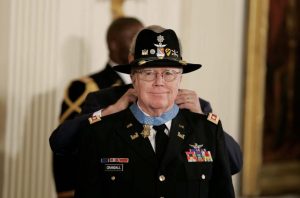
For Alaskans, Crandall’s story carries a unique connection. Long before he became one of the most celebrated helicopter pilots in military history, he was flying low over Alaska’s vast frontier, helping map a territory that was still years away from statehood.
The young Army aviator surveying Alaska’s mountains and wilderness in the 1950s would eventually become one of the most legendary combat pilots in American history — and one of the last surviving links to the generation whose sacrifice was captured in We Were Soldiers Once … and Young.
The Vietnam Helicopter Pilots Memorial Bridges cross the Matanuska River at Mile 30.4 of the Glenn Highway, just northeast of Palmer. They were officially dedicated in 2021 and honor the service, sacrifice, and combat testing conducted by American helicopter pilots during the Vietnam War. The legislation (HB 34) was sponsored by former Navy SEAL Rep. Laddie Shaw, who retired from the Legislature in 2025.
With Crandall’s passing, another chapter closes in the story of one of America’s greatest generation of warriors, a chapter with a strong tie to Alaska.


3 thoughts on “Alaska link to legendary Medal of Honor recipient Bruce Crandall remembered after his death at 93”
These were brave men……and heros. Not the girly boy, wannabees of today. A freedom fighter who knew that communism and the ones who advance it under the thin veil of collectivism are the real enemy, foreign AND domestic. God bless you, sir, for helping keep our great country safe.
Rest in Peace to a true American hero.
Wow! Such an amazing life story! Sadly there are not as many of that caliber today as there once were.