


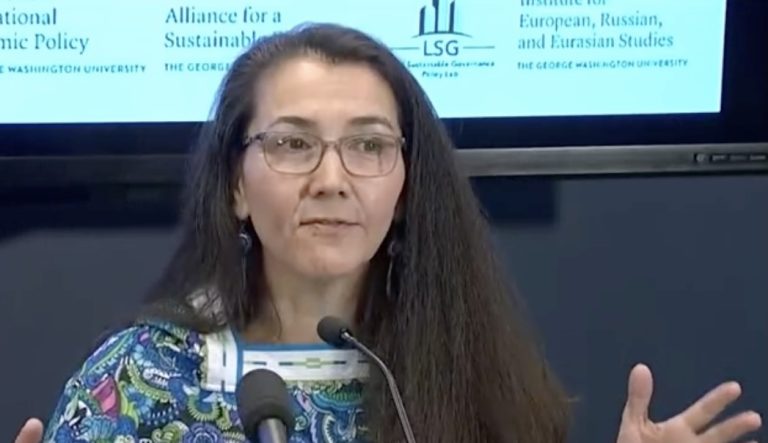
By BARBARA HANEY
May 15, 2026 – The conference committee in Juneau is haggling over whether Alaskans get $1,150 or $1,500 in their PFD check this year, a difference of $350. Meanwhile a state transportation program is quietly writing checks against the maintenance budget that will cost $2 million per year by 2035. No legislator authorized it. No OMB reviewed it. Nobody in that building knows it’s happening.
Here is the mechanism.
When DOT&PF converts a rural stop sign to a roundabout, the new intersection costs roughly $45,000 more per year to maintain than the one it replaced, permanently. Roundabouts need specialized winter clearing, high-friction surface treatment replaced on a cycle, and more sand and deicer on every storm event.
In Fairbanks at −40°F, with 57 snow events a year, that is not a rounding error. Over 20 years at a standard 3% discount rate, that is $675,000 in present-value obligations per intersection, created by a program-level engineering decision, locked in for the life of the concrete, and invisible in every budget document the Legislature sees.
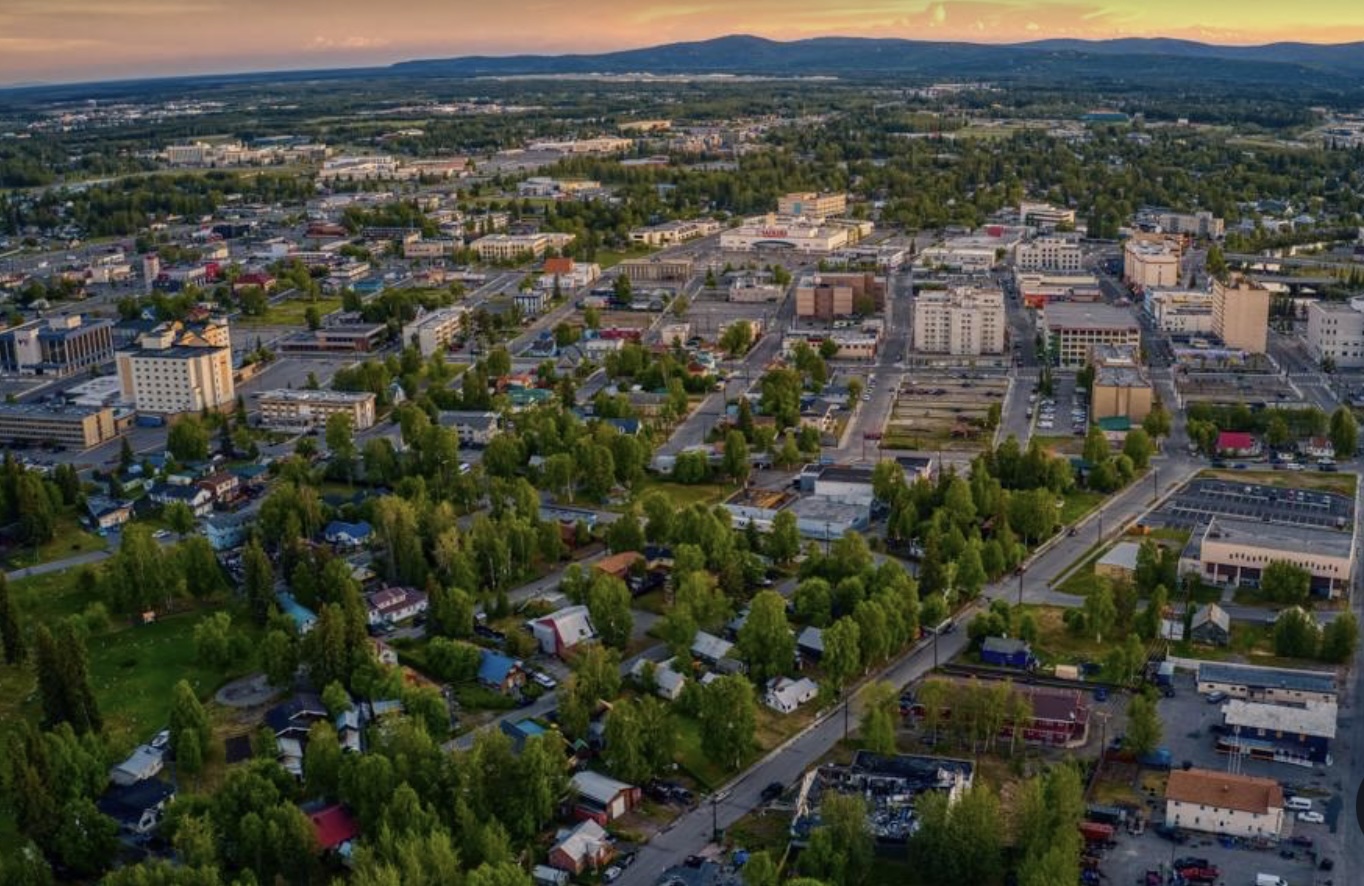
What makes it structural is the cost-sharing gap. In Wisconsin, a roundabout on a state highway triggers a formal agreement splitting maintenance between the state and the county. In the Fairbanks North Star Borough, the Matanuska-Susitna Borough, the Kenai Peninsula Borough, and the Unorganized Borough, which together cover the vast majority of Alaska’s land area and most of its highway mileage, there is no county road commission. No local government to take any part of the bill. DOT&PF builds the roundabout, DOT&PF maintains it, forever, alone.
A review of federal HSIP Annual Reports confirms seven to eight roundabout projects already obligated or proposed in these jurisdictions, with more in the pipeline under IIJA funding. Combined permanent M&O obligation: $400,000 to $600,000 per year right now, growing to $1.45 million per year by 2030 and $2 million per year by 2035. None of it in any benefit-cost analysis. None of it disclosed to the Legislature.
The individual project that crystallizes the problem is Nordale Road and Peede Road in Fairbanks, a $4.8 million HSIP roundabout at an intersection carrying 1,090 vehicles per day, with zero fatalities at the intersection itself in the five-year analysis period. The benefit-cost ratio, using the correct crash modification factor for a stop-controlled intersection, is below 1.0. The cost per statistical life saved is $160 million, 14 times FHWA’s own benchmark.
Two miles away, Badger-Holmes-Montgomery carries 9,660 vehicles per day. People died there in 2024. The EPDO crash rate is 18.7 times higher. The land is government-owned, no condemnation required. The same $4.8 million there would prevent an estimated six times more deaths. There is no HSIP project at Badger-Holmes-Montgomery. The money is going to the intersection where nobody died.
DOT&PF’s own project engineer verbally confirmed this week that the qualifying crashes used to justify the Nordale-Peede project did not occur at that intersection. A formal public records request and an FHWA oversight letter have been filed.
The broader point is not about one intersection. It is about a policy of “roundabouts first,” applied in practice as“roundabouts only” — that systematically selects a higher-maintenance infrastructure type at every qualifying intersection statewide, creating permanent overhead that arrives in the maintenance budget without attribution and cannot be reversed without removing the concrete.
This is how structural deficits are built. Not in one large vote, but in dozens of small program-level decisions, each individually defensible, collectively producing an overhead burden nobody authorized.
The conference committee has five days. This particular problem does not need five days to fix. It needs one amendment to the HSIP Handbook requiring lifecycle M&O disclosure before a project is nominated. It would take a DOT&PF staff attorney one afternoon and cost nothing.
The question is whether anyone in that building knows it needs fixing.

11 thoughts on “Barbara Haney: How DOT locks Alaska into millions in hidden future costs”
“………When DOT&PF converts a rural stop sign to a roundabout, the new intersection costs roughly $45,000 more per year to maintain than the one it replaced, permanently. Roundabouts need specialized winter clearing, high-friction surface treatment replaced on a cycle, and more sand and deicer on every storm event……….”
How can this be true? First, any intersection (signed, signaled, or roundabout) is going to require “specialized winter clearing, high-friction surface treatment replaced on a cycle, and more sand and deicer on every storm event”. Secondly, electric signals requires electricity 24/7/365, not to mention componentized maintenance and repair of its own. Then the increased costs of signal purchase and installation. All this is to ignore the studies of reduced deaths and collisions and increased traffic flow at roundabouts vrs signaled intersections. The last time I ordered an intersection signal system (yes, I did that), the contract cost was astronomical compared to a roundabout…………and electricity was already flowing through the intersection. If no power was there and an electric ROW and supply line would have to be installed, the cost would have been beyond astronomical.
The comparison was relative to other improvements – not every “improvement” is a traffic signal.. oh, btw- the electrical substation at the intersection and all the improvements GVEA made in new lines and poles will have to torn down to accommodate the ssd for the roundabout and 8 private properties will have serious RoW impacts.
The factor no one admits or talks about: roundabouts frustrate drivers – amplifying the already dangerous level of road rage we see every day.
Its high school level physics. With 4-wheel vehicles in icy conditions, centripetal force on a curve is more difficult to maintain than is linear reaction force of braking at a stop sign. Tire treads are designed to grip better in linear motion than in lateral motion.
“………Its high school level physics. With 4-wheel vehicles in icy conditions, centripetal force on a curve is more difficult to maintain than is linear reaction force of braking at a stop sign………”
Sure; if you’re the guy trying to shoot through at the approach speed limit. The smaller roundabout design speed limit is 15mph. This is part and parcel of the reduced death stats. The design speed is lower. Of course, that’s a problem with a society who is quite sure that the speed limit through a roundabout needs to be at Autobahn speeds.
Several years ago I began to wonder exactly whom or what was behind the push to turn literally every single intersection in and around Fairbanks into a roundabout. Turns out federal rules require any “metro” area of 50k or more to have a Metropolitan Planning Organization (MPO). For the FNSB, that organization is FAST Planning. Their website lists a small staff led by an engineer named Jackson Fox, and also the related boards and committees, which are populated by (surprise) the usual list of borough fruitloops. This is how we end up with absurdities like the Full Retard Intersection (FRI) in front of Wainwright, and the crude attempt downtown at creating “Portland style” bike lanes by, lacking any room for that, simply painting “bike lanes” into the regular traffic lanes. It all fits right in there with the effing 33 million dollar dog pound. Same clowns, same logic.
Several years ago I began to wonder exactly whom or what was behind the push to turn literally every single intersection in and around Fairbanks into a roundabout. Turns out federal rules require any “metro” area of 50k or more to have a Metropolitan Planning Organization (MPO). For the FNSB, that organization is FAST Planning. Their website lists a small staff led by an engineer named Jackson Fox, and also the related boards and committees, which are populated by (surprise) the usual list of borough fruitloops. This is how we end up with absurdities like the Full Retard Intersection (FRI) in front of Wainwright, and the crude attempt downtown at creating “Portland style” bike lanes by, lacking any room for that, simply painting “bike lanes” into the regular traffic lanes. It all fits right in there with the effing 33 million dollar dog pound. Same clowns, same logic.
The costs are INSANE.. we must stop it this “round-about- system”.. If Fairbanks wants it, they need to pay for it. It’s not worth the extreme costs to continue, No wonder there is NEVER enough $$ in the budget.
First of all, never believe anything an economist says. Second, round-abouts are dumb anyway. I don’t understand why DOT is in love with them.
Mrs. Haney is absolutely correct about this. Years ago they redid the Chena Hot Springs Highway on ramp into a double roundabout, that the community loudly protested against. No one wanted and it caused a number of accidents the first year it was in because poor design. Multiple vehicles sled off the road knocking out the signs repeatedly. We have a problem with people spending “free federal” money to create jobs on projects nobody wants that are actually a negative value for the community.
Only idiots love roundabouts.
.
Normal people with common sense realize that roundabouts are unnecessarily complicated, confusing and inappropriate to Alaskan weather and road conditions. They are just another lemming-like fad beloved by divorced-from-reality central planners and academic engineers.
.
I will now await Steve-O to chime in, as usual, to tell me that I am not only wrong in opposing the lunacy of traffic roundabouts, but antisemitic for doing so as well.