


By SUZANNE DOWNING
April 12, 2026 – The US Coast Guard is drastically pulling back its previously announced plans to expand its Seattle waterfront base for Arctic operations, opting instead for a modest approach, after citing resistance from local tribes, rising costs, and various challenges.
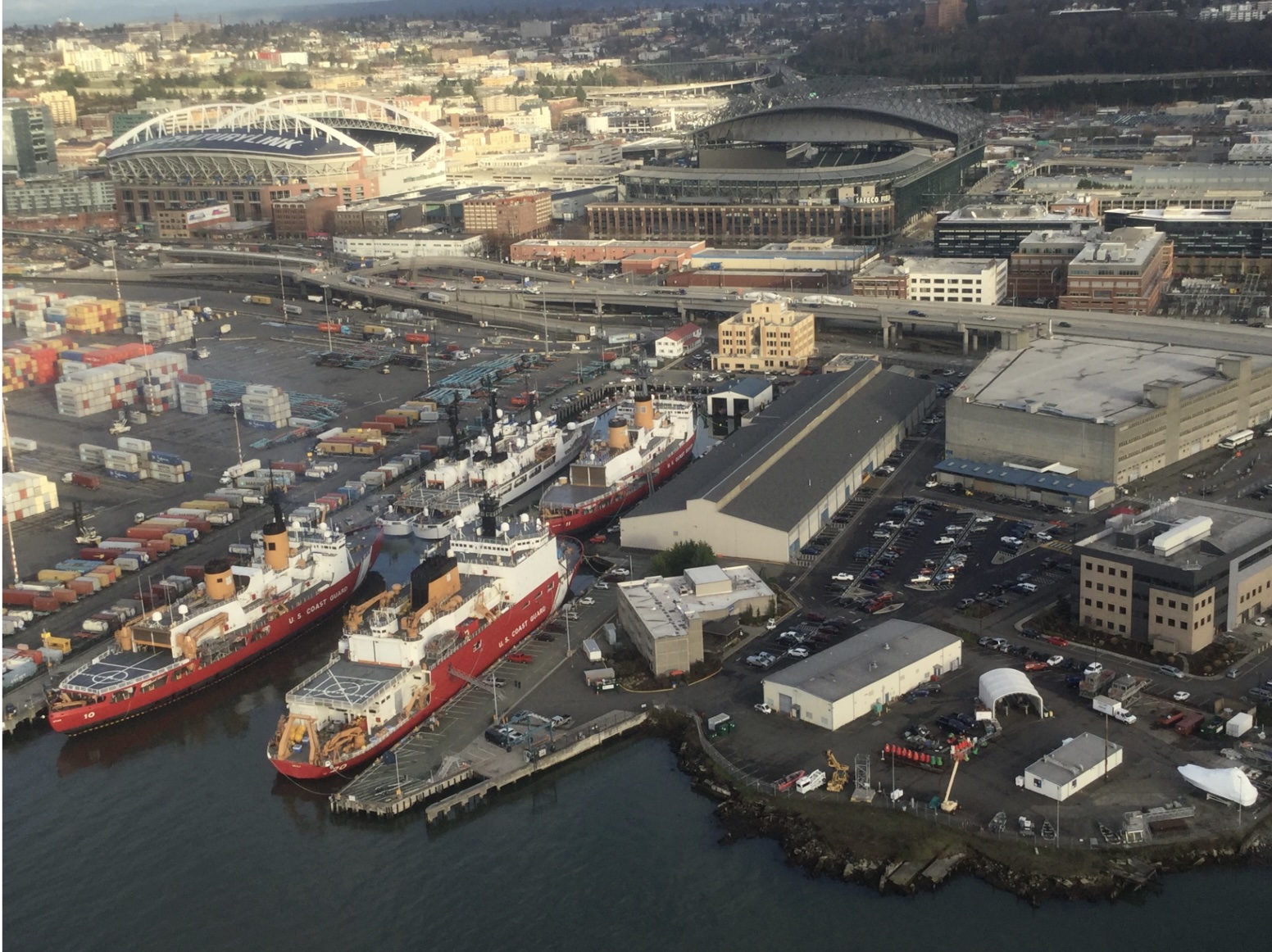
The installation, known as Coast Guard Base Seattle, sits on Elliott Bay at Pier 36, just west of T-Mobile Park and Lumen Field. It is a maritime industrial area and has been for centuries. It serves as a homeport for the Coast Guard’s polar icebreakers, including the USCGC Polar Star and the USCGC Healy, both of which support operations in Alaska.
Coast Guard launches major upgrades at Seattle harbor as it eyes expanded polar fleet
Just months ago, the Coast Guard said it would dramatically expand its footprint at the site. In September, the service awarded a $137 million contract to Whiting-Turner Contracting Company to begin early work on the project, including dredging Slip 36 and constructing two new cutter berths designed for the next generation of heavy icebreakers under the Polar Security Cutter program.
Pier 36 has long anchored Coast Guard operations across the Pacific. But as Arctic traffic increases, sea routes become more accessible, and global competitors, especially Russia and China, expand their own icebreaking fleets, the United States is accelerating efforts to reinforce its maritime posture.
That broader vision, described in congressional testimony as a multi-phase modernization effort potentially costing more than $300 million, was intended to position Seattle as a cornerstone of US “maritime dominance” in polar regions.
But as of now, that vision has been significantly downsized.
In newly filed planning documents, the Coast Guard indicates it will no longer build additional berths at the base. Instead, the revised plan focuses on acquiring up to 5.5 acres at nearby Terminal 46 and roughly 1.1 additional acres in the vicinity. The land would primarily be used to meet anti-terrorism and force protection requirements, creating necessary buffer zones around existing infrastructure. But the smaller plans would not accommodate the expanding icebreaker program.
The revised footprint represents only a fraction, potentially as little as one-tenth, of the expansion once envisioned.
Officials pointed to several factors behind the shift. Among them were concerns raised by local tribal entities during formal consultation processes.
Federal records show that the Muckleshoot Indian Tribe and the Suquamish Tribe are among the primary tribal governments raising concerns about the expansion, pointing to their legally protected “usual and accustomed” fishing grounds in Elliott Bay and the Duwamish, East, and West waterways, areas that overlap with or sit adjacent to Base Seattle and Terminal 46.
The Muckleshoot Tribe, a successor to signatories of the Treaty of Point Elliott and Treaty of Medicine Creek, said fishing rights are central to its cultural identity and economic sustainability.
During the Environmental Impact Statement process, tribes and stakeholders, including the Northwest Seaport Alliance (a marine cargo operating partnership), warned that large-scale expansion, such as new berths, dredging, and expanded security zones, could restrict access to fishing areas, disrupt habitat through seabed disturbance, pile driving, and potentially affect treaty-protected fish and shellfish. They called for more robust, government-to-government consultation, including clearer details on vessel traffic, moorage plans, and security measures that could interfere with seasonal fishing.
The Coast Guard has not indicated that all modernization work is off the table. Initial upgrades funded under the 2025 contract, including dredging and improvements to existing piers, are still expected to move forward. However, the decision to abandon major berth construction is clear retreat.
The pullback comes at a time when Arctic operations are gaining renewed attention from the Trump Administration. The Coast Guard’s Polar Security Cutter program, which is intended to replace the aging USCGC Polar Star, has faced delays and cost pressures. Shore-side infrastructure is a key piece of that broader strategy.


6 thoughts on “Coast Guard trims sails on major Seattle icebreaker base expansion, citing tribal concerns”
Russia don’t care about Whales.
If Americans don’t get across the Arctic. Someone else will regardless of whales.
If the Coast Guard facilities cannot be built and the ability to defend the United States is impaired, one option would be to go to war with the complaining Indian tribes. Then we could draw up a new treaty.
Wouldn’t be surprised to find out the locals are more “concerned” about Coasties disrupting a thriving drug and human trafficking business.
Why does Seattle get to have all the fun? There must be a community or two in Southeast Alaska that could/would embrace the the growth that accompanies supporting these mariners.
Russia has 34 diesel powered icebreakers and 8 nuclear powered icebreakers. They did not cite tribal concerns.
I have a problem with Natives having a veto right over national security and that’s being polite.