


By SUZANNE DOWNING
March 11, 2026 – A debate in the Alaska House on extending emergency disaster aid for Western Alaska communities turned lengthy Wednesday, as lawmakers debated the process for providing aid — whether through executive powers or regular appropriation powers. The debate gave one member the opportunity to distort the historical record of disasters that include the storm that devastated parts of the Yukon-Kuskokwim Delta last fall.
The measure under discussion would continue emergency authorization tied to recovery efforts from the October 2025 storm that struck the coast after the remnants of Typhoon Halong pushed powerful storm surges into western villages.
Several Republican lawmakers said they support continued aid to the affected communities but argued the Legislature should move the funding into the normal appropriations process rather than continue relying on emergency authority.
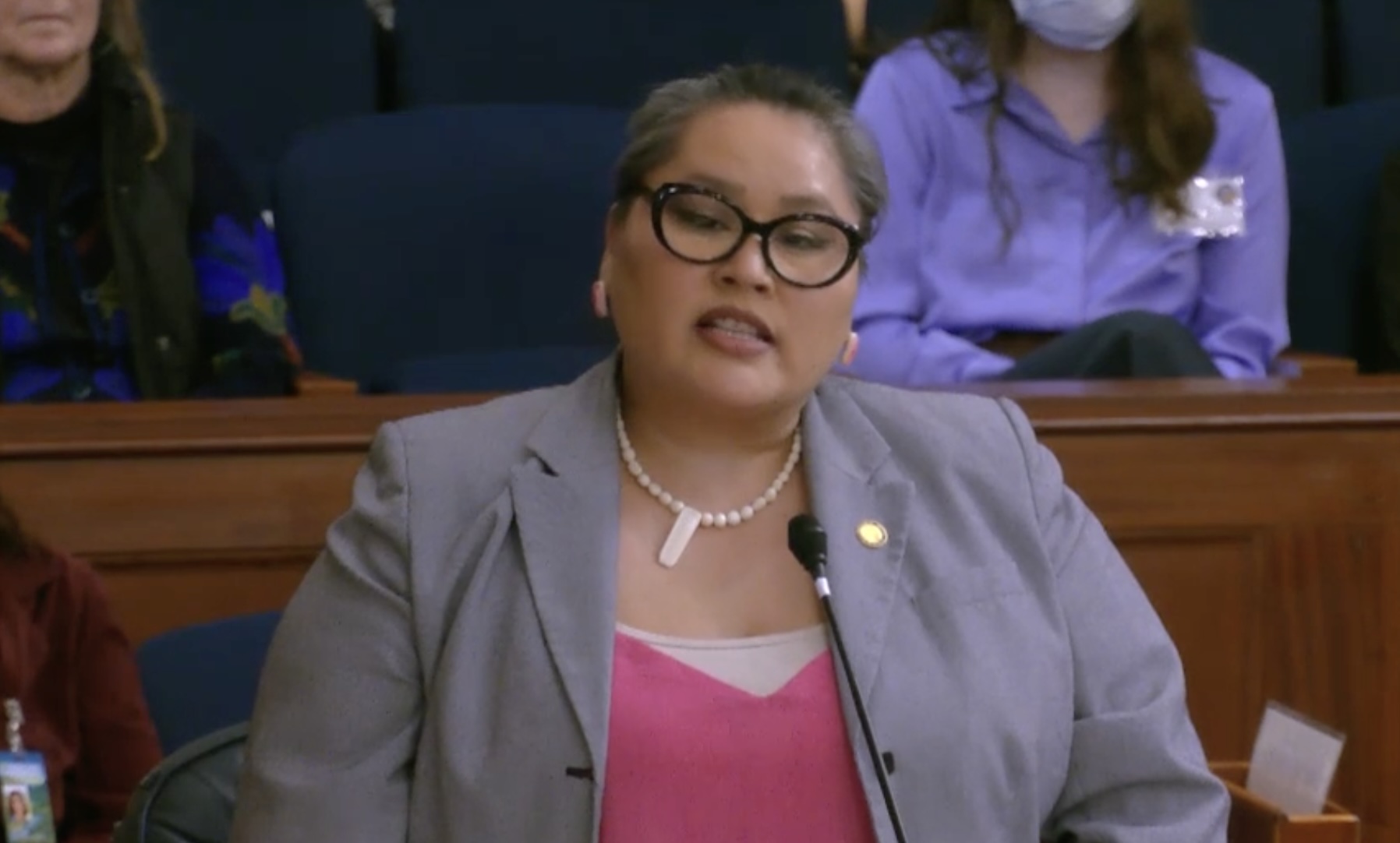
During the floor debate, Rep. Nellie Jimmie, a Democrat from Toksook Bay, rose to defend continuing the emergency authority of the governor, and criticized colleagues who questioned it. Jimmie, whose district includes many of the communities hit by the storm, spoke emotionally about the destruction and said the disaster was unlike anything Alaska had ever experienced.
Jimmie has frequently described the storm in those terms.
But while the October event was devastating for Western Alaska communities, historical records show that Alaska has experienced several disasters far greater in scale when measured by fatalities, economic impact, or statewide damage.
The 2025 storm was severe. It produced record storm surge and severe flooding across the Yukon-Kuskokwim Delta. Villages such as Kipnuk saw roughly 90% of homes destroyed or rendered uninhabitable, while communities including Kwigillingok suffered widespread structural damage. Thousands of buildings were damaged or destroyed across the region.
More than 1,600 residents were displaced or evacuated in what officials described as one of the largest airlift operations in recent Alaska history. Many evacuees were transported to Bethel, Anchorage, and other communities, and hundreds remain displaced. As of early 2026, roughly 500 people are still being housed in Anchorage hotels while long-term housing solutions are sought.
At least one death was confirmed in Kwigillingok, and two additional individuals were reported missing in the aftermath of the storm. Initial damage estimates were placed around $125 million, though full assessments remain incomplete as recovery continues.
However, Alaska’s history includes disasters that were significantly larger in terms of deaths, economic losses, or overall statewide impact.
The 1964 Good Friday earthquake, measuring magnitude 9.2, remains the most destructive disaster in Alaska history and the strongest earthquake ever recorded in North America. The quake and resulting tsunamis killed about 139 people and caused massive destruction across Southcentral Alaska, heavily damaging Anchorage, Seward, Kodiak, and numerous coastal communities. Economic losses from that event reached billions of dollars when adjusted for inflation.
Another historic disaster occurred in 1967 when the Chena River flooded Fairbanks. The flood inundated nearly 95% of the city for days, damaging approximately 6,000 homes and buildings and forcing more than 12,000 people to evacuate. Damage estimates ranged from $85 million to more than $200 million in 1967 dollars, equivalent to hundreds of millions to more than a billion dollars in today’s dollars. The event ultimately led to the construction of the Chena River Lakes Flood Control Project to protect Fairbanks from future floods.
Compared with those events, the 2025 Western Alaska storm involved fewer fatalities and lower overall economic losses.
Even the earthquake that struck north of Anchorage in 2018 did not have executive authority extended repeatedly, as Rep. Jimmie was arguing for on Wednesday.
Lawmakers on both sides of the debate agree that aid must continue for the affected villages. The disagreement in the House centered on whether emergency authorities of the governor should remain in place for the fifth time or whether future recovery funding should be handled through the Legislature’s standard budget process.
Rep. Jimmie was arguing for top-down authority, but using emotions and distortion rather than facts to make her argument, which she read aloud from a prepared script.


11 thoughts on “Rep. Nellie Jimmie distorts the history of Alaska disasters”
Makes one wonder who wrote the script for her.
I think perhaps her grasp of reality is a bit tenuous, and she certainly has no concept of history. Not sure why she is in the State House but it certainly isn’t for rational lawmaking.
As the person who took the initial phone calls during the storm from people in the water and in their floating houses and evacuated all of those people . . . your perspective is wildly incorrect! The 1964 Quake is the ONLY disaster that compares to the severity Ex-Typhoon Halong!
Jimmie is just another phony.
One fact that is undeniable, Representative Jimmie hasn’t been involved in a disaster involving the scarcity of food.
haha you got that right I was thinking the same thins
Yeah, Rep NJ completely reinforces to the concept of … “Plan-B” pill.
Rep. Jimmie is nothing but predictable in her myopic view solely focused on her native victim status. Clearly from her perspective nothing bad ever happens to anyone else. I assume she is in favor of continued emergency authorization as these usually have less hoops to jump through for disbursement than regular legislative appropriations, where debate and scrutiny can delay or reduce availability of funds and has to compete with all other appropriations. There should be no extension of the emergency authorization and the disaster relief should be rolled into the regular appropriations process.
BTW I find making derogatory remarks about Rep. Jimmie’s physical attributes highly inappropriate and misplaced. The debate is about what she says not what she looks like.
an economic study of how these villages can support themselves would be the correct approach.
should they be rebuilt is the question.
many places start out on the edge of maybe it will work, building out of shipping crates.
but evolve into towns and cities, not saying they don’t get some help along the way but they become towns and cities.
there has to be a reason other than welfare/government hand outs.
every place has some subsidized housing, but does it help or hurt those who receive it.
Toksook is her entire world and nothing else exists.
Cutoff the welfare ‘lollypop’, move those folks to higher ground where they can be productive and pay taxes. The real world awaits for accountability.