


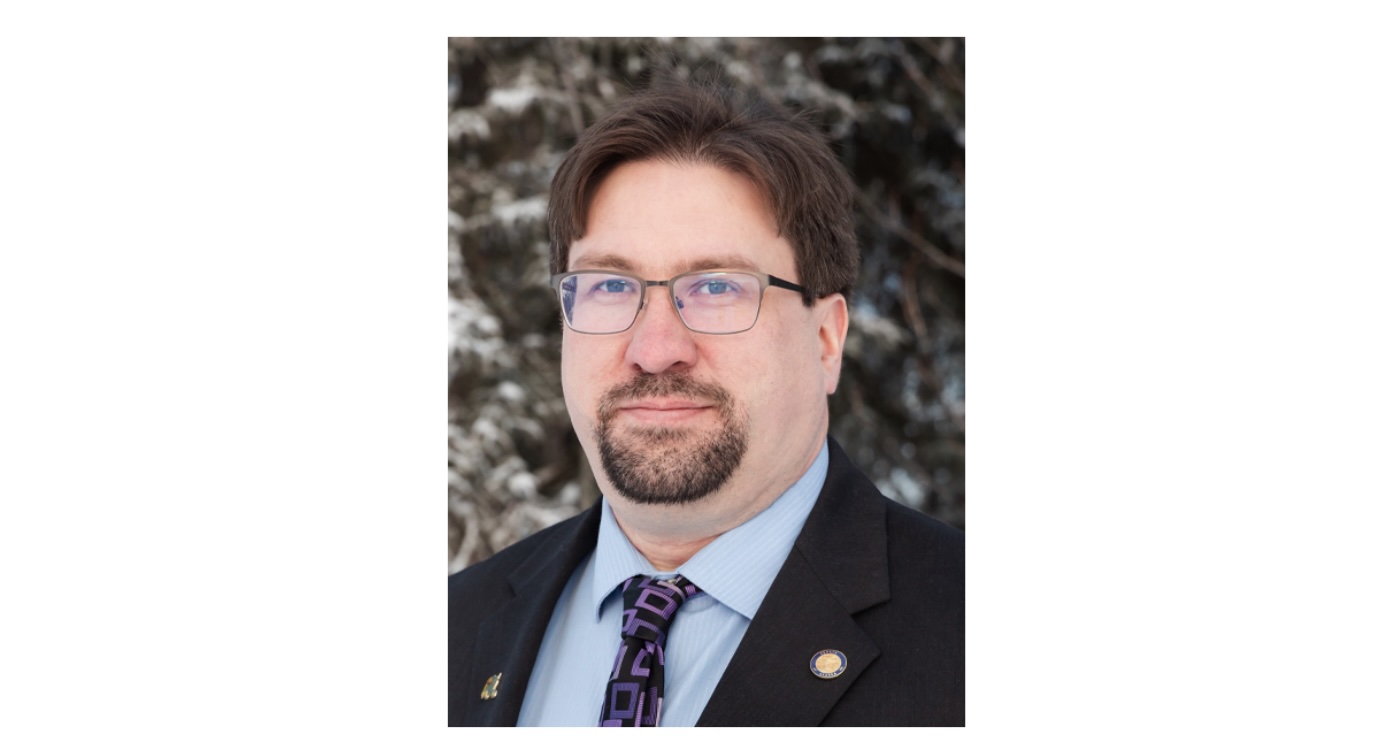
By SEN. ROBERT MYERS
Thank you for following me this far. The most common question I have gotten over the course of this project is what our solutions will be.
I want to start that discussion with a recap of everything we’ve covered so far.
The goal of this series was to examine how the incentives created in the structure of our state at statehood and supercharged in the 1970s after the Prudhoe Bay discoveries have shaped our government and economy.
The problems and debates that we are facing now are not new; the seeds for them were sown decades ago. Alaska based its revenue on oil and other mineral rights because the federal government set it up that way. That hamstrung us with the resource curse and created the perverse incentives that I’ve been unpacking up to this point. The result was spending that was far outsized for our population because we drew so many people to be dependent on government spending for a living. But no one outside of the oil companies paid for it, therefore having no reason to push back on spending.
Even with all of that spending, we get poor-quality services from our government because the services are not the point of most of the spending. The point is the spending itself, as so many people have used services as a guise to get on the state’s indirect payroll. On top of that, we don’t build anything significant because our state government doesn’t have a reason to help the private sector except for short-term projects to assist with reelection. The private sector doesn’t build either because it is concerned that it will be the next target when the state runs out of money for short-term spending. It really hasn’t mattered whether Republicans or Democrats have been in charge of the legislature because the underlying structure never changed. Elected officials treated the oil money (and now the Permanent Fund) as a way to use public funds to help with reelection.
We keep cutting the PFD because one large faction of the electorate and the government are focused solely on keeping the spending going by any means necessary, while the other large faction is focused on cuts that have been tried and are politically unpopular (if not downright politically impossible) in the current structure. In addition to messing with the PFD, the management of the Permanent Fund itself appears to be influenced by the need to keep the spending up.
Our economy is stagnant because we have diverted royalties to government, which does not let individuals use them to diversify the economy. That oil wealth, along with the Permanent Fund, also removes any reason for the state to care about nurturing the long-term health of the non-oil economy. Because of that disconnection, growing the economy not only doesn’t fix our state’s finances but actually makes them worse.
It should be clear by now that we can’t expect to fix things by electing different people or making little tweaks to our budget or revenue here and there. We have to change the incentives that pushed us to this place. Otherwise, putting in a strong governor or changing out the legislature wholesale will be a temporary reprieve at best and an exercise in frustration at worst. It is the pressure of the system that is the problem, not any one person or group.
A spending cap is required. It will reassure businesses that they will not be the next targets when the state runs up an unsustainable budget during a boom time. It will also encourage the state to prioritize the programs and projects with the best return on investment. Government tends to think that money is unlimited because it can always raise taxes. A spending cap helps fix that problem because it limits how far government can grow. It can’t be all things to all people. It will have to prioritize.
But a spending cap is not enough on its own. It is a rule on behavior, but it doesn’t change the incentives driving that behavior, either for the people or the politicians. We need the state to have a financial reason to care about the economy. We need individuals to have a financial stake in how much money is spent and what it is spent on. We need a structure that makes the state care about the long-term health of the economy instead of just what boosts support in the next election cycle.
We can’t allow the state to have a large pot of money that doesn’t connect to either the economy or the voters, which allows the politicians to avoid scrutiny. It was mistake to reserve all of the oil money to the state in the 1970s. Milton Friedman said that the best option probably would have been to give it all out to the people. Amazingly, he said that in 1977, just after the Permanent Fund was created but before the income tax was repealed. It is a mistake now to reserve all or most of the Permanent Fund to the government. It keeps costs hidden and lowers the accountability between the voters and elected officials.
Alaska is standing on a precipice. We have a lot of opportunities in front of us: the gas line, more development on the Slope, the Ambler mining district, etc. But most of it either will not happen or will be squandered if we do not make Alaska an attractive place for business.
We have deep, structural issues that drive us to where we are, regardless of who is in office. We’re not going to fix it with a strong leader or some other simple change at the next election. At best, that’s a temporary fix that will fall apart after the next election. We need structural change that alters the incentives for both voters and politicians. As we look to this next election, especially the governor’s race, we need to find people who understand that our problems are in the systems, not the people.
These past two legislative sessions, it has become clear that there are two competing visions in the legislature. One vision wants to channel everything through the legislature and dole out the money and opportunities to the politically connected. The benefits from the gas line or any other development will go to the people with the best lobbyists or those who help with reelection the most. In this view, the private sector exists to be milked by the public sector in the most hidden way possible to minimize any pushback from the electorate.
The other vision wants to unleash the private sector, which is where most Alaskans work and live. Government should be the servant and not the master. For these people, pushback has been ineffective so far, and many have taken the only option left to them: leaving the state. This is what is driving the exodus of working people and their families from Alaska. It is why the share of out-of-state workers has risen to nearly all-time highs.
We have jobs available in the state, but people don’t see this as a place where they can make a living in the long term. Until we alter our financial structure to fix these disconnections, we will continue down the same path.


11 thoughts on “Sen. Robert Myers: Where do we go from here?”
“Government is a disease masquerading as its own cure.”
Well. We don’t need to throw out the “baby with his bath water” to change our directions. Or like when I said “changing anchorage’s direction doesn’t mean throwing out and rewriting the founding documents that set up Anchorage as a municipality, it means changing the neighbors at the community council leadership. Keeping those leaders who are Right, Libertarian, neighbors already serving who are not for government dependency and replacing council leaders who are socialistic with new Right thinking neighbors for a smaller government ”
It’s the same thing with State of Alaska Government. Hard choices will one day have to be made. We can either choose to make them today or wait for life to being on us events not of our convenience to force us to make hard choices we put off.
Whether AKGOP believes it or not, they need to get Control over Anchorage after all 50% of the legislature comes from the Cook Inlet Area. Republican members, Conservatives, Christians on Anchorage can’t just move to Wasilla-Palmer-Kensi-Sodotna-Sterling. Plus too it’s not fair on those communities to get Republicans-conservatives-Christians fleeing the socialism and leftism infestation of Anchorage because those communities can’t count on them to fight or to even know how to fight. Just as I said to someone here Wasilla-Palmer has five years before the AkDemocrats get the Matsu at a 60/40 control like where they are at controlling Fairbanks.
Republicans have a lot of work to do regaining the ground they forfeited starting with controlling the councils.
You guys need tk also change your GoP Chair. The current one is not in the correct position utilizing her talents. She shouldn’t been elected Chair and still shouldn’t be chair.
You guys need someone who can lead and control and unify the groups within the Alaska Republican Party.
Good ideas and points. Starting at the more grass roots community level. I absolutely do not expect those in Juneau to do anything.
Today’s legislators won’t do anything needed. They lack strength and courage and knowledge of right and wrong. That the peoples fault it’s because the voters don’t know right and wrong to not elect better neighbors of good character, morale, and conscience.
In encouragement. The neighbors of the legislature districts they don’t need them though. They can always be replaced. The neighbors hold the power in their hands every election cycle they can replace the representative every two years and the Senator every four years.
The neighbors like you Elizabeth just need to increase their involvement in attendance and participation on their local neighborhood district councils. The work of neighborhood councils gives knowledge, experience, and confidence in the next legislators. The Republican members have neglected their neighborhood councils, they don’t even know their own districts and who is who and where the voters live in their own neighborhoods. Which is why when R neighbors are running they at struggling during campaigns.
Your town Palmer or Wasilla it needs more Republican, Christian, and Conservative neighbors are needed to get more involved in your neighborhood council. I don’t want to see Wasilla-a Palmer deteriorate anymore than it already has because of the poor leaders who guys are electing overseeing Matsu local government. Wasilla currently is in a sad state negligence
A personal action by families of Wasilla-Palmer is Valley Republicans-Christians-Conservatives need to remove their next generation of Matsu schools for a private school orHomeschool. That’ll likely take more control of the future if more valley children are educated outside of an Alaska public school.
I was thinking yesterday as I was sitting in a Wasilla restaurant if parents in Wasilla can afford mortgage on 300,000 plus home, then surely they could downsize into a smaller lesser expensive home so they can pay for private school tuition. Because the education a family’s child receives is more important to a family and community than the type of house a child lives in. Right nor what I’m seeing in Wasilla-Palmer young adults is your community schools have turned its 18-22 year olds to act just as ghetto as Anchorage young adults where they have no style, no elegance, no intelligence, and no work ethic.
While Matsu Republican, Christians, and Conservative adults are increasing their attendance and participation serving on local council they also need to pull their family’s next generation out of Matsu school and educate their children in a private school or homeschool.
Your community can’t wait for Alaska to improve the education. The current leaders on school boards. Local governments will Never do what is needed! They know what needs to be done but are refusing to make the cuts and reforms necessary. Parents don’t have time. Their children’s childhood is Only 17 years.
Excellent series. Thank you for taking the time to present realistic info and even possible answers. It is pretty discouraging when the majority of sustaining employment within a state is government, or dependent on government. We are self employed and the cost of doing business, the hoops, fees, taxes, insurance requirements, health insurance, are staggering. Employees multiply it significantly if providing healthcare, paid leave, retirement. Many, if not most, of our friends are government employees, retired or still working. They work a fraction of the hours we do while being able to afford lovely homes, new vehicles, toys, enjoying paid vacation time and dependable healthcare for very little if any cost, and guaranteed employment with virtually no risk.
Many years ago the effort was to make government employment desirable by making it in parity with the private-sector employment. Well that was bypassed by leaps and bounds. Our state has so undercut and squelched private enterprise whiling just steadily growing government. Then those employed by or dependent upon, vote for more, continuing the cycle. There are successful businesses for sure, and we are blessed to have one, but even in successful private sector businesses, much of the money is tied to government. Our state is so out of balance now I don’t see how the scale can be set back to functional. Senator Meyers your articles are common sense and provide hope but without action anf sacrifice we will continue the spiral until there is no more private sector to squeeze.
If you really are serious about cutting the budget, the first thing you should do is look at this budget chart:
https://gov.alaska.gov/fy26-governors-proposed-budget/
Most people don’t understand that Medicaid, Public Assistance, Public Health is the single biggest portion of the budget.
Then followed by K-12 education and University of Alaska. These items are a combined 55% of the budget. Everything else is chump change – the Dividend is about 6-7% of the budget I estimate.
I haven’t seen the numbers yet but with a huge supplemental fy2026 budget and continuing budget pressure in fy2027 it appears that the only way to fund ANY Dividend will be to raid the rainy day savings account (the CBR) or exceed the self-imposed draw limit on the PF Earnings Reserve
Is it going to rain?
it’s not public assistance the state or federal government gives to Alaskans taking too much of the budget. It’s actually Public Employees or PERS/TERS (we need to stop hiring so many government workers and start shrinking departments and divisions, then Medicaid (because of health care costs are expensive), and then the state Dept of Education (Which too like the public employees districts csn use reforms, position cuttings especially on the admin side and even a reduction to k-12 education and UA.
From your reference:
“……..The Governor’s proposed operating and capital budget totals $14.2 billion……….””
A “full PFD” at $3600 per head would surpass $2.5 billion, and so would be $17.7% of the budget. Moreover, Medicaid brings in federal dollars, so the amount spent by the state is partially federal money, while the feds will tax PFD unearned income at 18%-22%. Even a $1000 PFD would amount to over $700 million, which would be 5% of the $14.2 billion budget.
The above interesting article mentions something called the “resource curse”.
There are books in print that explain how some 3rd world countries with huge oil reserves can sometimes be adversely affected, by such great natural resource wealth.
In the case of Alaska, which is a state within the U.S. and not a 3rd world nation, our great reserves of oil is a total blessing and not a “curse”.
.
But in the case of a few 3rd world nations where there are no democratic institutions, no accounting transparency, and no constitutional structure with checks and balances, a strong dictator can siphon off a great amount of wealth to cement his power over the nation, to the detriment of the people. Massive amounts of waste and corruption can occur, because there is no oversight and no one can complain too loudly because they could be persecuted.
.
Alaska is totally the opposite of this 3rd world situation, because there is a strong and unbreakable connection between the people and their representatives due to regular and honest elections at the state level. And there is total freedom of speech and the written word when citizens testify on state legislation. People can watch their legislature live in action on “Gavel Alaska” TV.
And, a careful printed record is kept of all state government actions and proceedings, and is forever open to public scrutiny and review. There is a court system that is ready and willing to punish any legislator or bureaucrat that is found guilty of corruption, bribery, or theft.
.
Also, Alaska is a state within a larger country that is also a democratic republic. Citizens can travel freely back and forth from Alaska to the lower 48. This allows for an expansion and relief tank effect in the event that world oil prices crash and economic opportunities temporarily subside in Alaska. This allows for citizens to be able to maintain and maximize their well-being and circumstances. Of course, there are other economic sectors within Alaska besides oil, providing good employment, that can provide a cushioning effect. There are also government cushions such as the Constitutional Budget Reserve and the Permanent Fund.
Elections tend to exacerbate the resource curse, not eliminate it. In Venezuela, the dictators came to power through elections and have to maintain popular support, at least nominally, through elections. In Saudi Arabia, the royal family is able to escape at least some of the resource curse because they have longer time horizons on which they can plan because they aren’t subject to regular elections. They can operate the country less like a government and more like a business.
Of course the ideal would be individual ownership like Texas or Pennsylvania, but that’s not possible in Alaska because of the federal government.