


By REP. KEVIN MCCABE
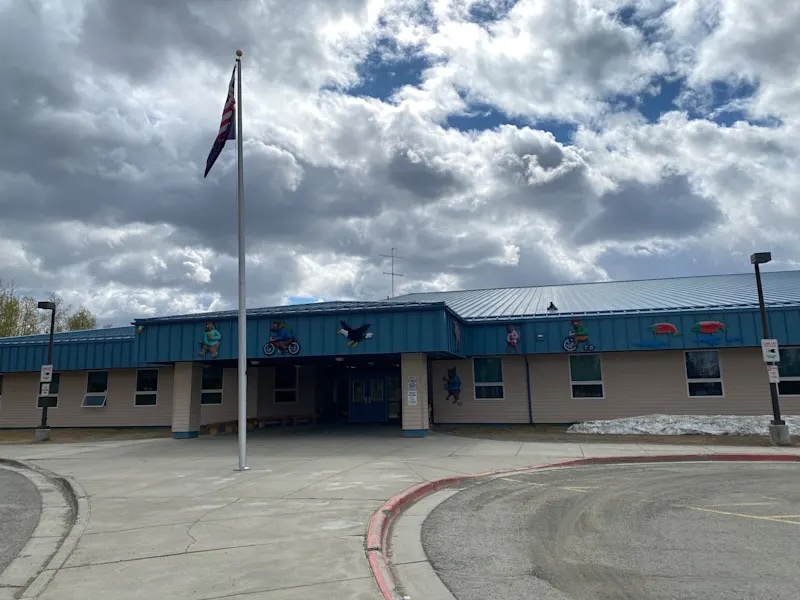
March 7, 2026 – Three schools, Glacier View, Larson, and Meadow Lakes, are now on the chopping block in the Matanuska-Susitna Borough School District. The familiar explanation is declining enrollment and empty classrooms.
Those are real, but they are not the cause of the crisis. They are symptoms, the visible evidence of deeper failures that have built over years. The rise of correspondence programs and homeschooling is also a symptom of Alaska’s education challenges.
Families are not abandoning neighborhood schools because correspondence options suddenly became appealing or because parents enjoy the demands of homeschooling. They are leaving because too many have lost confidence that the system delivers the basics, children who read well, write clearly, and handle math with competence. When those fundamentals consistently fail their children, families seek alternatives.
Alaska’s record on the National Assessment of Educational Progress, the Nation’s Report Card, remains near the bottom nationally. In 2024, fourth graders averaged 202 in reading, well below the national 214, and 226 in math, below the national 237. Eighth graders averaged 246 in reading, below the national 257, and 264 in math, below the national 272. These scores rank Alaska near the bottom and show little meaningful improvement over two decades.
Parents notice this long before policymakers do. When large numbers of students fail to reach grade-level proficiency in reading or math, trust erodes. Families question whether the system serves their children well. When the answer is an obvious no, then they act.
Some choose homeschooling or correspondence programs. Alaska has one of the nation’s highest homeschooling rates, around sixteen percent in recent data, and correspondence programs serve tens of thousands of students. Charter schools often have long waiting lists. These decisions are not casual. Homeschooling frequently means one parent forgoing full-time work, and correspondence education requires significant effort at home. Parents make these sacrifices because they believe the alternatives better serve their children.
Others leave Alaska entirely. The state has seen 13 straight years of net outmigration, with more people departing than arriving. Families with school-age children are part of that trend, often citing education quality alongside cost of living and job opportunities.
Demographics compound the problem, and that reality rarely receives honest discussion. Births peaked above 12,000 annually in the mid-1980s. In 2024, there were just 8,950 births statewide. The fertility rate has fallen to about 61 births per 1,000 women ages 15 to 44, well below replacement level. Fewer kindergarten students enter the pipeline each year due to economic pressures, delayed family formation, cultural shifts, and roughly 1,000 to 2,000 abortions annually, a factor that directly reduces the number of future students entering classrooms in every district.
And enrollment is the foundation of school funding. When student numbers fall year after year, the math eventually catches up, especially when it collides with rising fixed costs. Salary schedules, step increases, and contractually programmed raises push personnel expenses higher regardless of enrollment trends.
The district now faces a projected $22.5 to $23 million shortfall for 2026 to 2027, prompting proposals to close schools, cut programs, and eliminate more than 100 positions. The math is catching up.
Public testimony around these proposals has been emotional, often from employees whose jobs and working conditions are directly at stake. I do not blame them, but that reality naturally shapes the conversation and parents and the public served by those schools should recognize that.
Teachers deserve respect and fair compensation. No serious policymaker disputes that. The question is sustainability. Can a system keep expanding fixed costs while enrollment shrinks and outcomes stagnate? Again, the simple math is catching up.
When expenses rise automatically while student numbers fall, districts eventually reach the point where buildings close, programs shrink, or positions are eliminated. That is the simple math.
For years the public has heard that more funding is the key to better education. Yet Alaska has increased per student spending while outcomes have remained flat and enrollment has begun to fall. If funding alone solved the problem, results should already look very different.
Empty classrooms are not the cause. They are the report card. Families have voted with their feet for stronger academics and confidence that their children are learning what they need. Students are the levers that brings funding into the system, but their education must be the product.
The purpose of a public education system is not to preserve its own structure. It is to educate children in a way that gives them opportunity, independence, and the skills they need to build their future.
If the system consistently fails to produce those results, families will continue making the same decisions they are making today. They will find other ways to educate their children, or they will leave in search of places where they believe their children’s prospects are better.
Empty classrooms are not the failure. They are the warning.
Without a shift toward measurable academic outcomes and sustainable cost structures, school closures will not be the last difficult decision the Mat-Su Borough School District faces.
Rep. Kevin McCabe is an Alaska legislator representing District 30, Big Lake. He has lived in Alaska for 43 years, served in the US Coast Guard, as a Boeing 747 captain, and was a volunteer firefighter.
Rep. Kevin McCabe: Cascade Point is a lifeline for Juneau
Rep. Kevin McCabe: The heartbeat of Alaska Republican conservatism
Rep. Kevin McCabe: HB 152 isn’t an Education tax — it’s Alaska’s return to a state income tax
Rep. Kevin McCabe: With Alaska LNG, it’s either lead or be left behind



3 thoughts on “Rep. Kevin McCabe: Empty classrooms aren’t the crisis in Mat-Su schools. They’re the symptom”
If I was a superintendent, I’d start allocating revenue sources from what is available into how to get the district students who can stay home into an online academy through the district creating its own online academies where they can complete their basic courses, weekly quizzes, and module tests online where teachers are assigned by grade level the students they will monitor and grade submitted online. They can still meet for field trips and participation in clubs for social skills. A public school district using the Online homeschool models that is set up such as by: Ignite Christian Academy, Liberty University Online Academy, Mia Academy, and Acellus is using. The technology is already there to be utilized.
Online Homeschool academies are public school districts competition (growing in popularity) and public school districts are going to have to offer the service sooner than later else All schools one day will be closed. This way the districts can try lessen number of students leaving the districts all together losing more money overall.
The nice thing about the Public school districts moving to develop what its competition is already got implemented is the state will pay for it and the parents won’t have to pay a tuition. The education budget wouldn’t be cut, it’ll just be Re-directing money away from how it’s traditionally spent for online homeschool academies to pull kids out of the classroom and to complete work online. Alaska Junior Highers and Highschoolers would likely appreciate it more because of the toxic dysfunction, increasing behavioral and bully issues in their peers at school. This way more students who don’t want the Drama can still complete their courses at home monitored by a teacher, participate in field trips and clubs of interests without the student distracted by stupidity and drama.
You are a lawmaker, if I’d round up the members of the education committees of the Senate and House to look at and study the existing Online Homeschool/private school models and technology they are using. So Alaska can develop its own competitive public online academy per school district starting with grades 5/6th-12 grades.
And have an open mind because any state can do it!! No excuses because the private sector proves what it created and technology developed it works, it can work for a state of Alaska education department and school districts too. Plus too we now have Starlink that is used in roadless small town communities of Alaska
Hi Kevin. You totally ignored all the BS that the schools have been pushing on the kids. Like the sexual stuff, telling kids they can change their gender. They push gay stuff on our kids and try to have gay pornographic books in the library. Like playing CNN10 in the classroom and it not being on the curriculum. In Anchorage School District had a sexual pronoun survey Nov 2024 and didn’t inform the parents. Like the schools pushing a leftist agenda on the kids and to hate our government. The schools are more interested in pushing leftwing garbage than better educating our kids. They know there are better ways of teaching, but they refuse to implement them. Like giving kids a chance to review/correct their work instead so they can learn what they missed. But no, we need to get that grade number in there, that is more important than testing later. If the kids were doing great, the NEA would have less of the reason to ask for more money; we can’t have that. Parents are not stupid and are sick of all the crap schools have been pushing on our kids. You want to do something? Ban CNN10 from all classrooms in Alaska. And tell Juneau School District to stop letting boys in the girls locker rooms to watch little girls get naked. Ya, call Frank at 907-523-1700 and ask him. Or email him at frank.hauser@juneauschools.org. The school system is full of a bunch of perverts.