



By REP. KEVIN MCCABE
Feb. 19, 2026 – HB 152 asks Alaskans to cross a line we have not crossed since 1980. It brings back a statewide income tax, this time under the label of an “education tax.” The bill combines a $150 annual head tax on anyone earning wages or self-employment income in Alaska with a 4 percent surtax on taxable income above $150,000 for single filers and $300,000 for joint filers. Supporters say it will fund K-12 and early education starting January 1, 2026. The main pitch is simple: non-resident workers who earn money here will finally help pay for our schools.
That sounds good. It just is not the full story.
The Department of Labor and Workforce Development reported that Alaska had 413,867 workers in 2024. About 22.9% were non-residents. They earned $3.823 billion, or roughly 17.3% of total wages paid in the state. Many are concentrated in seasonal and high-paying industries. More than 81% of seafood processing workers are non-residents. Around 40% of oil and gas services workers and 44% of metal mining workers come from outside Alaska. Nearly a quarter of construction workers are non-residents. Most work rotational schedules or short-term jobs. Their kids generally are not in our public schools.
Under HB 152, non-residents are expected to provide between 15 and 25 percent of the total revenue, roughly $50 to $80 million a year once the tax is fully in place. The other 75 to 85 percent would come from Alaskans. Total revenue is estimated between $300 and $360 million annually. The $150 head tax would bring in $40 to $60 million. The rest would come from the 4 percent surtax.
So, let’s be clear. While non-residents would contribute something, most of this tax would be paid by Alaskans. That means families working in oil, gas, mining, construction, health care, and small businesses. This is not mainly a tax on Outside workers. It is a broad-based income tax on the people who already live here.
There is also a constitutional issue we cannot ignore. Article IX, Section 7 of the Alaska Constitution says the proceeds of a state tax cannot be dedicated to a special purpose, except for the Permanent Fund and certain federal requirements. HB 152 sends the money to the general fund and says it will be accounted for separately; while also stating it does not create a dedicated fund. At the same time, it is being sold as a dedicated stream for education.
That is hard to square. If the money is truly dedicated, we have a constitutional problem. If it is not, then a future legislature can spend it somewhere else. Calling it one thing in statute and another thing in public does not build trust.
Supporters point out that most states tax non-residents on income earned within their borders. That much is true. But Alaska has not had a personal income tax since 1980. For 46 years we have relied on resource development, Permanent Fund earnings, and other targeted revenues. Bringing back an income tax is not a small adjustment. It is a major change to the structure of how we fund state government.
We are told this tax would add stability to a budget that relies heavily on Permanent Fund percent of market value draws and petroleum revenue. But the surtax targets high earners in industries like oil and mining, which move up and down with commodity prices. When oil drops, wages drop. This is not a stable foundation. It may add another revenue source, but it does not solve overspending.
Alaska does face workforce and demographic challenges. Non-resident employment has grown even without an income tax, and economic modeling of a larger flat tax suggested only modest long-term effects. The question is not whether Alaska could survive an income tax. The question is whether this is the right approach, right now, and whether it is being presented honestly.
There are other options. Governor Dunleavy’s SB 227 proposes a seasonal statewide sales tax aimed at visitors. More than 3 million tourists come here each year and spend billions of dollars. A seasonal tax on lodging, tours, rental cars, and cruise activity could generate meaningful revenue and better match the idea that those who use our infrastructure should help pay for it. Before we tax wages, we should fully examine ways to capture visitor spending.
We also need to think about what happens after the first year. Once a statewide income tax is in place, it does not stay frozen in time. Rates can go up. Income thresholds can come down. What starts as a surtax on higher earners can gradually reach middle-income families. At the same time, new revenue can ease pressure for spending discipline and increase pressure on the Permanent Fund Dividend. We have seen how quickly fiscal guardrails can weaken when government grows.
HB 152 is described as modest and focused on education. The reality is that it’s a major shift in Alaska’s fiscal policy. It places most of the burden on residents, leans on semantics to sidestep the constitutional ban on dedicated funds, and opens the door to future expansion.
Before we undo nearly five decades of policy, Alaskans deserve straight answers about who will pay, how high it can go, and what protections exist for their dividend and their paycheck. If those answers are not clear, we should not move forward.
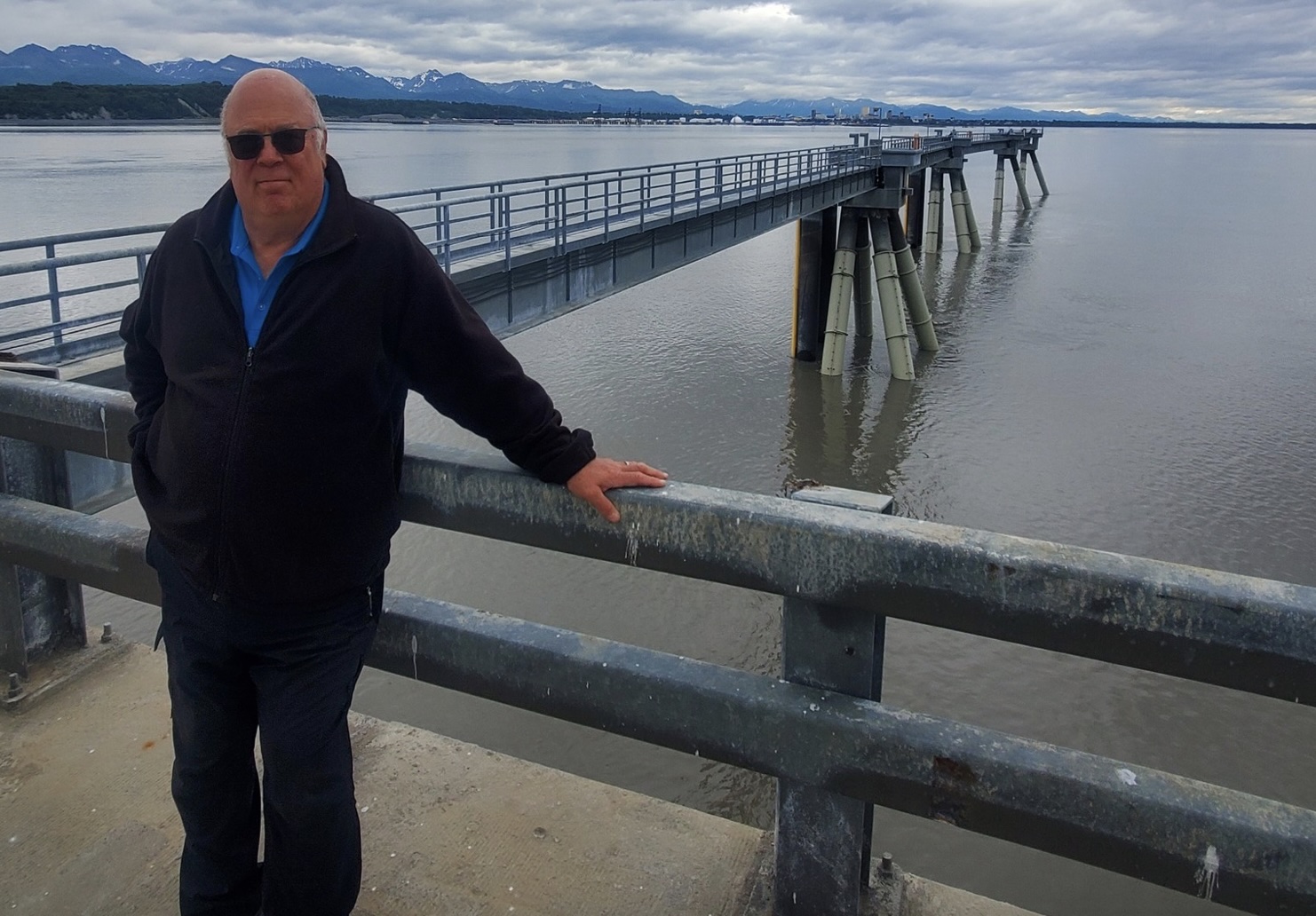
Rep. Kevin McCabe is an Alaska legislator representing District 30, Big Lake. He has lived in Alaska for 43 years, served in the US Coast Guard, as a Boeing 747 captain, and was a volunteer firefighter.




10 thoughts on “Rep. Kevin McCabe: HB 152 isn’t an Education tax — it’s Alaska’s return to a state income tax”
Any tax is bad. All a tax does is allow government to expand, and we have far too much of that already.
Alaska has a cruise ship tax. Parnell cut it by one third. Hard to be more short sighted than Dunleavy but he managed
Why pay more for what is a proven poor system. One can hardly find a well educated graduate of the Alaska public school system.
Disregarding the “dedicated fund” issue, I kinda like the tax to be called an Education Tax. Maybe then people will wake up from their slumbers and notice how much we pay for a mediocre/failing K12 system. The only problem is that many don’t even pay attention to their property taxes and how much goes for the same mediocre/failing K12 system.
Let’s go full speed to an Education Tax at about 10% and exclude school district employees because they are so poorly paid (sarc)
So essentially this is not really a tax for funding education but it is being sold s such. Just another way to feed the trough with no accountability or expectation and using the education carrot as the shiny object to deceive voters. Our legislature is pretty despicable. No offense Mr. McCabe and you have been working hard to give us details and your writing is appreciated by this reader. We have a handful of honorable and or sensible elected representation in Juneau but sadly the majority are not.
Up to 1980, Alaska and Alaskans was a different place and people. Single Alaskans and Families were more independent up to 1980. Do we really want to give more money into a state that’s government dependent.
Contrary to the over confidence of boomers, Genx, and GenY or millennials, they don’t hardly know anything at all. Boomers- your over opinionated, even racist, stricter and more conservative almost stingy parents and grandparents had better leadership skills than boomers. They may been hard on boomers but at least America wasn’t free-falling into the dumper.
The claim that SB 227 proposes a “seasonal” tax is an outright LIE! It proposes a YEAR ROUND tax that is higher in the summer. Oh, well it has a sunset clause….. What idiot would ever believe that our legislature would ever let a tax sunset? You want more money for education? Start by getting rid of at least half of the grossly overbloated school district administrations. Nearly the worst results in the nation! Throwing more money at that problem isn’t going to fix it. Someone in the legislature needs to grow a spine and tell these people HELL NO! The rest of us have to live with what we’ve got, they should, too.
Democrats, Independents who do not want to admit to being Democrats, and free-spending Republicans love to say “but it’s for the children” thereby claiming the $$ will be used for “education.” Forget the fact that abysmal student performance has not gotten any better with more $$$ and little to no accountability. All it has done is enrich the teachers union who then donate to the campaigns of legislators who promise to keep the money stream flowing.
This new income tax proposal is honestly exhausting for those of us who have stayed here for the stability. If HB 152 passes and we lose that 46-year streak of no state tax, I wonder how many small business owners will start looking for options outside the US? I’ve been researching a move to Spain to reduce some overhead, but I’m stuck on the paperwork side of things. Does anyone here have experience with the process at https://e-residence.com/pt/nie-spain-online/malaga/ for getting a tax ID remotely, or is it better to handle it through a local consulate if I’m still officially an Alaska resident?
When did Democrats/Liberals/Leftists ever tell the truth about a “new tax” or how they wanted to spend the dollars raised by a new tax? A couple of years ago the leftists on the Fairbanks North Star Borough Assembly tried the mis-named dedicated “Education Tax” ploy to raise the FNSB tax cap by 10 million dollars. But the money raised by the increase had to go into the general fund. That tax cap has been approved overwhelmingly every time it comes up for a vote. The Presiding Officer of the FNS Borough Assembly even promoted the increase on the tax cap on the radio multiple times giving the impression that the Assembly was 100% behind the tax cap being raised for “education.” When the ten million dollar tax cap raise went to the voters for approval it was defeated by more than a 60 to 40 margin.