


By SUZANNE DOWNING
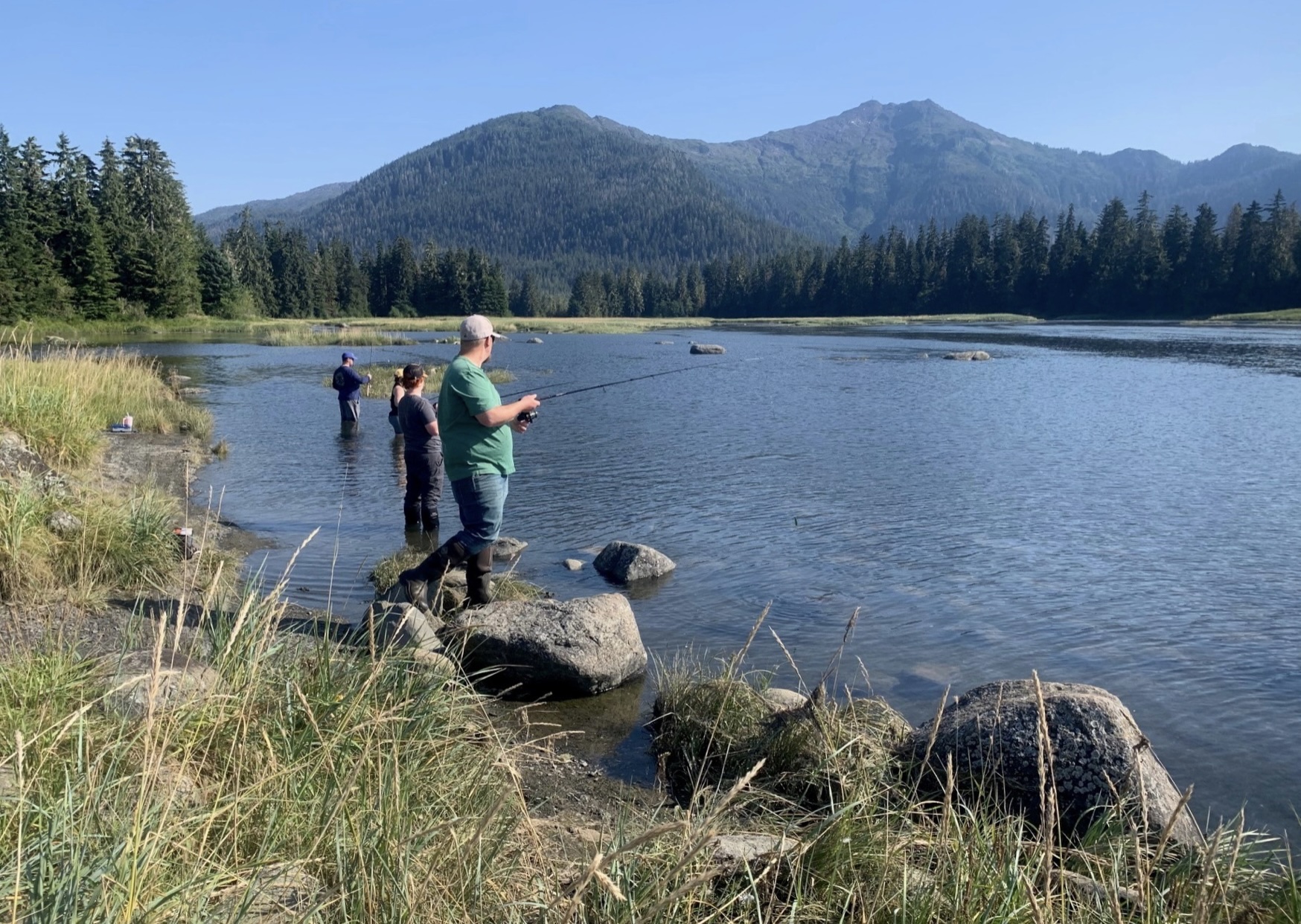
Feb. 15, 2026 – The Alaska Senate Judiciary Committee will take invited and public testimony Monday afternoon on House Bill 93, a controversial measure that opponents warn would eliminate entire classes of Alaskans from resident hunting, fishing, and trapping privileges.
The hearing is scheduled for 1:30 p.m. Monday, Feb. 16, in Butrovich Room 205, with teleconference access available.
HB 93, sponsored by Reps. Rebecca Himschoot, Sara Hannan, Jesse Burke, Dan Saddler, Andy Josephson, and Jeremy Bynum, would change the residency requirements for obtaining resident fish and game licenses by tying them to the state’s Permanent Fund Dividend allowable absence rules.
Supporters say the bill is intended to close what they describe as a loophole that allows some people to claim Alaska residency “on paper” while spending much of the year Outside, yet still receive discounted resident license fees and resident-only hunting and fishing opportunities.
But some Alaskans argue HB 93 goes far beyond tightening enforcement and instead quietly rewrites what it means to be an Alaska resident, with serious constitutional implications.
HB 93 creates a fundamental legal conflict by conditioning constitutionally protected access to Alaska’s fish and wildlife resources on compliance with a separate cash-benefit eligibility system.
Under Alaska’s established residency framework, residency is determined by domicile and intent, not by annual physical presence.
State regulation 15 AAC 23.143 recognizes residency through intent to remain indefinitely in Alaska, maintenance of Alaska ties, and the absence of residency claims elsewhere. Extended absences do not automatically terminate residency, and physical presence alone is not determinative.
The Permanent Fund Dividend program, however, operates under a narrower standard.
PFD statutes impose strict allowable absence limits for one purpose only: determining eligibility for a dividend check. Alaska law has long allowed residents to lose the dividend without losing their legal residency.
HB 93 would collapse those two systems.
The bill amends statute AS 16.05.415(a)(3) to require that resident hunting and fishing eligibility comply with AS 43.23.008, the PFD allowable absence law.
In effect, critics say, Alaskans who fail the PFD absence test would be treated as nonresidents for hunting and fishing — even though Alaska law otherwise continues to recognize them as residents.
“This is not an individualized hardship issue,” one opponent wrote in testimony. “It is a class-wide reclassification of residents.”
Those potentially affected include rotational workers, airline pilots, maritime officers, healthcare professionals, frequent travelers, and longtime Alaskans who knowingly exceed PFD absence limits while still maintaining Alaska as their permanent home.
Some argue the bill raises major constitutional questions under Article VIII of the Alaska Constitution, which guarantees common use and equal access to fish and wildlife resources for Alaskans, subject only to uniform and reasonable regulation.
By conditioning access to resident hunting and fishing privileges on eligibility standards designed for an unrelated cash benefit, critics say HB 93 risks creating non-uniform classifications among residents.
“Alaska law allows residents to lose PFD eligibility without losing residency,” one summary of the issue states. “HB 93 erases that distinction by using dividend eligibility as a proxy for residency, with direct constitutional implications for Article VIII hunting and fishing rights.”
One Alaska mariner described how the bill would affect people who are absent not because they claimed residency elsewhere, but because their profession does not fit within the narrow PFD allowable absence categories.
The mariner has been denied the dividend since beginning his maritime career in 2019, not because he left Alaska, but because he works on the “wrong” type of ship under the Permanent Fund dividend rules.
He remains a property owner, taxpayer, and born-and-raised Alaskan.
“Alaska is my home,” he wrote.
The Judiciary Committee’s hearing will include both invited and public testimony as lawmakers consider whether HB 93 is a reasonable tightening of resident license rules — or an unconstitutional restructuring of Alaska residency itself.
“This bill is not just about hunting and fishing,” one opponent warned. “This rewrites what it means to be an Alaska resident.”
HB 93 moves to Senate, would tight Alaska residency rules for hunting and fishing
6 thoughts on “Senate Judiciary to hear testimony Monday on bill that strips some Alaskans of hunting and fishing rights”
Its a revenue grabB. All those people will just have to pay non-resident rates for their licenses money straight into the state’s budget to be dispensed to cronies
As a life long Alaskan, and as mariner who specifically lost PFD privileges for a period because of absence for work aboard ships, but never having residency elsewhere, I support this change in the requirements for hunting and fishing access. I do however, believe that there should be an appeal process on individual basis for people of special work related absences. This is not so hard. Alaskas fish and game has become a contested enough resource that a tightening of requirements for access is in order.
I happen to agree with HB 93 even though many of the supporters do not get my vote. For many years lodge owners, recreation property owners and former “ Alaskan Residents” have benefited from fairly lax F&G rules and requirements. I personally know several people who used to live full time in Alaska but now reside outside. As long as they do not buy a resident license in another state or register to vote in another state they have been allowed to slide under the resident requirements as far as F&G and the current law is concerned.
I know there will be a few legitimate Alaska residents who will get caught up in the new requirements due to mentioned job requirements but just like with the PFD exceptions can be made with proof of extenuating circumstances. If a lifelong Alaskan resident decides they are ready to reside elsewhere due to health, family or just a desire to live somewhere a little warmer they are no longer Alaskan residents. Sorry
Can we add that you are prohibited from running for office unless you have reached a residency threshold of 15 years.
It’s unfortunate that so many have taken advantage of the law that should be pretty clear to everyone, the troopers haven’t help the matter by refusing to enforce the law as written, and the judiciary has completely abandoned the law as written. And it’s all done to save a few bucks. When I was younger and moved out of state, even when I came back every year I would buy a non-resident commercial and sports license because I didn’t meet the requirements, specifically the “with the intent to remain in the state indefinitely and to make a home in the state” and the “absent under circumstances, that are inconsistent with the intent required under (a) of this section.” There are more than a few people who spend a week or a few weeks here that claim to be Alaskan residents even though they do not meet those basic requirements, many of those people continue to claim residency only for the purpose of taking advantage of our lenient fish and game enforcement.
If you leave the state every year to go live in your home in another state, you likely aren’t a resident of Alaska. If the majority of your time is spent out of state, you likely aren’t a resident of Alaska. If you get an absentee ballot mailed to an out of state residence, you likely aren’t a resident of Alaska. If you do not vote in Alaska because you don’t want to be charged with election fraud, you likely aren’t a resident of Alaska. Most other states have very clear residency requirements, if ours aren’t clear enough or aren’t appropriately enforced then that needs correction.
I agree with Mitch and Steve-O.