


By ROBERT SEITZ
It has been a couple of months since I submitted an opinion piece but it is time to get back in print. Work gets in the way, but people keep doing things that are not really right.
So much has happened or is being discussed in recent weeks, which requires some critical comment. I am going to address Alaska energy and Cook Inlet gas in this commentary and some fiscal policy.
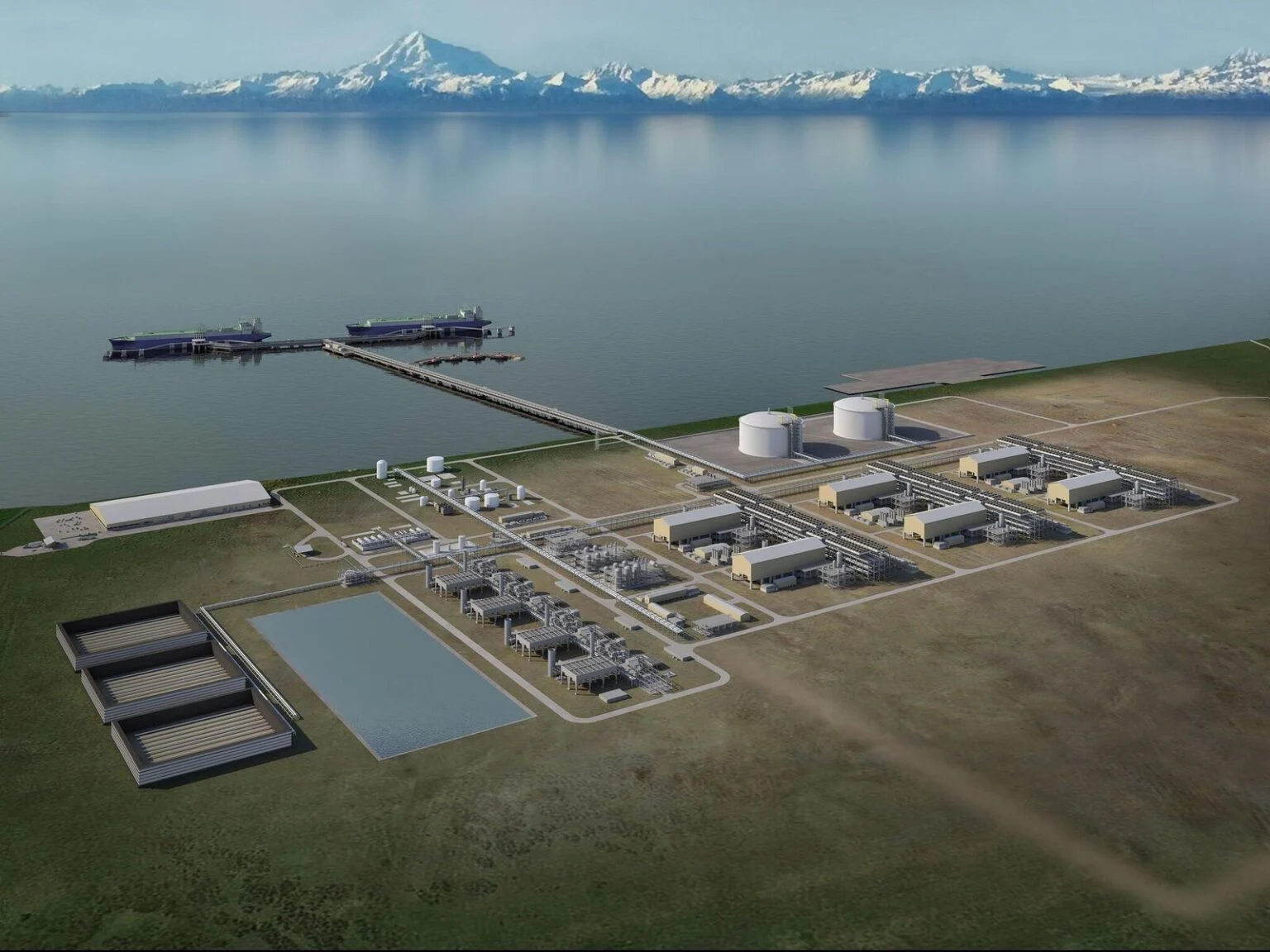
My commentary entitled “Manage industrial development with caution and care” published Nov 18, 2025 in The Alaska Story advised against setting up projects so that one can easily sabotage the success of another viable project. My example was the Alaska LNG project in competition with the development of increased production of Cook Inlet natural gas. The AK LNG project has been getting some positive press with notice that Enstar and Glenfarne are working on a contract for North Slope natural gas, but we need to continue with a desire to keep both projects viable.
Bills in the Legislature to help with reducing the effort needed to increase Cook Inlet natural gas production by placing royalty rate reduction in statute is a plus. The primary focus should be to ensure favorable financing incentive for investment in Cook Inlet gas activities and other projects around Alaska.
Recently the Alaska Industrial Development and Export Authority (AIDEA) has also received commendation for their financial support of Alaska industry and I am here to recommend that they keep providing that support especially for Cook Inlet gas. I read somewhere recently that the cost of modifying the LNG plant in Nikiski is estimated at $500 million.
For this same $500 million, John Hendrix and Furie could drill 6 or more gas wells in the next three years at a cost of $10 to $15 million each with a flow rate of 5MMscfd (million standard cubic feet per day) which would total 30MMscfd at a maximum cost of $90million.
That would leave $410million to flow gas to storage at $9 /Mscf or about 46 MMscf could be stored and ready to distribute. After the LNG plant is ready to receive LNG there is still the cost of the gas to be received.
So for the cost of a modified LNG plant we could have another 30MMscfd of production with 45MMscf in storage ready to flow. The benefit of keeping Cook Inlet gas flowing is it keeps oil and gas production jobs in the Cook Inlet area and on the Kenai Peninsula.
I keep bringing up that one benefit of the AkLNG project is that the flow of natural gas through Fairbanks will allow source of fuel for heat and electric power to be provided in the Interior and reduce the demand on Cook Inlet gas. I will continue to encourage Alaska to make the most of this opportunity to have more energy at both ends of the Railbelt. A natural gas fuel for electric generation should be much better than liquid fuel generation.
Alaska needs to be focused on cheap energy and increased revenue from our extraction industries. I know Governor Dunleavy’s intent for his fiscal program is to decrease the disincentives for investment in Alaska with reduction in corporate income tax and other features. Anything else that will provide significant more incentive for financial investment in Alaska ventures should be encouraged greatly.
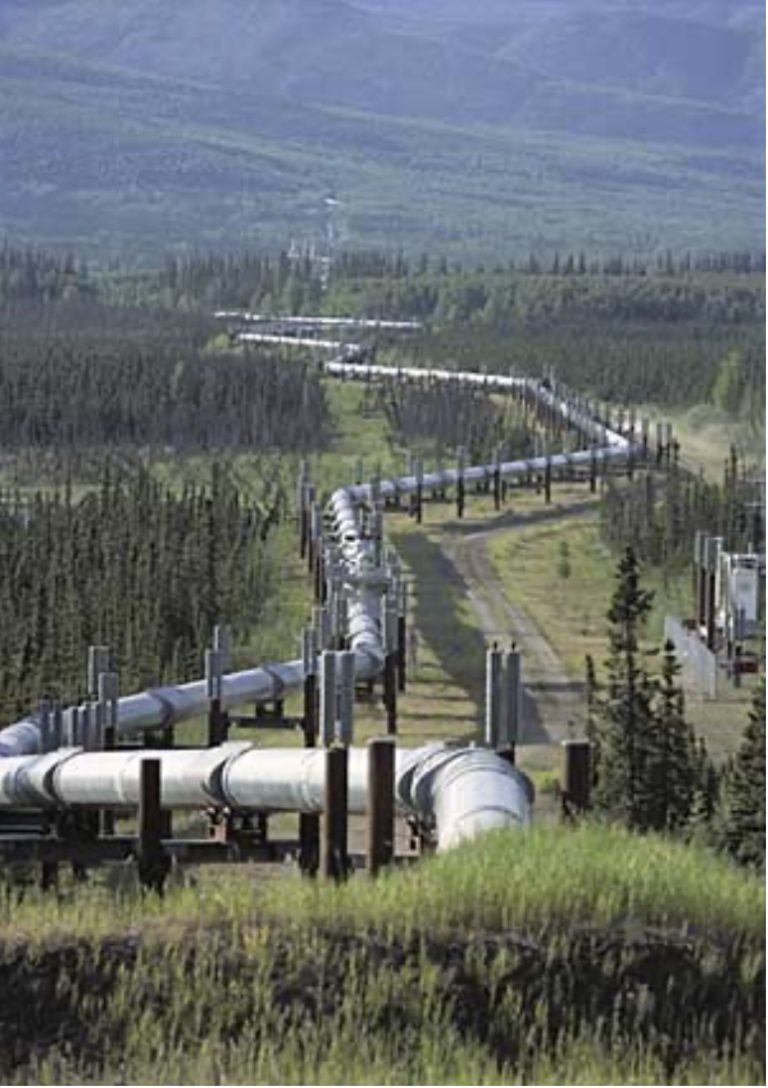
Some have asked, “Where are the American investors for the AkLNG project?” I also wonder. We need lots of incentive for our oil companies on the North Slope to look for other opportunities, to increase crude flow through the oil pipeline so we can have a more stable budget and budget plan with increased revenue from the increase quantity so that the price per barrel is not the only influencing factor during budget negotiations. We don’t want taxation to be our primary source of revenue, but instead use the revenue generated by our extractive industries, including whatever value added we can develop with our cheap energy. The LNG export will be value added to our natural gas.
The mining projects such as Pebble, Ambler, Donlin and others are wonderful opportunities to improve the financial stability of communities and regions around Alaska as well as the State of Alaska. It might help if there were American investors for those projects as well. We need to find ways to provide energy at much lower prices so refining of ores can be done on site or nearby so we have value added to our mining projects to bring more wealth to the State.
I keep hearing that we don’t have the workforce or the expertise for projects such as the AK LNG. We have the expertise we don’t have all the workers that will be needed. Our expertise has been developed through the building of the Trans-Alaska Pipeline and all the projects on the North Slope and the Cook Inlet area. If the AK LNG project stalls much longer we’ll run out of the expertise as those of us who have been doing the work can’t last much longer and then you’ll have to start all over.
If you start over you run the risk of people selecting methods and materials which are not appropriate or the best choice, and which were tried and abandoned 40 or 50 years ago. For all the oil and gas projects that are or will be considered, I hope they get started before the expertise is gone. I am a great advocate for the zone method of electrical area classification for the hazardous, explosive atmospheres that can occur in the oil and gas facilities.
My opinion is that we can design and build the electrical systems, faster and for less cost with the zone-rated products than if the Division method of classification is used. There may be other technologies that might be passed over because the expertise is no longer available.
Some of us work as consultants, but most took their retirement seriously and are traveling and relaxing. There are enough people in Alaska with Arctic experience and expertise to help ensure the new projects can be run right. If there is a project the workforce will come. Jack London went from San Francisco to the Klondike to get rich from gold, but found his true skill as a writer.
Robert Seitz, PE Electrical Engineer and is a lifelong Alaskan.

3 thoughts on “Robert Seitz: It is time to get new projects started so we can get to financial stability”
https://www.linkedin.com/pulse/alaskas-missing-energy-strategy-capturing-value-we-trudy-sobocienski-lsasc
Alaska’s Missing Energy Strategy: Capturing the Value We Already Produce
For years, Alaska’s public energy debate has centered on a familiar set of arguments: whether to increase or reduce oil taxes, which large resource project should move first, and how to stabilize a state budget that rises and falls with commodity prices. These discussions, while important, miss a more fundamental economic reality. Alaska’s long-term fiscal challenge is not simply how much resource production we generate, but how much of the value created from those resources we actually keep.
The oil and gas industry’s call to avoid additional taxation on exploration, drilling, and production has often been framed as an attempt to protect corporate profits. That interpretation oversimplifies the issue. The deeper signal from industry has been consistent for decades: Alaska cannot tax its way to fiscal stability if it continues exporting raw resources while allowing the highest-value portions of the energy supply chain to occur elsewhere.
Today, Alaska produces world-class hydrocarbons, yet much of the refining, processing, and manufacturing tied to those resources happens outside the state. Crude oil leaves Alaska, is refined elsewhere, and refined products are sold back into global markets at significantly higher margins. Natural gas faces a similar dynamic, where the conversion into higher-value exportable products — including LNG and petrochemical feedstocks — determines where the largest economic gains are realized. When those steps occur outside Alaska, the state exports not only molecules, but also jobs, industrial growth, and long-term tax base expansion.
This is not a partisan issue, nor is it a simple “industry versus government” debate. It is a structural economic question: will Alaska remain primarily an extraction economy, or will it evolve into an integrated energy-processing and manufacturing economy capable of capturing the full value of what it produces?
More than fifty years after the Alaska Native Claims Settlement Act, a new generation of Alaska Native shareholders and Alaskans across the state has gained the education, professional expertise, and global exposure needed to recognize this gap clearly. Many of us have worked in markets where energy-producing regions retain refining, manufacturing, and downstream industrial activity — and where the resulting economic stability is not driven solely by commodity price cycles. We understand that the greatest fiscal resilience comes not from increasing tax pressure at the extraction phase, but from expanding the number of value-added stages that occur within the producing region itself.
The challenge is not that Alaska lacks resources, capital access, or technical expertise. The challenge is that our policy discussions too often focus on dividing limited fiscal outcomes rather than expanding the economic base that produces them. When debates center exclusively on tax rates or which single project should take priority, we lose sight of the broader opportunity: building coordinated in-state industrial capacity that includes refining, LNG conversion, petrochemical development, and energy-intensive manufacturing powered by Alaska’s competitive energy advantage.
This shift requires leadership not only from government and industry, but also from shareholders, communities, and institutions willing to advocate for long-term structural growth rather than short-term fiscal positioning. Industry alone cannot carry this message effectively; it must come from Alaskans themselves, who recognize that retaining value within the state is essential to future economic independence.
The call to action is straightforward. Alaska must move beyond a policy framework focused primarily on extraction taxation debates and instead develop a coordinated statewide strategy to capture downstream value from its energy resources. That means supporting infrastructure that enables refining and processing, encouraging industrial investment that uses Alaska’s energy cost advantages, aligning regulatory frameworks to facilitate in-state manufacturing, and ensuring that future resource development decisions are evaluated not only on production output but on how much economic value remains within Alaska’s borders.
Fiscal stability will not come from producing more resources alone. It will come from capturing more of the value those resources create. Alaska has the resources, the technical capability, and the human capital to make that transition. The question now is whether we are willing to recognize the opportunity — and act on it — before the next generation looks back and sees another fifty years of value exported that could have been built at home.
Alaskans can’t keep paying for oil to go out, then paying extra for the same oil in the form of refined produst(gasoline) shipped back. The public is getting screwed in both directions. There needs to be more refineries HERE! Its the old story, of not allowing the colony to develop its own industry, then charging for cartel products see how England treated the 13 colonies before the Revolution
Last time I checked we don’t import gas, we do however import aviation fuel because the aviation industry (both commercial and military) consumes so much fuel here since we are located in such a geographically important area. We should refine more oil products here, especially as the West Coast states seem intent upon shutting down the refineries they have.