By REP. KEVIN MCCABE
Alaska has very few tools designed to grow our economy rather than manage decline. The Alaska Industrial Development and Export Authority is one of those tools. It exists for a clear purpose: to finance and support projects that strengthen Alaska’s economy, create jobs, and generate long term returns for the state. It was never intended to be a political battleground or a proxy forum for ideological fights already playing out elsewhere in state government.
That is why efforts to restructure AIDEA’s board and decision making process to inject legislative control and environmental advocacy representation should concern every Alaskan who cares about jobs and economic development.
AIDEA works because it is insulated from day-to-day politics. Its board is structured to focus on finance, feasibility, and public benefit. Projects rise or fall based on whether they pencil out, serve a clear public purpose, and comply with existing law, including environmental law. When AIDEA is allowed to function as designed, it behaves more like a disciplined investment authority for building Alaska than a traditional state agency.
HB 124 would change that balance. Adding legislative appointees from an often partisan legislature, along with representatives of environmental advocacy organizations, is not about improving expertise. It is about shifting outcomes by constraining the board’s independence. It signals that project decisions should be filtered through political priorities rather than evaluated on their merits. That is a dangerous shift for an authority whose credibility depends on independence and predictability.
It is also unnecessary.
Every project AIDEA considers is already subject to extensive environmental review. State permitting, federal permitting, public notice, comment periods, and litigation risk are baked into the process. Alaska has some of the most rigorous environmental standards in the country, and AIDEA does not get to waive them. Claims that environmental interests need a dedicated seat on AIDEA’s board imply these existing controls are inadequate. That is simply not true.
What this approach really does is move environmental advocacy from the permitting arena, where it belongs, into the financing and governance arena, where it does not. AIDEA’s board should not be re-litigating environmental policy questions already settled in statute and regulation. Its job is to assess financial risk, public benefit, and long term value to the state.
The same concern applies to increased legislative control. Oversight is appropriate. Micromanagement is not. The Legislature already sets AIDEA’s statutory mission, confirms board members, and reviews its finances. Requiring legislative approval for major investments or capping AIDEA’s retained earnings may sound like accountability, but in practice it turns AIDEA into just another arm of the capital budget.
That has real consequences. The legislature already struggles to manage the state budget. Do we really want to give them more to manage?
Economic development does not move at the speed of legislative sessions. Opportunities often require timely commitments, coordination with private partners, and the ability to leverage capital when it becomes available. If AIDEA must wait for legislative approval or worry that its reserves will be swept into the general fund, it loses the flexibility that makes it effective in the first place.
I have written before that AIDEA is not a slush fund and not an ATM for the Legislature. It earns money. It reinvests that money. It reduces risk for projects that benefit Alaskans. Weakening its balance sheet or tying its hands with political approvals undermines its ability to do exactly what it was created to do.
There is also a broader principle at stake. When boards are redesigned to guarantee seats for specific ideological interests, the message is clear: outcomes matter more than process. The “board stacking” approach rarely produces better policy. It produces gridlock, risk aversion, and decisions driven by optics rather than results. Alaska has enough of that already.
If legislators believe environmental standards should be stricter, they should debate that openly through legislation. If they believe AIDEA’s mission should change, they should amend the statute directly and accept responsibility for the consequences. What they should not do is quietly transform an economic development authority into a political committee by stacking the board and altering its composition.
AIDEA should be judged on clear metrics. Jobs created. Revenue generated. Risk managed. Public benefit and dividends delivered. Transparency and reporting can always be improved, and that is a fair conversation. But transparency is not the same as politicization, and accountability is not the same as control.
Alaska needs institutions capable of building, financing, and thinking long term. We cannot afford to turn every effective tool into a process heavy, risk averse extension of the political system. Once that happens, opportunity leaves, capital dries up, and the only thing that grows is government paperwork.
Keeping AIDEA free from legislative micromanagement and environmental advocacy capture is not about favoring industry over the environment or the executive branch over the Legislature. It is about preserving a rare institution that still knows how to evaluate projects based on facts, finance, and long term benefit to Alaskans.
We should strengthen AIDEA by protecting its independence, not weaken it by turning it into just another arena for political influence and the free market limiting pressures of DEI/ESG.
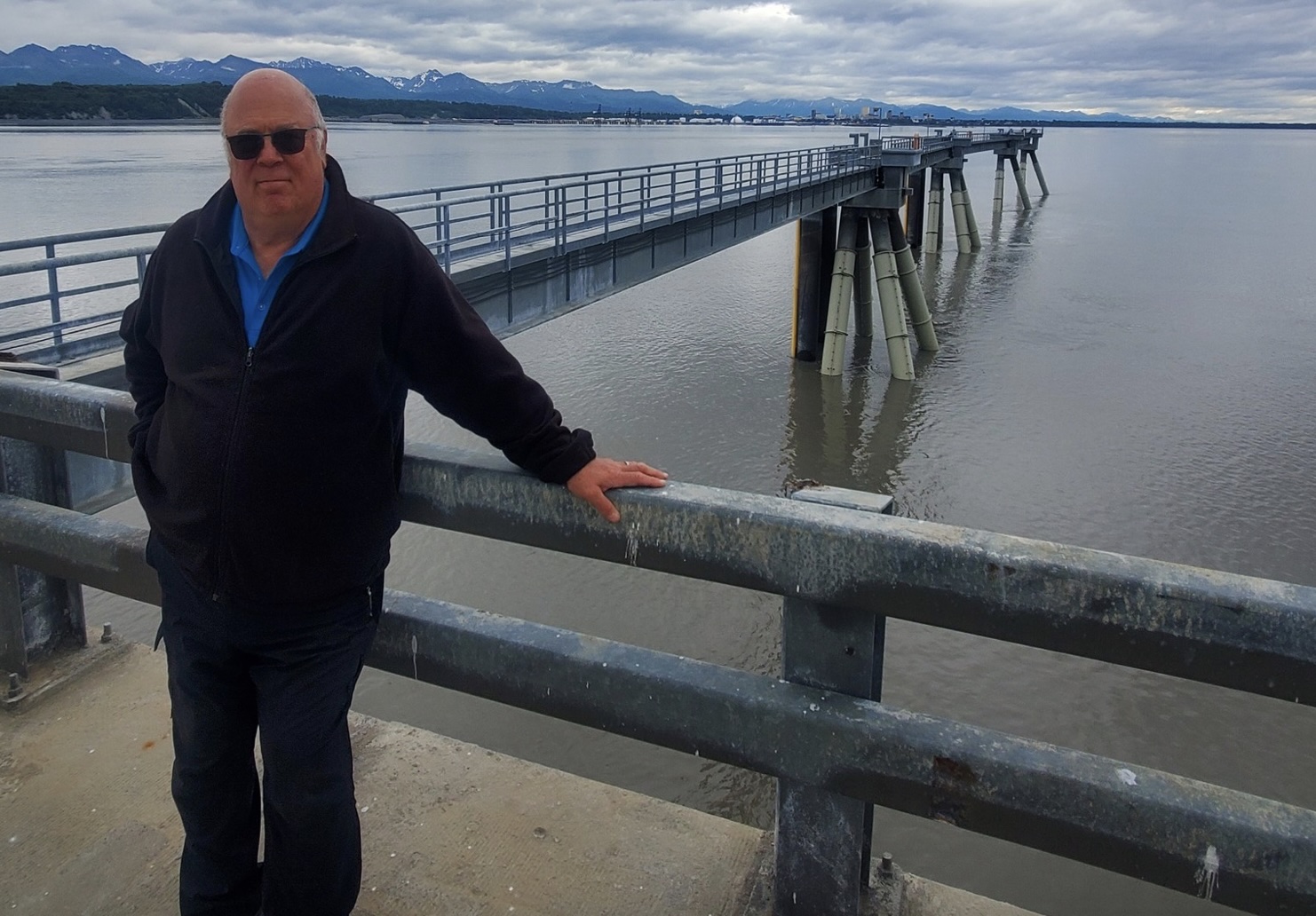
Rep. Kevin McCabe is an Alaska legislator representing District 30, Big Lake. He has lived in Alaska for 43 years, served in the US Coast Guard, as a Boeing 747 captain, and was a volunteer firefighter.
Kevin McCabe: Let’s get back to building great big durable things in Alaska
Home » Kevin McCabe: Keep AIDEA free from political battles
Kevin McCabe: Keep AIDEA free from political battles
By REP. KEVIN MCCABE
Alaska has very few tools designed to grow our economy rather than manage decline. The Alaska Industrial Development and Export Authority is one of those tools. It exists for a clear purpose: to finance and support projects that strengthen Alaska’s economy, create jobs, and generate long term returns for the state. It was never intended to be a political battleground or a proxy forum for ideological fights already playing out elsewhere in state government.
That is why efforts to restructure AIDEA’s board and decision making process to inject legislative control and environmental advocacy representation should concern every Alaskan who cares about jobs and economic development.
AIDEA works because it is insulated from day-to-day politics. Its board is structured to focus on finance, feasibility, and public benefit. Projects rise or fall based on whether they pencil out, serve a clear public purpose, and comply with existing law, including environmental law. When AIDEA is allowed to function as designed, it behaves more like a disciplined investment authority for building Alaska than a traditional state agency.
HB 124 would change that balance. Adding legislative appointees from an often partisan legislature, along with representatives of environmental advocacy organizations, is not about improving expertise. It is about shifting outcomes by constraining the board’s independence. It signals that project decisions should be filtered through political priorities rather than evaluated on their merits. That is a dangerous shift for an authority whose credibility depends on independence and predictability.
It is also unnecessary.
Every project AIDEA considers is already subject to extensive environmental review. State permitting, federal permitting, public notice, comment periods, and litigation risk are baked into the process. Alaska has some of the most rigorous environmental standards in the country, and AIDEA does not get to waive them. Claims that environmental interests need a dedicated seat on AIDEA’s board imply these existing controls are inadequate. That is simply not true.
What this approach really does is move environmental advocacy from the permitting arena, where it belongs, into the financing and governance arena, where it does not. AIDEA’s board should not be re-litigating environmental policy questions already settled in statute and regulation. Its job is to assess financial risk, public benefit, and long term value to the state.
The same concern applies to increased legislative control. Oversight is appropriate. Micromanagement is not. The Legislature already sets AIDEA’s statutory mission, confirms board members, and reviews its finances. Requiring legislative approval for major investments or capping AIDEA’s retained earnings may sound like accountability, but in practice it turns AIDEA into just another arm of the capital budget.
That has real consequences. The legislature already struggles to manage the state budget. Do we really want to give them more to manage?
Economic development does not move at the speed of legislative sessions. Opportunities often require timely commitments, coordination with private partners, and the ability to leverage capital when it becomes available. If AIDEA must wait for legislative approval or worry that its reserves will be swept into the general fund, it loses the flexibility that makes it effective in the first place.
I have written before that AIDEA is not a slush fund and not an ATM for the Legislature. It earns money. It reinvests that money. It reduces risk for projects that benefit Alaskans. Weakening its balance sheet or tying its hands with political approvals undermines its ability to do exactly what it was created to do.
There is also a broader principle at stake. When boards are redesigned to guarantee seats for specific ideological interests, the message is clear: outcomes matter more than process. The “board stacking” approach rarely produces better policy. It produces gridlock, risk aversion, and decisions driven by optics rather than results. Alaska has enough of that already.
If legislators believe environmental standards should be stricter, they should debate that openly through legislation. If they believe AIDEA’s mission should change, they should amend the statute directly and accept responsibility for the consequences. What they should not do is quietly transform an economic development authority into a political committee by stacking the board and altering its composition.
AIDEA should be judged on clear metrics. Jobs created. Revenue generated. Risk managed. Public benefit and dividends delivered. Transparency and reporting can always be improved, and that is a fair conversation. But transparency is not the same as politicization, and accountability is not the same as control.
Alaska needs institutions capable of building, financing, and thinking long term. We cannot afford to turn every effective tool into a process heavy, risk averse extension of the political system. Once that happens, opportunity leaves, capital dries up, and the only thing that grows is government paperwork.
Keeping AIDEA free from legislative micromanagement and environmental advocacy capture is not about favoring industry over the environment or the executive branch over the Legislature. It is about preserving a rare institution that still knows how to evaluate projects based on facts, finance, and long term benefit to Alaskans.
We should strengthen AIDEA by protecting its independence, not weaken it by turning it into just another arena for political influence and the free market limiting pressures of DEI/ESG.
Rep. Kevin McCabe is an Alaska legislator representing District 30, Big Lake. He has lived in Alaska for 43 years, served in the US Coast Guard, as a Boeing 747 captain, and was a volunteer firefighter.
Latest Post
AK LNG briefing by GafneyKline warns lawmakers of the big unknowns
By SUZANNE DOWNING The proposed Alaska LNG project is a development of national and global
Roe at 52: The decision that centralized power over abortion law, and the Dobbs ruling that gave it back
By SUZANNE DOWNING On Jan. 22, 1973, the United States Supreme Court issued a decision
Democrat Alaska lawmakers want military to brief them on Minnesota deployment
By THE ALASKA STORY Members of the Alaska Legislature’s Joint Armed Services Committee are seeking
Comments