


By SUZANNE DOWNING
As President Donald Trump revs up renewed interest in incorporating Greenland into the United States, the comparison between Greenland and Alaska that is debated most is geopolitical: Will NATO go along with it? What does Denmark say?
What is not being discussed is the human question: How do Inuit people fare under the Alaska model of statehood versus how they’ve survived Greenland’s model of self-rule under Denmark?
The answer reveals two fundamentally different approaches to Indigenous governance and economic power, and two very different sets of outcomes.
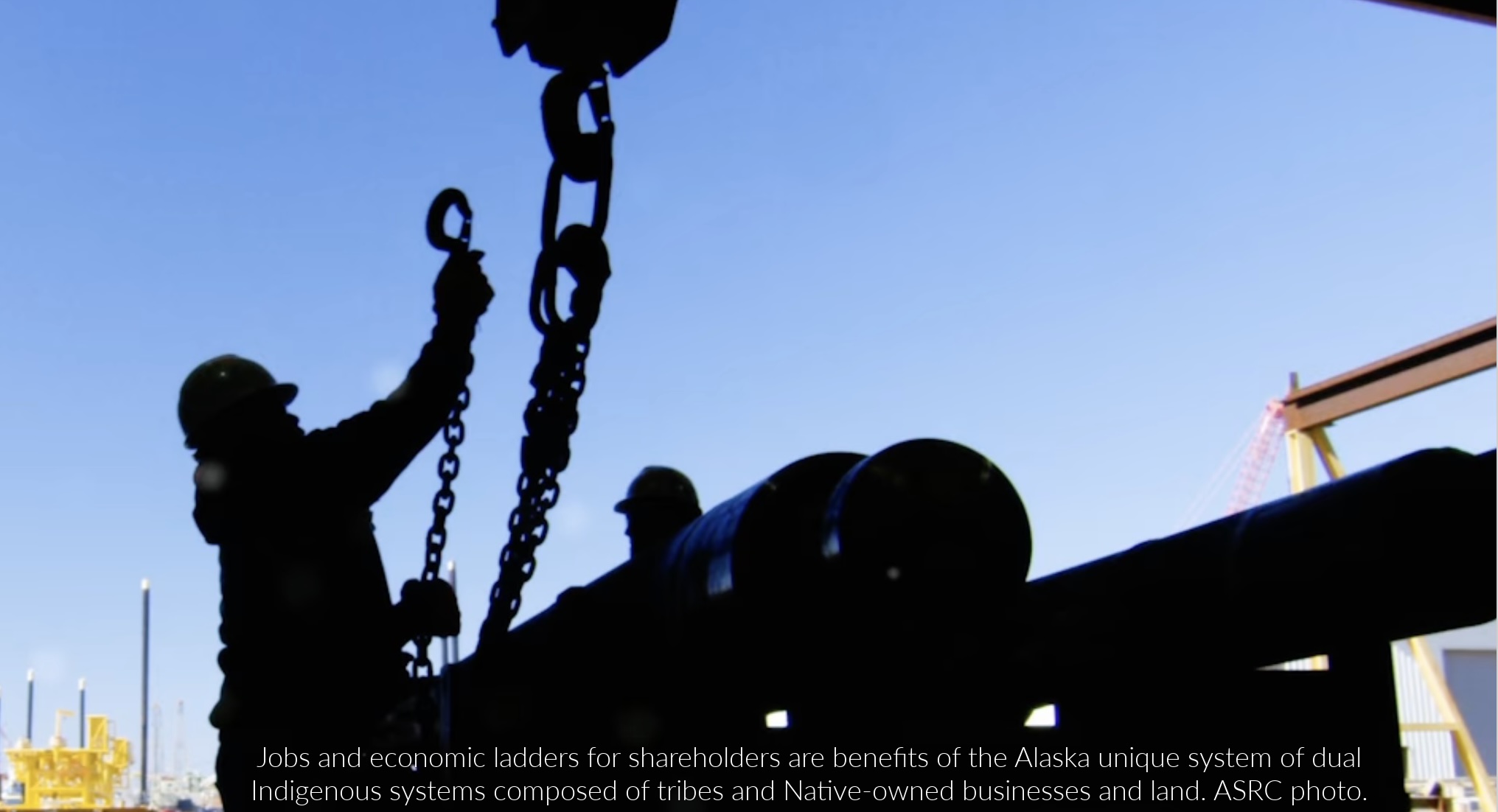
Alaska’s framework is globally unique. Under the Alaska Native Claims Settlement Act of 1971, Congress extinguished aboriginal land claims and created a system of for-profit, shareholder-owned Alaska Native corporations, 12 regional corporations plus one for Alaska Natives living outside the state, along with more than 200 village corporations.
These corporations collectively own about 44 million acres of land and subsurface rights. They operate major businesses in energy, construction, defense contracting, logistics, IT, and finance. Together, they generate billions of dollars in annual revenue, taxes, and they pay dividends to Native shareholders, fund scholarships and retirement accounts. They provide access to capital markets and function as permanent, intergenerational capital vehicles, independent of government budgets.
Alaska Native corporations are now some of the largest private businesses in the state.
Alongside this unique corporate structure, Alaska also has more than 200 federally recognized tribal governments. These tribes exercise limited, yet real sovereign authority that delivers health care, housing, social services, and cultural programs, often with direct federal funding. Crucially, the corporate and tribal systems are separate: Corporations are not governments, and tribes are not businesses.
The result is a dual Indigenous system: Economic power plus political sovereignty. This model exists nowhere else in the world.
Greenland follows a very different path. The Inuit (Kalaallit), who make up the vast majority of the island’s mere 56,000 residents, achieved Home Rule in 1979 and expanded autonomy under the Self-Government Act of 2009. Greenland has its own parliament (Inatsisartut) and executive (Naalakkersuisut), elected by all residents.
But what Greenland does not have are Alaska-style Indigenous corporations or tribal governments.
Instead, all land in Greenland is publicly owned and administered by the Greenlandic government. There are no shareholder-owned Native corporations, no private Indigenous land base, and very little business activity or dividend-generating institutions. Resource management of fisheries, minerals, and other assets is centralized within government, often through state-owned enterprises, municipal governments, or Danish subsidiaries.
Indigenous representation occurs through political parties, public institutions, and advocacy groups such as the Inuit Circumpolar Council, but there are no organized tribes with sovereign authority and no Indigenous private capital vehicles comparable to ANCSA corporations.
The economic consequences are stark.
While in Alaska, Inuit shareholders hold equity, receive annual dividends, and benefit from corporate employment across the private sector, the Greenland economy is small and narrow, dominated by fishing, public employment, and government-linked enterprises.
Alaska Inuit participate in a mixed cash-and-subsistence economy, with greater access to wage employment, private income, and capital.
Roughly half of Greenland’s public budget comes from Denmark’s annual block grant, leaving the territory structurally dependent on Copenhagen for fiscal stability. Without that block grant, Greenland might collapse economically altogether.
Measured across income, employment, and access to capital, Alaska Inuit are significantly better off economically than their Greenlandic counterparts, even after adjusting for cost of living. Alaska’s overall GDP is higher than Greenland’s, and Greenland’s economy is smaller, and heavily concentrated in the public sector.
Both regions face serious social challenges, including high suicide rates. But Greenland’s suicide rates, particularly among Inuit men, are among the highest in the world, alongside higher levels of substance abuse and domestic violence. Alaska faces similar issues, but benefits from a robust Alaska Native tribal health system (Alaska Native Tribal Health Consortium), while Greenlanders often must travel to Denmark for specialized medical care, delivered under the European socialist model.
Greenland has achieved cultural and political self-rule, but it’s impoverished. Without Indigenous ownership of land, capital, or profit-generating institutions, autonomy has not translated into broad-based economic strength and no ladder up economically.
Alaska’s model, born of ANCSA, produced something different: Wealth for Inuit people for many generations passed and to come.
As Washington and the world debate Greenland’s future, the comparison is worth studying. Self-determination paired with Indigenous ownership and access to capital can deliver durable economic power. Or the 56,000 Greelanders can remain in poverty, under centralized government control and dependent on handouts.
Greenland shows the limits of political autonomy in Arctic zones, when wealth-building systems are not part of the picture.


3 thoughts on “Alaska vs. Greenland: Two Inuit homelands, two systems—and very different outcomes”
Did you send this to President Trump? Seems like he would benefit from this analysis.
Well done, very well done. People, all people need to be responsible for their own livelihoods. Rights are wonderful, but without personal responsibility they are meaningless.
Greenland is 2000 miles from Denmark. US is closer. Denmark couldn’t stop a flotilla of kayaks invading Greenland, let alone Russian subs and Chinese warships transitioning through the Northwest Passage.
.
So here’s an idea while we wait for Trump to invade and conquer: Have ICE deport illegals to Greenland. Issue them a pair of mukluks, a parka, good mits, goggles, one bottle of Glenfiddich, and a two-gallon honey-bucket for those 361 cold nights each year.