


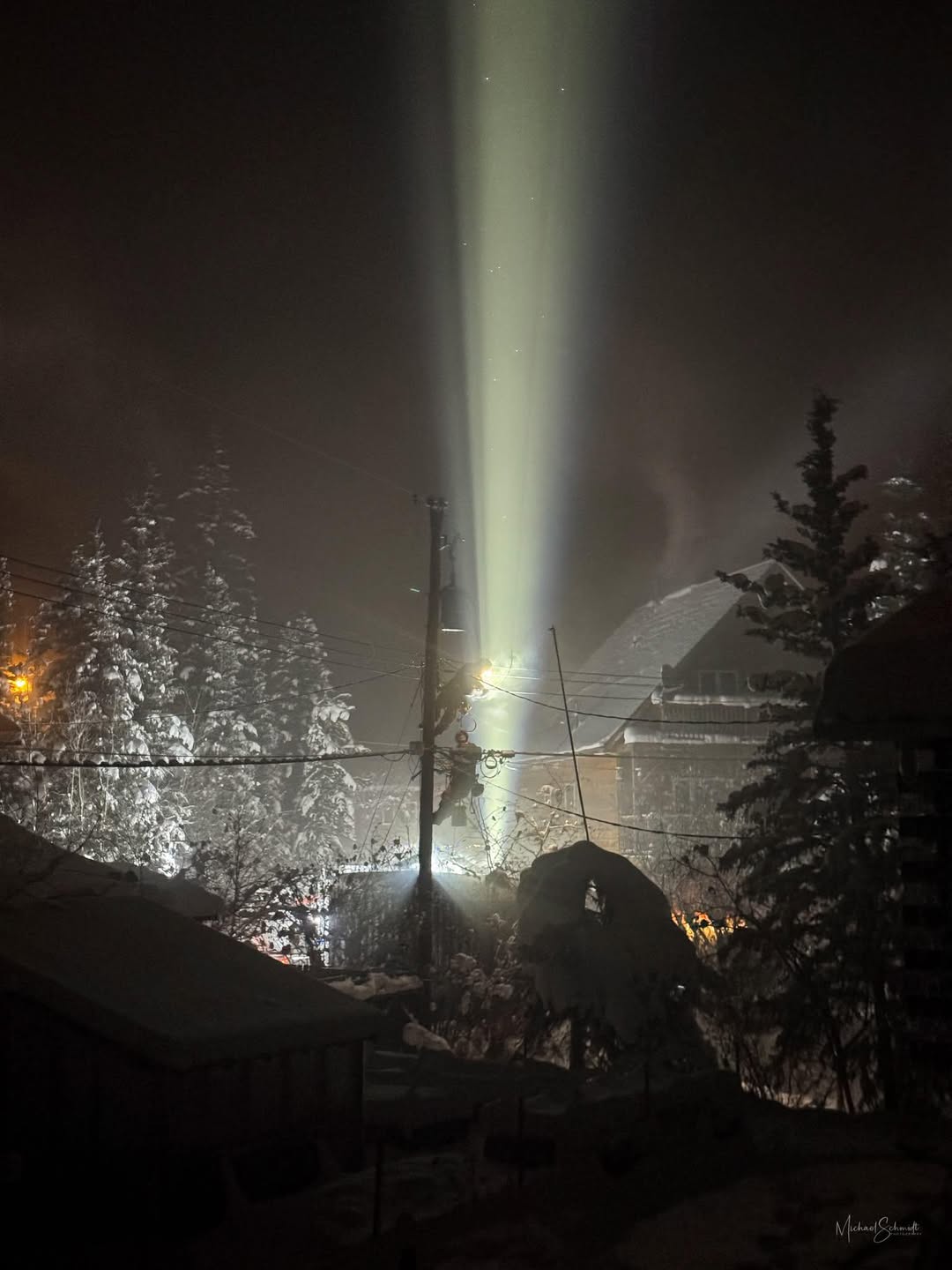
A prolonged and severe cold spell over Yukon Territory in December pushed the region’s electrical system close to its limits, highlighting long-standing vulnerabilities in generation capacity and infrastructure planning.
Beginning around Dec. 8, temperatures plunged across the territory, with Whitehorse recording lows near −44°F and several rural communities falling below −58°F. Faro reached −62°, breaking local records, while wind chills approached −58° in parts of the territory as a deep Arctic air mass settled over Western Canada.
The extreme cold drove electricity demand to unprecedented levels. On Dec. 22, Yukon’s power system reached a peak load of approximately 123 megawatts, surpassing previous records and approaching the system’s overall capacity of roughly 140 megawatts. At points earlier in the cold snap, the grid was operating at close to 90% of available capacity, prompting government conservation warnings and concern over potential rolling outages, particularly in and around Whitehorse.
Yukon’s electricity supply is heavily dependent on hydroelectric generation, which accounts for roughly 90 to 95% of total power production, according to the Canadian government, which has been pushing renewables as a greater portion of the power portfolio. That reliance became a constraint this winter as reservoir levels were already below average. The Aishihik reservoir, one of the territory’s key hydro assets, was reported to be more than three feet below normal by October 2025.
Lower water levels reduced available hydro output just as demand surged, forcing utilities to lean more heavily on thermal generation fueled by diesel and liquefied natural gas. While those backup systems prevented widespread outages, they operate at higher cost and face performance limits during prolonged extreme cold.
Local equipment failures added to the strain. On Dec. 22, a generator outage in Haines Junction caused by an exhaust leak resulted in a community-wide blackout during −44° temperatures. Power was restored within hours, but the incident exposed the system’s limited margin for error during peak winter conditions.
As of Dec. 25, no territory-wide blackouts had occurred, and power remained stable through Christmas Day. Temperatures were forecast to moderate into the single digits by the weekend, possibly easing immediate pressure on the grid.
Nevertheless, government officials warned that risks would remain elevated as long as extreme cold persisted.
Energy Minister Ted Laking urged residents to conserve electricity by reducing non-essential usage, lowering thermostats where possible, and avoiding peak-hour appliance use. Emergency officials also encouraged households to maintain 72-hour winter emergency kits, including flashlights, warm clothing, food, and medications.
Beyond the immediate weather event, the December cold snap raises questions about policy decisions that have shaped Yukon’s power system over the past decade.
A central issue is the territory’s heavy reliance on hydroelectric power without sufficient diversification for winter peak demand. While hydro has long been favored for environmental reasons and aligns with the government’s “Our Clean Future” climate strategy, water-dependent generation leaves the system exposed to low-snow and low-precipitation years, or extreme weather events.
Plans for additional thermal backup capacity have also been delayed or abandoned. A proposed new backup thermal plant was shelved in 2019 amid public opposition and a push for more renewable-focused alternatives.
As a result, Yukon entered the winter of 2025 with limited capacity despite rising population, increased electrification, and steadily growing winter peaks.
Aging infrastructure adds to the challenge. Major assets, including the Aishihik dam spillway, need significant capital investment, with replacement costs estimated in the hundreds of millions of dollars. Deferred maintenance and constrained utility finances have limited the pace of upgrades, leaving the system more vulnerable during extreme weather.
Long-term demand management has also lagged growth. Wind and solar generation remain minimal contributors during Yukon’s dark winter months, and questions have been raised about the suitability of some electrification strategies, such as electric heating, under sustained extreme weather conditions.
Photo above: Haines Junction power crews work in sub-zero weather to restore power after a generator failure.



4 thoughts on “Extreme cold pushes Yukon power grid to the edge, exposing long-standing policy gaps”
See! It’s expensive and unrealistic for Alaskans to be as Government dependent as we are. The taxpayer money the legislature it spends to maintains government paid jobs for either workers working for government, courts, public assistance, or non profits takes money away from infrastructures, technologies and its innovations and advancements that would make Alaska more competitive and advanced civilization
Our dependency brings this whether it’s the Yukon power grid, or Cook Inlet gas all upon ourselves For lacking honesty and imagination beyond government.
The deferred maintenance that’s our fault, its just like us having a car and routinely not taking it into mechanic shop for its maintenance just because we can still drive it.
If the legislatures today and before weren’t blowing money on stupidity for our own government dependency
It will had placed it where it was needed like maintaining the states existing infrastructures. The the systems as old as they are would be running like new
Hmmm(?) … it seems prudent and wise to have a back-up power source, fully automated and remotely controlled, to protect your $750K+ property asset. It’s a simple 15kW Generator plus Auto-Transfer Switch with a 1000gal Propane Tank. Probably about a $30K investment that can and/or will protect your asset when needed (specifically when the SHTF!), as well as provide a unique selling option not offered by most other competing properties on the market, when you decide to sell in the future.
Just more anthropogenic global warming, nothing to see here move along.