


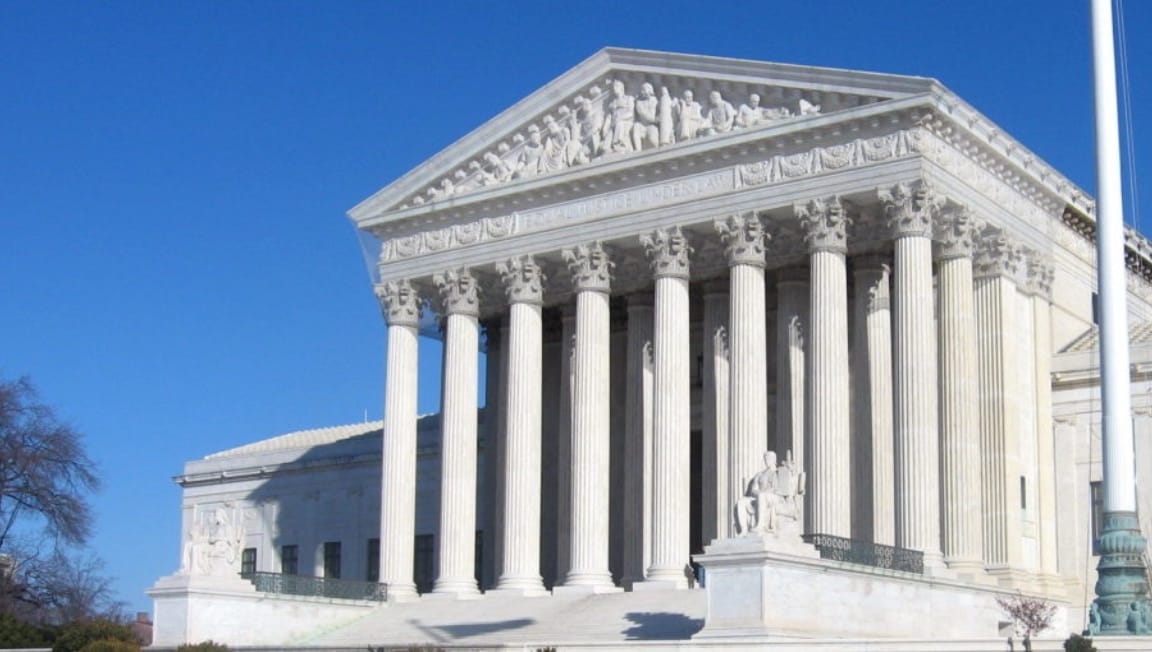
The US Supreme Court on Tuesday declined to intervene in a legal dispute over the Trump administration’s use of the National Guard, leaving in place a federal court order that bars the deployment of Guard troops in Illinois.
In a three-page unsigned order issued on the court’s final day before its Christmas recess, the justices rejected the administration’s request to pause a temporary restraining order issued Oct. 9 by US District Judge April Perry in Chicago.
The court concluded that, at this stage of the litigation, the federal government had not identified a lawful basis for deploying the Guard.
“At this preliminary stage,” the court wrote, “the Government has failed to identify a source of authority that would allow the military to execute the laws in Illinois.”
The decision marks the second setback for the Trump administration at the Supreme Court in less than a week and represents an early test of presidential authority to federalize National Guard units, which are often controlled by state governors.
President Donald Trump announced the deployment of roughly 300 National Guard members to the Chicago area in early October, citing the need to combat crime and assist federal immigration enforcement. The move followed similar Guard deployments in other cities led by Democratic mayors, including Washington, DC and Los Angeles.
Illinois and the city of Chicago immediately challenged the action in federal court. Judge Perry barred the federal government from “ordering the federalization and deployment of the National Guard of the United States within Illinois,” finding that the statutory conditions for doing so had not been met.
The US Court of Appeals for the 7th Circuit largely upheld Perry’s ruling one week later. The appeals court found that protests related to immigration enforcement, while sometimes “spirited” and “occasionally violent,”did not amount to a rebellion or danger of rebellion under federal law. It also concluded there was insufficient evidence that protest activity had significantly impeded federal officers from enforcing immigration laws.
US Solicitor General D. John Sauer asked the Supreme Court to pause Perry’s order, arguing that it caused “irreparable harm to the Executive Branch by countermanding the President’s authority as Commander in Chief.” Sauer contended that courts should not second-guess the president’s determination that he is unable to execute the laws with existing forces, or that any review should be highly deferential.
Illinois and Chicago countered that federal courts have long exercised the responsibility to review executive action, including presidential decisions invoking emergency powers. They argued that nothing in the statute governing National Guard federalization makes the president the sole judge of whether its conditions are met.
The law at the center of the dispute allows a president to federalize the National Guard when the United States faces an invasion, a rebellion or danger of rebellion, or when the president is unable “with the regular forces” to execute federal law.
In its order, the Supreme Court majority indicated that the phrase “regular forces” likely refers to the regular US military, not civilian law enforcement. Under that interpretation, the president would need statutory or constitutional authority to deploy the active-duty military domestically and demonstrate that he is unable to enforce the law using those forces before calling up the Guard.
The court concluded that the Trump administration had not made such a showing.
Justice Samuel Alito, joined by Justice Clarence Thomas, issued a 16-page dissent criticizing the majority for addressing statutory issues raised for the first time in a Supreme Court amicus brief rather than in the lower courts. Alito warned that the ruling could undermine the federal government’s ability to protect its officers.
“Whatever one may think about the current administration’s enforcement of the immigration laws or the way ICE has conducted its operations,” Alito wrote, “the protection of federal officers from potentially lethal attacks should not be thwarted.”
Justice Neil Gorsuch also dissented, emphasizing the gravity of questions involving domestic use of military forces. He said he would have granted the government’s request based on the arguments preserved by the parties and the evidentiary record developed in the lower courts.
The ruling is likely to have broader implications beyond Illinois. On Nov. 7, a federal judge in Portland permanently barred the Trump administration from deploying the National Guard near an Immigration and Customs Enforcement facility there. U.S. District Judge Karin Immergut, a Trump appointee, found that while violent protests occurred earlier in the year, they had largely subsided and that the president lacked a lawful basis for Guard deployment.
That case, currently pending before the 9th Circuit, had been placed on hold pending the Supreme Court’s decision in the Chicago dispute. Tuesday’s ruling is expected to make it substantially more difficult for the administration to rely on the same statute to deploy the National Guard in other cities.
The litigation over the president’s authority to federalize the Guard continues in the lower courts.


3 thoughts on “Supreme Court rules no National Guard to Chicago for now”
Seems fair
But what happens for future generations if state residents do not have their state officials protecting their communities from violence and violent criminals
Then who’s to intervene on the state residents behalf when elected public officials are negligent? Because there is a whole lot of negligence going on by elected members in the Governors office, the legislature, and the Assemblys in states.
For ’inquisitive’ reader reference and edification, Chicago crime rate tracker website …
https://heyjackass.com/
Pull ICE out too, Let Chicago deal with their high crime, Mayor said he can handle it, Let him, My guess is he can’t.