



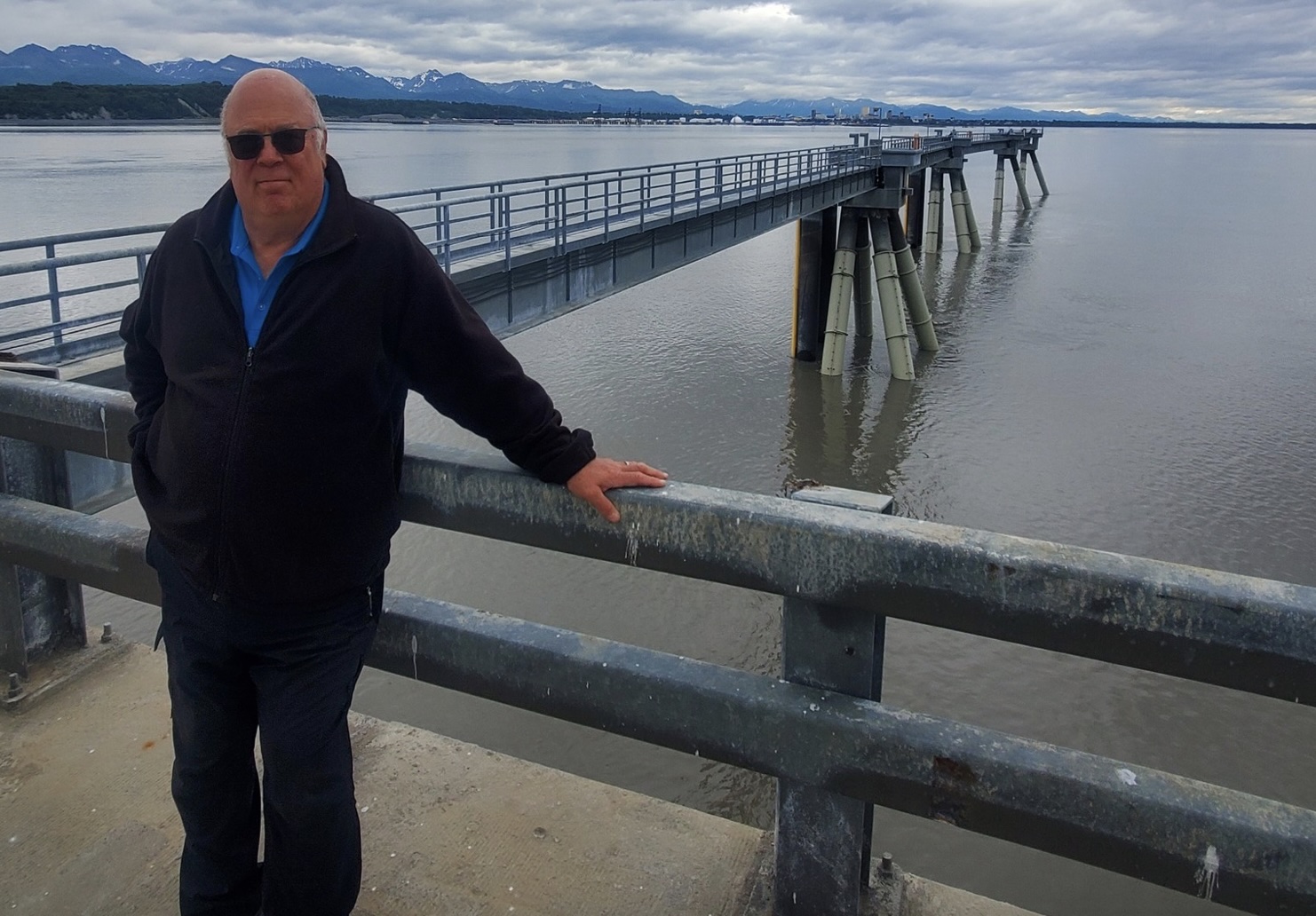
By REP. KEVIN MCCABE
An Anchorage senator recently posted to Facebook denouncing the Dunleavy administration for redirecting $18.7 million in federal Highway Safety Improvement Program funds from Anchorage projects to the Mat-Su and Fairbanks.
He called the move outrageous and overreaching, claimed it undermines local planning through AMATS, and warned it would worsen pedestrian deaths in the city. He even threatened to take a close look at how the department is funded and who is responsible for the decision to ensure it never happens again.
That reaction says a lot, and none of it is good.
It exposes the same urban tunnel vision we see every session, the belief that Anchorage is the center of Alaska’s universe and everyone else should wait their turn, even when the risks outside the city are far greater and far more deadly.
Safety dollars should go where lives are most at risk, not where the loudest press releases are written.
Anchorage absolutely has real safety challenges. Fifteen pedestrian deaths in 2024 are tragic. Any loss of life is unacceptable. But context matters. These deaths occur almost entirely on low-speed, lighted urban roads with sidewalks, crosswalks, signals, and emergency responders minutes away. The HSIP projects Anchorage lost involve improvements like signage, signals, and pedestrian treatments. Useful projects, yes, but not the difference between life and death in the way rural infrastructure often is.
Much of Anchorage’s increase in fatalities correlates with behavior and enforcement issues, including impairment, as well as policy choices such as the Anchorage Assembly’s decriminalization of jaywalking. State DOT Infrastructure money alone does not solve those problems. Anchorage’s challenges are serious, but they are manageable urban problems in a controlled environment with deep layers of public services and an assembly that could make a difference with a simple vote.
That is not what exists north of Wasilla.
The Parks Highway through the northern Mat-Su Valley is a completely different world. This is a high-speed, high-risk corridor carrying commuters, freight, tourists, and through traffic between Anchorage and Fairbanks. Speeds reach 65 miles per hour. Weather changes fast. Wildlife crosses without warning. Lighting is nonexistent. Cell service is spotty. When something goes wrong, help can be an hour or more away.
State data consistently shows rural highways account for a disproportionate share of fatal crashes. Per mile traveled, rural Alaskans die at rates far higher than urban drivers and pedestrians. When a crash happens on the Parks Highway, it is not a fender bender. It is often catastrophic. Delays in emergency response turn survivable incidents into fatalities.
That is what real risk looks like.
And yet the same urban legislators who cry foul over redirected safety dollars were silent, or worse, complicit, when the legislature cut funding to reopen the Talkeetna trooper post.
The Mat-Su Valley has over 100,000 residents and some of the lowest law enforcement coverage in the state. Communities like Talkeetna, Willow, and Trapper Creek rely entirely on troopers based 45 to 60 miles away. Response times can stretch into hours. That reality affects traffic accidents, stranded motorists, often Anchorage or Fairbanks residents passing through, and criminal emergencies alike.
Governor Dunleavy proposed $2.4 million in FY2026 to reopen the Talkeetna trooper post. The legislature stripped it out. Somehow that was acceptable. But redirecting federal safety funds to protect people on one of Alaska’s most dangerous highways is suddenly treated as an outrage.
That is backwards.
The governor’s FY2027 budget rightly restores funding for the Talkeetna trooper post, recognizing that troopers on the ground save lives. Predictably, some urban lawmakers are now threatening to scrutinize department budgets because their city did not get every single dollar it wanted for signs. That hypocrisy should not go unnoticed by Alaskans.
If scrutiny is warranted, it should be directed at safety on a road traveled by Anchorage residents every hour, the artery that connects Anchorage and Fairbanks. Just because it runs through the Mat-Su Valley does not mean it should be ignored like the rest of the valley’s infrastructure. Many of the people using that road are the same senator’s constituents.
The Parks Highway does not belong to the Mat-Su alone. It is arguably “the” statewide artery. Anchorage drivers use it. Fairbanks families use it. Businesses depend on it. When we improve safety there, we are protecting all Alaskans.
This debate is not urban versus rural. It is reality versus geographic rhetoric.
True safety policy means putting resources where the danger is greatest and the margin for error is smallest. It means acknowledging that a dark, icy, high-speed highway with no troopers nearby is more dangerous than a lighted city street with a crosswalk, a traffic signal, and first responders minutes away.
We can and should invest in Anchorage pedestrian safety. But we cannot keep sacrificing rural, or indeed any, Alaskans on the altar of urban political rhetoric. Equity is not about population alone. It is about geographic risk, response time, and consequences.
If lawmakers truly care about saving Alaskan lives, wherever they live, they will stop treating the rest of Alaska as an afterthought and start funding safety where it actually makes the difference between someone getting home and someone not coming home at all.
Rep. Kevin McCabe is an Alaska legislator representing District 30, Big Lake. He has lived in Alaska for 43 years, served in the US Coast Guard, as a Boeing 747 captain, and was a volunteer firefighter.


3 thoughts on “Kevin McCabe: Where is the concern for saving lives outside of Anchorage?”
Now. Rep McCabe you are writing like a Real Republican.
These are the complaints I find coming from Real Republicans
Real Republicans care about the lottle issues like the closure of a law enforcement post But in scale to a bigger issue, the bigger issue takes priority
This is not a criticism toward Gov Dun leavy, I give him a lot of grace because of recognizing Who he must work with and the left constantly pressuring him while the right have no backbone to stand up for him and with him for the bigger priorities versus the little problems
I am curious which Anchorage senator!
Were they once an Anchorage assembly member? Because if so. And as usual. I am assuming that they talk out both sides of their mouth. If it about saving lives. What was their stance when the planning AND funding was put in place to complete Elmore road to Bragaw. Got shot down because some people couldn’t do without the bike path circling Goose Poo Lake
Money should not be given to the MSB. Because they will not spend it fixing roads and making travel safer. Corrupt politicians like McCabe will divert the money to their pet economic fantasy projects. Like the rarely used and fiscal black hole Port to Nowhere (pictured here), the Houston to Port Mac Railroad to Nowhere or the West Su Road to Nowhere boondoggle. There are no adult politicians in the MSB. So don’t give the MSB more money to squander.