


By LINDA BOYLE
Sometimes a new medical treatment is found buried – in this case, buried in a 1,000 old Viking book that may lead to the first new antibiotic in forty years.
Who would have thought? How quickly are we to discount treatment options that worked in the past. Just like the government discounted Ivermectin and pushed for an experimental mRNA shot.
That was only a short timeframe, while this “new” discovery covered centuries. Who would in their right mind would want to consider treatment modalities that old?
Antibiotic resistance is real. The bugs are smart. They want to mutate so they can live. And we want to kill them. And by overusing antibiotics, the bugs have had ample opportunity to morph and become resistant to these antibiotics.
With drug resistance expected to result in 10 million deaths a year by 2050, scientists are hunting high and low for new treatment modalities.
An international team of experts from various fields believes that medical history may offer solutions to the antibiotic crisis. Erin Connelly, the Council on Library & Information Resources Mellon Fellow for Data Curation in Medieval Studies at University of Pennsylvania, is part of the “Ancientbiotics team.” She writes in The Conversation, “with the aid of modern technologies, we hope to unravel how premodern physicians treated infection and whether their cures really worked.”
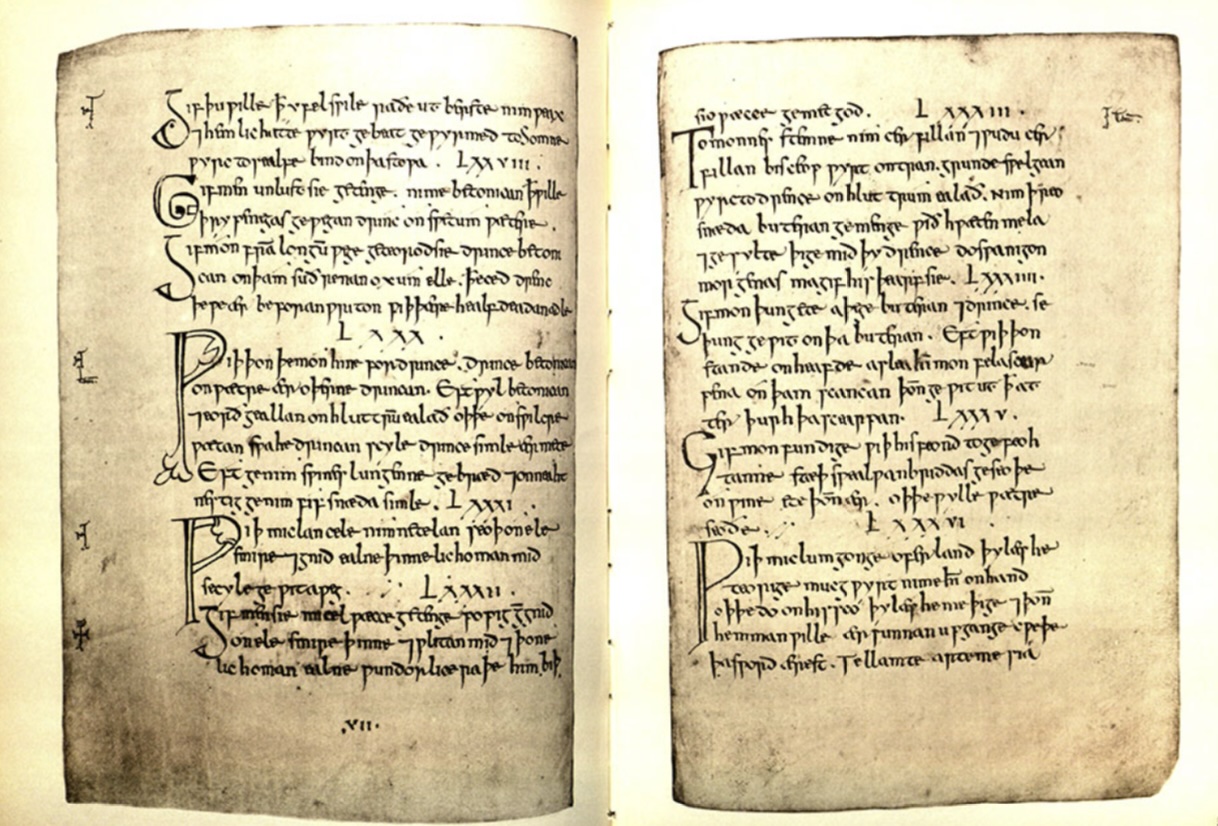
One of the 1,000 year old recipes for eye salve in the Leechbook of Bald is an Old English medical text that was of particular interest to the team.
The Ancientbiotics team was curious about a 10th Century eye stye cure in the form of an eye salve. They recreated the formula and found much to everyone’s surprise it killed 90% of the antibiotic resistant scourge in hospitals today— Methicillin-resistant Staphylococcus aureus (MRSA).
MRSA is a major problem in hospitals, where it can lead to life-threatening pneumonia and bloodstream infections. MRSA has earned the designation of a “superbug.”
Exactly how is the magic eye salve formula made according to this ancient book? Well, here’s the recipe:
Equal amounts of garlic and another allium (onion or leek), finely chopped and crushed in a mortar for two minutes.
Add 25ml (0.87 fl oz) of English wine – taken from a historic vineyard near Glastonbury.
Dissolve bovine salts in distilled water, add and then keep chilled for nine days at 4C in a brass vessel. Once ‘ripe’ the smell was pretty overwhelming.
However, it is also effective in killing MRSA and other staph type infections. Obviously, the researchers of today took the “recipe” and sanitized it to test it out.
In the Middle Ages, people recorded remedies for illnesses. Now, microbiologists and historians are testing these old treatments as potential antibiotics, with several showing encouraging results.
Dr. Connelly says the team is now focused on the Lylye of Medicynes—a 5th-century Middle English translation of the Latin Lilium medicinae. The Latin Lilium Medicinae is a significant work from 1305 and was considered a go-to book up until the 17th Century.
Connelly stated this book has 360 recipes and thousands of ingredients, all of which she copied and updated to create a database that lists the ingredients in modern terms and also states which diseases they were used for.
Now the database contains a plethora of mixes of ingredients and methods used to treat infectious diseases.
The hope for the future of treating infectious diseases and other illnesses may lie in what our ancestors had already figured out. Seem a little farfetched?
As proponents of ancient medicines might point out, “it wouldn’t be the first modern drug to be derived from ancient manuscripts – the widely used antimalarial drug artemisinin was discovered by scouring historical Chinese medical texts,” reports NewScientist.
How many more ancient medicines are waiting to be discovered to replace some of the Big Pharma concoctions? Regardless to what they find, these “new” “old” drugs will need to be studied, leading to a very lucrative business.
Wonder what researchers might think in a 1,000 years when they find our mRNA covid jabs recipe?
Linda Boyle, RN, MSN, DM, was formerly the chief nurse for the 3rd Medical Group, JBER, and was the interim director of the Alaska VA. Most recently, she served as Director for Central Alabama VA Healthcare System. She is the director of the Alaska Covid Alliance/Alaskans 4 Personal Freedom.



5 thoughts on “Linda Boyle: Medieval remedy may be first ‘new’ antibiotic in 40 years”
Boomers, GenX, Millinnials or GenY, GenZ, GenAlpha
we likely the histories generations future generations will talk about us being in an informational era but the LEAST educated generations
Tell you what: I’ll stick with the FDA, the CDC, and the scientific method. Seems that MRAK is still desperate for content.
So because something useful has been gleaned from history you believe it has no merit? You don’t think those who are exploring such information have no connection to the FDA or CDC? History shows that as time goes on much gets forgotten in favor of the new. Hence why it is useful to revisit history. Lastly, are you being forced to visit this site?
“However, it is also effective in killing MRSA and other staph type infections. Obviously, the researchers of today took the “recipe” and sanitized it to test it out.”
Hans are you saying that the researchers here did NOT follow the scientific method? Seems to me they did. Just because something is old does not not impact the way it was studied. MRSA is a scourge.
As for “old medicine” many of our modern pharmaceuticals are derived from ancient knowledge. Take Digitalis, a heart medication, comes from Foxglove and ergot is a fungus found on grain (especially rye). Just because they are these days produces synthetically does not discount their ancient roots.
Interesting. Garlic is known to have antibiotic properties. This illustrates yet again why history is important and that there can be much to learn from it.