

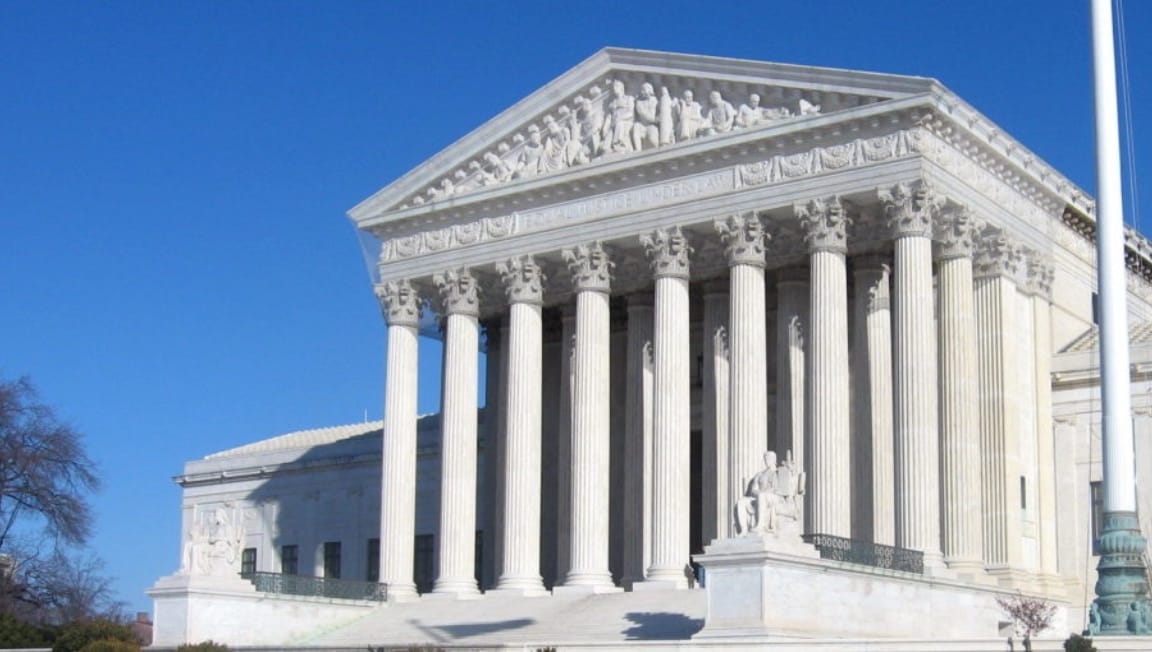
The US Supreme Court on has granted an emergency request from the Trump Administration, allowing enforcement of a new State Department policy requiring all passports to reflect a person’s sex as listed on their original birth certificate.
The 6–3 ruling in Trump v. Orr temporarily restores the policy while lower court challenges continue.
The rule reverses changes made under the Biden Administration, which had allowed passport applicants to select “M,” “F,” or “X” to reflect their gender identity. It also ends self-identification of gender markers, returning to a two-category system of “male” or “female,” as was standard through time.
President Trump’s Jan. 2o executive order, titled Defending Women from Gender Ideology Extremism and Restoring Biological Truth to the Federal Government, directed agencies to define sex as “an immutable biological classification.” The State Department implemented the directive two days later, requiring passport applicants to list their sex at birth, regardless of gender transition or identity.
Seven “transgender” and “nonbinary” plaintiffs challenged the policy in February, saying it violates equal protection and endangers travelers who could face harassment or detention abroad. A federal judge in Massachusetts issued a nationwide injunction against the rule in June, which the First Circuit Appeals Court upheld in September.
The Supreme Court’s conservative majority lifted that injunction, calling the passport’s sex field a “historical fact” comparable to a person’s birthplace and emphasizing executive authority in foreign affairs.
Justice Ketanji Brown Jackson, joined by Justices Sonia Sotomayor and Elena Kagan, dissented, calling the decision a “heartbreaking setback” that risks harm to affected travelers.
The case now returns to the lower courts for full arguments on the policy’s constitutionality.