


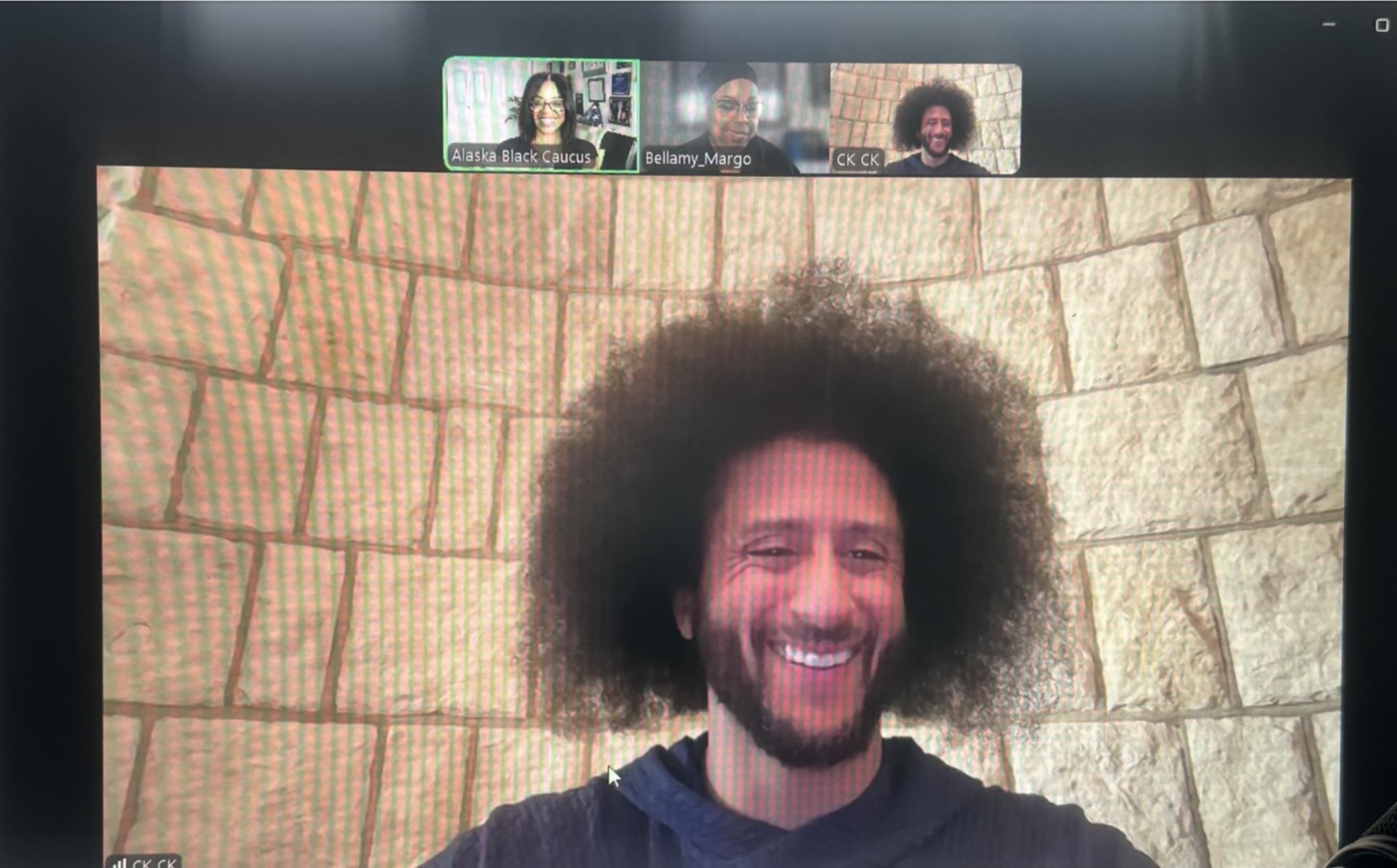
The Alaska Black Caucus, a race-based activist organization whose members include Anchorage School Board former president Margo Bellamy, has been working on plans to bring former NFL quarterback and activist Colin Kaepernick to Alaska, a move raising eyebrows among Alaskans who see Kaepernick as a divisive national figure rather than a unifying one.
In a recent Facebook post, the group said Kaepernick’s visit would “shine a spotlight on important social issues” and “empower individuals to actively engage in advocating for change.” The invitation is marketed as part of a broader effort to promote “social justice, health, and community development” and claimed his presence could “inspire” youth and “foster cultural dialogue.”
What Kaepernick would actually bring to Alaska is controversy. His record of stoking division has followed him since 2016, when he began kneeling during the national anthem as a protest against what he called systemic racism and police brutality – actions that fractured NFL audiences and drew criticism from both fans and public figures.
Kaepernick’s activism has been marred by tone-deaf moments and questionable alliances. He once wore a T-shirt emblazoned with the face of Cuban dictator Fidel Castro, praising the regime’s “education” record while ignoring its history of censorship, executions, and imprisonment of political dissidents. Cuban-Americans condemned the display as hypocritical from someone claiming to protest oppression.
Kaepernick turned on his own upbringing, accusing his white adoptive parents of “perpetuating racism,” in his comments during promotion for his 2020 graphic novel. The remarks were a betrayal of the parents who raised him and supported his career, including paying for his college football path that led to the NFL.
He also championed controversial figures such as convicted cop killer Mumia Abu-Jamal, whose 1981 murder conviction was upheld by multiple courts based on eyewitness and ballistic evidence. And he once characterized fear of Muslims as the real reason behind Trump’s travel restrictions, a claim that civil rights groups themselves criticized as simplistic and counterproductive.
Even liberal icons have questioned Kaepernick’s approach. The late Supreme Court Justice Ruth Bader Ginsburg called his protest “dumb and disrespectful,” though she acknowledged his right to free expression.
To his defenders, Kaepernick remains a symbol of protest and defiance. To his critics, he’s a celebrity revolutionary who profits from stoking racial grievance while vilifying the very country that made him wealthy and free to speak his mind.
The Alaska Black Caucus appears to believe his presence would advance “dialogue and justice” in Alaska. But it may simply import the culture wars of the Lower 48 into a state that already values self-reliance, diversity of thought, and respect for country.



One thought on “School board member, Alaska Black Caucus working to bring Colin Kaepernick to Alaska”
Kaepernick needs to crawl back under the rock from which he was spawned….