


By ALEX GIMARC
Nov. 22, 2026 – Two studies looked at the potential for microreactors in Bush Alaska. The first was the UAA Center for Economic Development’s 2020 use case analysis of microreactors in Alaska. The second was MIT’s 2021 study, The Value of Nuclear Microreactors in Providing Heat and Electricity to Alaska Communities. Many of these ideas came up at a 2022 Alaska Sustainable Energy Conference workshop on nuclear energy in Alaska.
The bottom line from the two studies? Nuclear energy in the Bush is an attractive possibility for communities and for heavy industrial operations such as mines that have no other way to get power. Add military bases and you have a substantial potential user base.
A military installation has different energy needs from a mine, an oil field or a village. Units with a deployment mission, such as those at Eielson and Joint Base Elmendorf-Richardson, must be able to pack up at a moment’s notice, go halfway around the globe, set up and operate for a specified period. Other installations, including Fort Wainwright, Clear and Shemya, have different missions. In recent years, the Department of War has looked at how installations could operate independently for 90 days in an emergency, with reactors as one possible energy source.
Some industrial operations, including oil and gas production, coal mining and timber operations, can generate their own energy. The oil patch can readily produce its own natural gas and diesel. Mines typically bring in electricity, fuel and heat from outside. Both military installations and industrial sites also need food. Villages need food, heat and fuel, and electricity. They are also the most widely dispersed.
The technical expertise available locally varies widely. Industrial and military sites generally have the largest pools of trained workers, while villages have the smallest. The military keeps much of that expertise in-house, especially in units that deploy. It hires for the rest, as industrial sites do. Villages can train residents and hire from outside, though both can be difficult in small communities with few people who already have the necessary training.
The goal is to become more autonomous. That means relying less on outside support, importing as little as possible and shortening supply chains so it costs less to live in remote parts of the state.
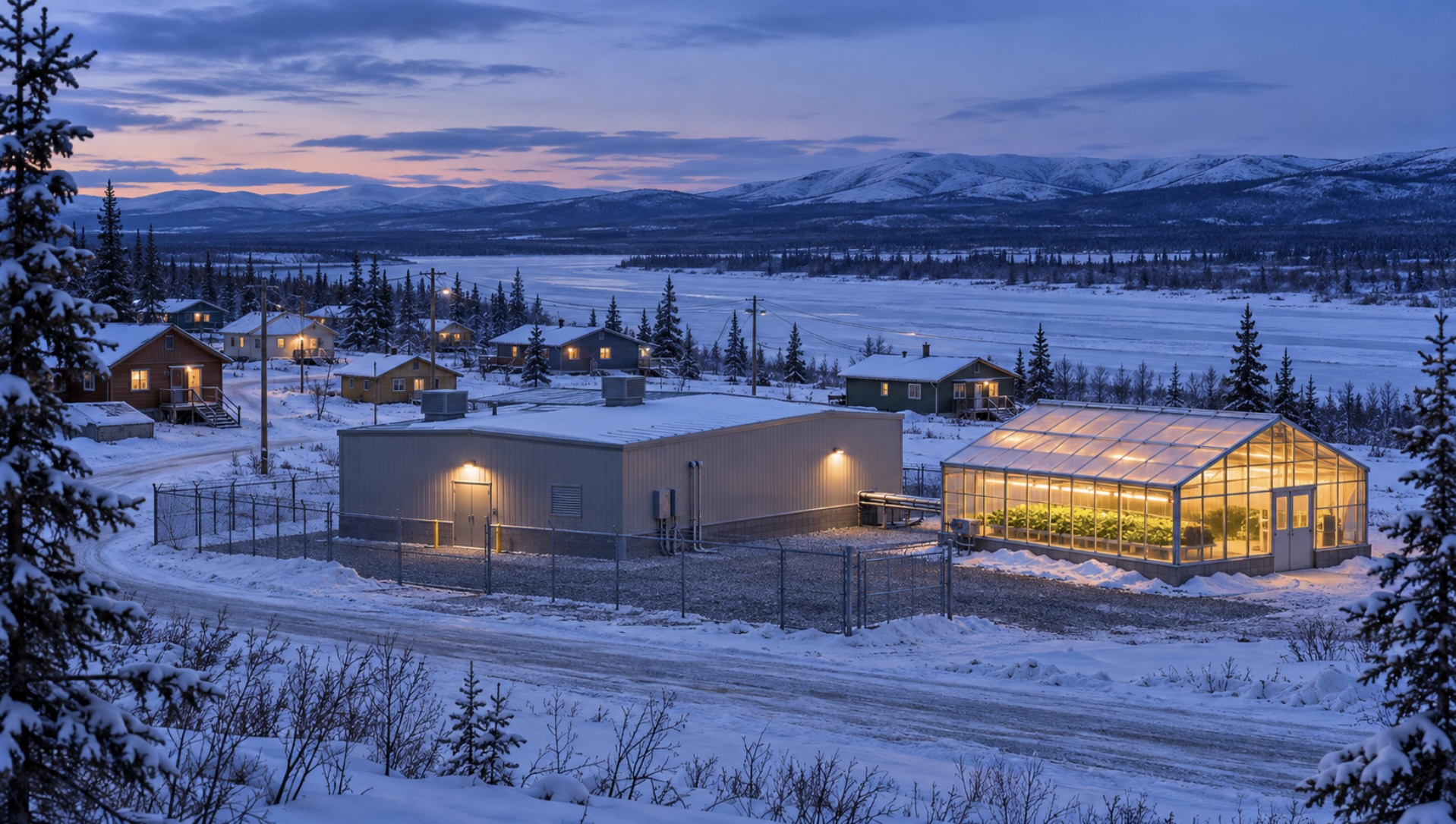
The tools we’re looking at are reactors for energy, modular greenhouses for food, modular aquaculture for food and water, and modular biomass conversion systems for liquid fuels and natural gas. We discussed reactors in the last piece as a possible source of both heat and electricity. Aquaculture and greenhouse systems are commercially available and already in use in Alaska. Biomass-to-liquids systems are newer and haven’t made it up here yet. Alaska does have biomass systems that provide heat and power without producing natural gas, propane or diesel.
Several companies sell hydroponic farms housed in shipping containers. Freight Farms, now part of Growcer, is one. Companies also sell modular recirculating aquaculture systems, known as RAS.
If a base, a mine, a Bush hub community or even a regional corporation decides to pursue greater autonomy, it should start small and test different approaches side by side before committing to an expensive, all-in-one system.
There will be surprises. Greenhouses or aquaculture systems might end up growing feedstock for biomass-to-liquids modules. Hydroponic and aquaculture systems might also help recycle water, treat sewage or do both.
There will also be pushback in communities that have little interest in adopting new technology. Anyone proposing these projects should expect that from day one and be ready to respond.

From here, it looks like the tools are out there to increase local autonomy. The path forward is still taking shape, which is both a blessing and a curse. We’re about to learn a lot about ourselves and our neighbors.
Alex Gimarc has lived in Anchorage since retiring from the military in 1997. His interests include science and technology, the environment, energy, economics, military affairs, fishing and disability policy. His weekly column, Interesting Items, summarizes news stories and covers Alaska issues. He was a small-business owner and information technology professional.


2 thoughts on “Alex Gimarc: Nuclear renaissance in Alaska, Part 3 – Autonomy for the Bush”
It boggles my mind that Alaskans are so terrified of data centers, yet appear to embrace nuclear power plants in villages that can’t even maintain dirt roads.
Every year some village has trouble keeping water from freezing because the diesel engines are maintained by people who do not live there, lights on runways are shot out, buildings are damaged. There is a place for nuclear power, the village isn’t that place.