

By SUZANNE DOWNING
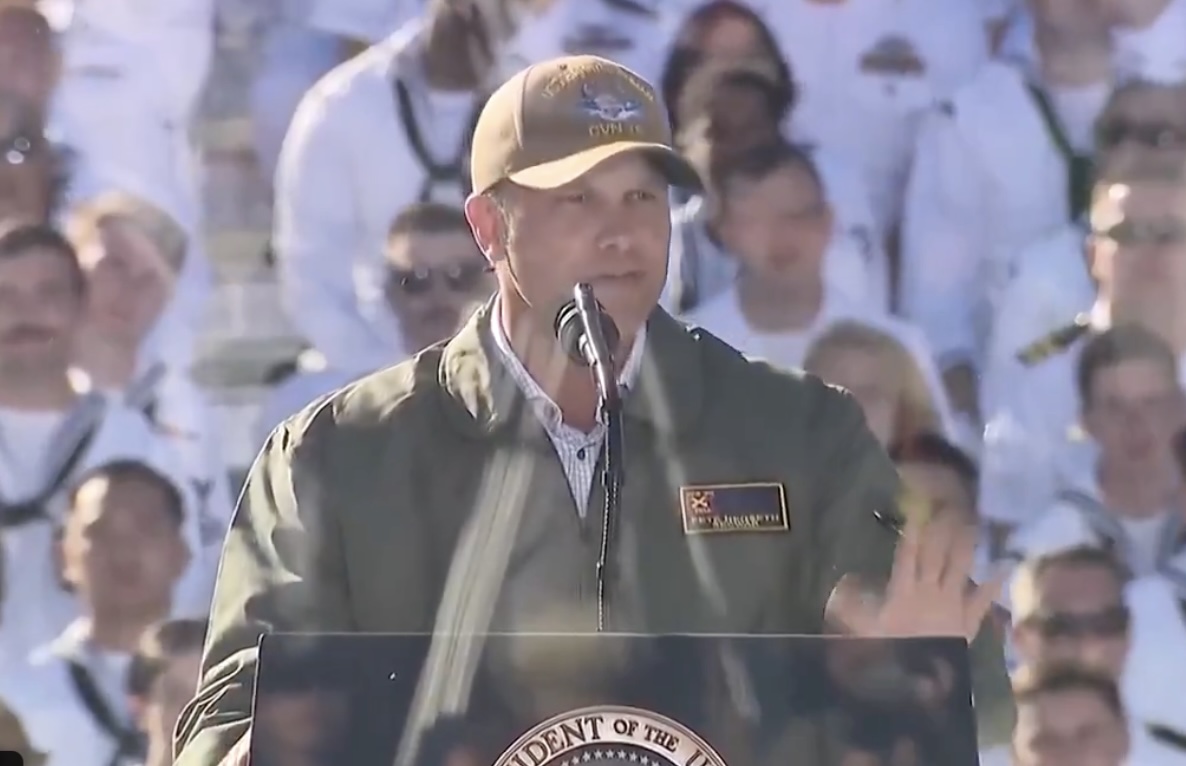
Sept. 15, 2026 — Republican Rep. Thomas Massie of Kentucky introduced eight articles of impeachment Tuesday against Defense Secretary Pete Hegseth, accusing him of conducting unauthorized military operations and disregarding Congress’s constitutional war powers.
Massie designated the measure as a privileged resolution, a procedural step that requires the Republican-controlled House to address it within two legislative days. House leaders could bring the resolution to a vote, move to table it or refer it to a committee.
The impeachment effort is widely expected to fail. It nevertheless could force members of Congress to record their positions on the Trump administration’s military campaign against Iran and several other overseas operations.
Massie, a longtime critic of American military intervention abroad, read the articles on the House floor. He lost his Republican primary earlier this year to Ed Gallrein, a Trump-backed former Navy SEAL, and will leave Congress at the end of his term.
The Kentucky congressman accused Hegseth of “high crimes and misdemeanors,” beginning with the U.S. conflict with Iran, which began in late February.
Congress passed a concurrent resolution in June directing the removal of U.S. forces from the conflict unless lawmakers authorized their continued involvement. Massie contends the administration continued hostilities despite that directive and beyond the limits established by the War Powers Resolution of 1973.
Under that law, a president generally must end the use of U.S. forces within 60 days unless Congress declares war, provides authorization or extends the deadline. The statute allows an additional 30 days when necessary to safely withdraw forces.
The administration disputes Massie’s interpretation of the law and has questioned whether Congress may restrict the president’s authority as commander in chief through the War Powers Resolution.
Massie’s first three articles focus on the Iran conflict. He alleges that Hegseth helped wage the war without a declaration of war, statutory authorization, an attack on the United States or an imminent threat. He further alleges that Hegseth continued the campaign after Congress directed a withdrawal and after the statutory War Powers deadlines expired.
A fourth article accuses Hegseth of disregarding laws and policies intended to minimize civilian casualties. Massie cited military strikes in Iran, including an attack on a school that reportedly killed more than 100 children.
The fifth article concerns US attacks on boats suspected of transporting illegal drugs in the Caribbean and eastern Pacific. Massie alleges that the administration improperly substituted military strikes for law-enforcement operations, resulting in at least 221 deaths. He also alleges that U.S. forces denied quarter and conducted secondary attacks against survivors.
Article VI accuses Hegseth of using Defense Department authority to retaliate against Sen. Mark Kelly, D-Arizona. Kelly appeared in a video with other lawmakers discussing the obligation of military personnel to reject unlawful orders. The Pentagon subsequently investigated Kelly, a retired Navy captain.
Two other articles challenge US operations in Venezuela and Yemen.
Massie alleges that Hegseth directed Operation Absolute Resolve, which resulted in the capture of former Venezuelan leader Nicolás Maduro and Cilia Flores, without constitutional or statutory authority. He also challenges Operation Rough Rider in Yemen, alleging that it began without congressional authorization or an imminent threat and violated reporting and civilian-protection requirements.
The Pentagon rejected Massie’s accusations and defended Hegseth’s leadership.
“The Department is unified behind the Secretary’s vision and will continue working to put our warfighters and America first,” Pentagon press secretary Kingsley Wilson said.
Hegseth has not been charged with a crime. Articles of impeachment are allegations made through a constitutional process, not criminal findings or adjudicated conclusions.
A Cabinet officer may be impeached by a simple majority of the House. Conviction and removal would then require a two-thirds vote in the Senate. The House has not yet voted on Massie’s resolution.
The dispute revives a long-running constitutional struggle over which branch of government controls the use of American military force. The Constitution gives Congress the power to declare war, while naming the president commander in chief. Presidents of both parties have asserted broad authority to conduct military operations without formal declarations of war.
Massie argues that the Iran campaign, suspected drug-boat strikes and operations in Venezuela and Yemen required congressional authorization, and that Hegseth’s role in implementing them amounted to an abuse of office.
Administration officials and other opponents of the resolution contend that the president possesses sufficient constitutional authority to order the operations and that the War Powers Resolution is either outdated or an unconstitutional restriction on executive power.
Those remain contested political and legal claims. No court or congressional proceeding has determined that Hegseth committed the offenses alleged in Massie’s resolution. Reuters reported that the House is expected to dispose of the resolution without approving the articles.



One thought on “Massie moves to impeach Hegseth over Iran war, other military operations”
Pete Hegseth: We need our military to be more like the Spartans! *immediately loses fight with Persia over an important chokepoint*