


Sept. 7, 2026 — American service members age 30 and older will be screened annually for testosterone deficiency under a new Pentagon policy intended to improve military health, performance, and combat readiness.
The policy will apply to active-duty and reserve personnel, including thousands of service members stationed in Alaska. Those younger than 30 may request screening or may be tested if a military healthcare provider identifies symptoms or other warning signs.
Defense Secretary Pete Hegseth announced the initiative in July, directing that testosterone screening become a mandatory part of the military’s existing annual Periodic Health Assessment.
“Achieving peace through strength demands a decisively dominant force,” the department said. “Our military advantage and our readiness depend directly on the performance of the Department’s most critical asset: our Warfighters.”
The screening itself is mandatory for those covered by the policy, but treatment is not. Service members diagnosed with testosterone deficiency may be offered testosterone replacement therapy or other care, but they will not be required to accept it.
Apply liberally? Testosterone gel nudged weak Democrats to the right
The policy is part of a broader military effort to identify medical and physiological problems that can reduce strength, endurance, concentration, recovery, and long-term readiness. It also may help doctors identify underlying health problems involving the testes, pituitary gland, metabolism, obesity, sleep disorders, medication use, or previous brain injury.
One area of concern is sometimes called “Operator Syndrome,” a collection of health problems reported among special operations personnel and others who have spent years in high-stress assignments. The condition may involve traumatic brain injuries, disrupted sleep, chronic pain, hormonal changes, depression, fatigue, and reduced physical performance.
Implementation of the new program has encountered an early administrative detour.
On Sept. 2, the Pentagon posted detailed clinical guidance describing how the screenings would be conducted. The documents were removed from Pentagon and Defense Health Agency websites the following day.
A military official said the draft had been “temporarily rescinded to allow for updates,” but emphasized that the underlying interim screening policy remains in effect while officials prepare a revised version.
The withdrawn guidance established different screening procedures for men and women. Men age 30 and older would be assessed through a questionnaire and testosterone blood testing, with repeat testing and additional evaluation when necessary. Men under 30 could request testing or receive it when medically indicated.
Women were to be screened primarily through questions about fatigue, menstrual disruption, and other possible signs of hormonal imbalance or low energy availability. Routine testosterone blood testing was not prescribed for women. Testosterone treatment for women was contemplated only under narrowly defined medical circumstances.
The distinction is important because the July directive initially referred broadly to all active-duty and reserve personnel age 30 and older, while the more detailed clinical guidance placed the principal emphasis on testosterone testing for men. Those implementation details could change again when the final guidance is released.
The initiative comes amid increasing concern about declining testosterone levels among men generally.
Research presented in July at the European Society of Human Reproduction and Embryology examined data from 118,593 men in six international studies. Researchers estimated that average total testosterone levels declined 54% between 1972 and 2019, even after accounting for age. Obesity, diabetes, environmental chemicals, lifestyle changes, and other factors have been suggested as possible contributors, although scientists continue to debate the causes and magnitude of the decline.
Testosterone plays a role in muscle mass, bone density, sperm production, sex drive, mood, energy, and metabolism. Low levels can be a symptom of an underlying medical condition, but a single low reading does not necessarily establish a deficiency because hormone levels fluctuate and can be affected by sleep, illness, weight, medications, and the time of day a blood sample is collected.
Potential risks of inappropriate or excessive testosterone treatment include increased red blood cell counts, worsening sleep apnea, infertility, blood clots, and complications involving an undiagnosed prostate condition. Supplemental testosterone can also suppress the body’s natural sperm production — a consideration for younger service members who may want children.
The Pentagon says the objective is not artificial enhancement but the identification and treatment of legitimate medical conditions affecting the health and effectiveness of the force.


9 thoughts on “Pentagon orders annual testosterone screening for troops 30 and older”
Dan Sullivan voted to confirm Pete Hegseth as Secretary of Defense. Hegseth is by far the most inept and unqualified secretary EVER and Sullivan knew he was weak and incompetent.
SULLIVAN=TRUMP
TRUMP=POISON
NOVEMBER=PELTOLA
I’m sure you’d much prefer the half-illiterate, physically incapable tub of goo in the ridiculous Darth Vader mask that Hegseth replaced, or possibly one of the many men in skirts he was surrounded by.
SULLIVAN=Your Senator
TRUMP=Your President
PELTOLA= Outside democrats
Hegseth is the epitome of toxic masculinity. He’s FUBARed our military. We have zero international cred thanks to his GI Joe bravado and Trump’s inability to lead. Read this again: Dan Sullivan voted to confirm Pete Hegseth as Secretary of Defense. Hegseth is by far the most inept and unqualified secretary EVER and Sullivan knew he was weak and incompetent.
SULLIVAN=TRUMP
TRUMP=POISON
NOVEMBER=PELTOLA
Thanks for clarifying your statement I understand now your problem is that Hegseth’s a man.
And, Singh is a woe-man
“Toxic masculinity”. Only a man-hater or Soy Boy would speak such nonsense. We didn’t serve and defend this nation by throwing daisies at our rat commie bastard enemies. Step aside child. The only issue I see is they’re testing the wrong age class. Test the low-T level kids. That’s the real issue.
I’d say your fixation with war and your anger and arrogance is an example of toxic masculinity. You are not needed.
“Toxic masculinity” is exactly what is needed for a strong, effective fighting force. Your hero and role model, Joe Biden, did not possess the ability to lead himself off stage safely. I’m sure that Chinese and Russian soldiers were stricken with fear upon seeing the “Emma has two moms” recruitment video, and the men wearing women’s U.S. military uniforms. The previous ultra-woke military “leadership” turned our military into the laughing stock of the world. Read THIS again:
SULLIVAN=Your Senator
TRUMP=Your President
PELTOLA=Outside democrats
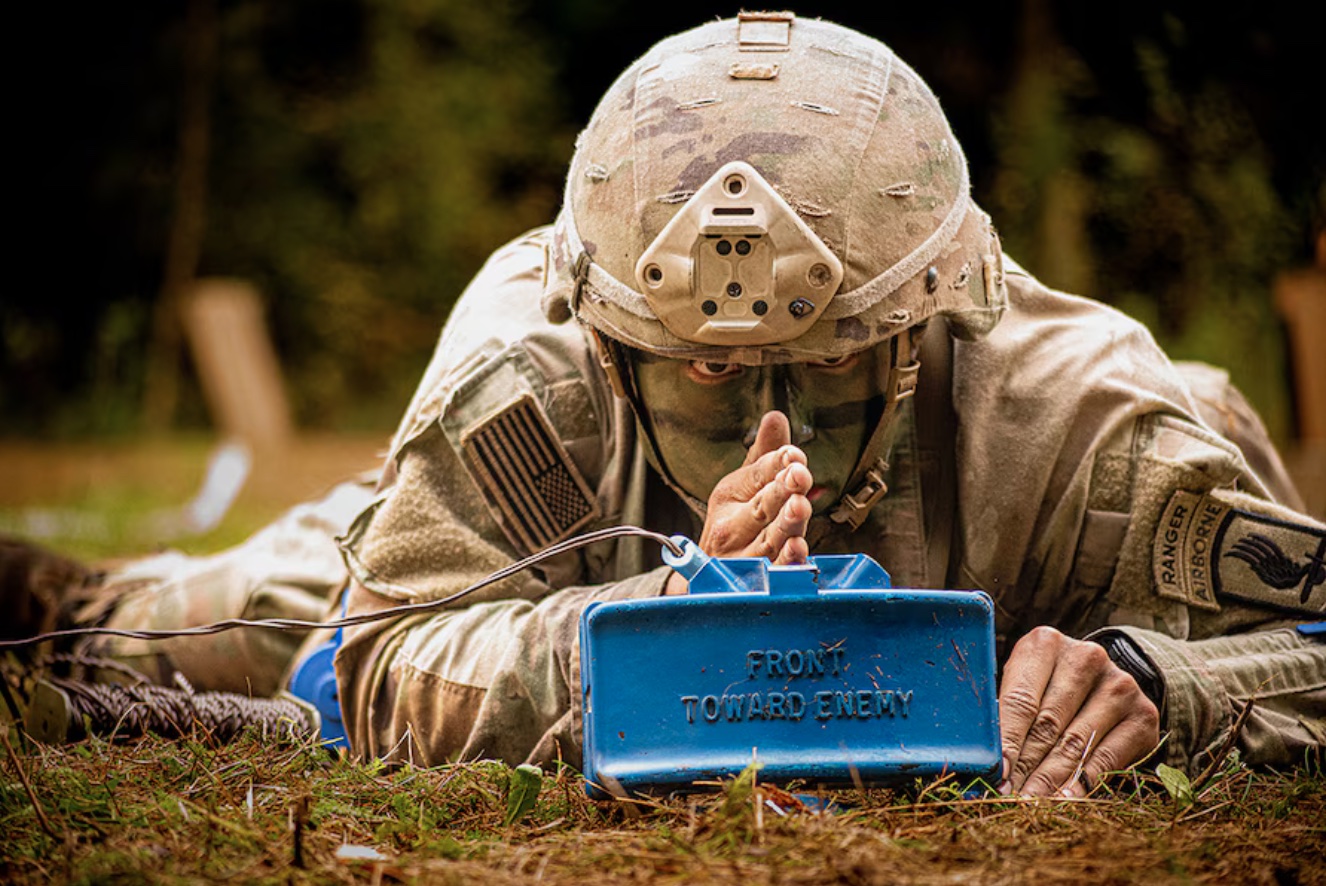
Someone please tell the soldier in the picture to back his (training) Claymore up against a hard surface when using a live munition. He will experience greater spread pattern, down range velocity and superior projectile penetration. And remember; your equipment is all made by the lowest bidder. Army…..🙄