


THE ALASKA STORY
Aug. 18, 2026 – A federal judge has again blocked the land exchange needed to complete the long-sought King Cove access road, handing environmental organizations another victory in the community’s nearly half-century effort to obtain dependable access to an all-weather airport.
US District Judge Sharon Gleason vacated the October 2025 agreement between Interior Secretary Doug Burgum and King Cove Corporation, an Alaska Native village corporation. The exchange would have placed a narrow road corridor through the Izembek National Wildlife Refuge into corporation ownership.
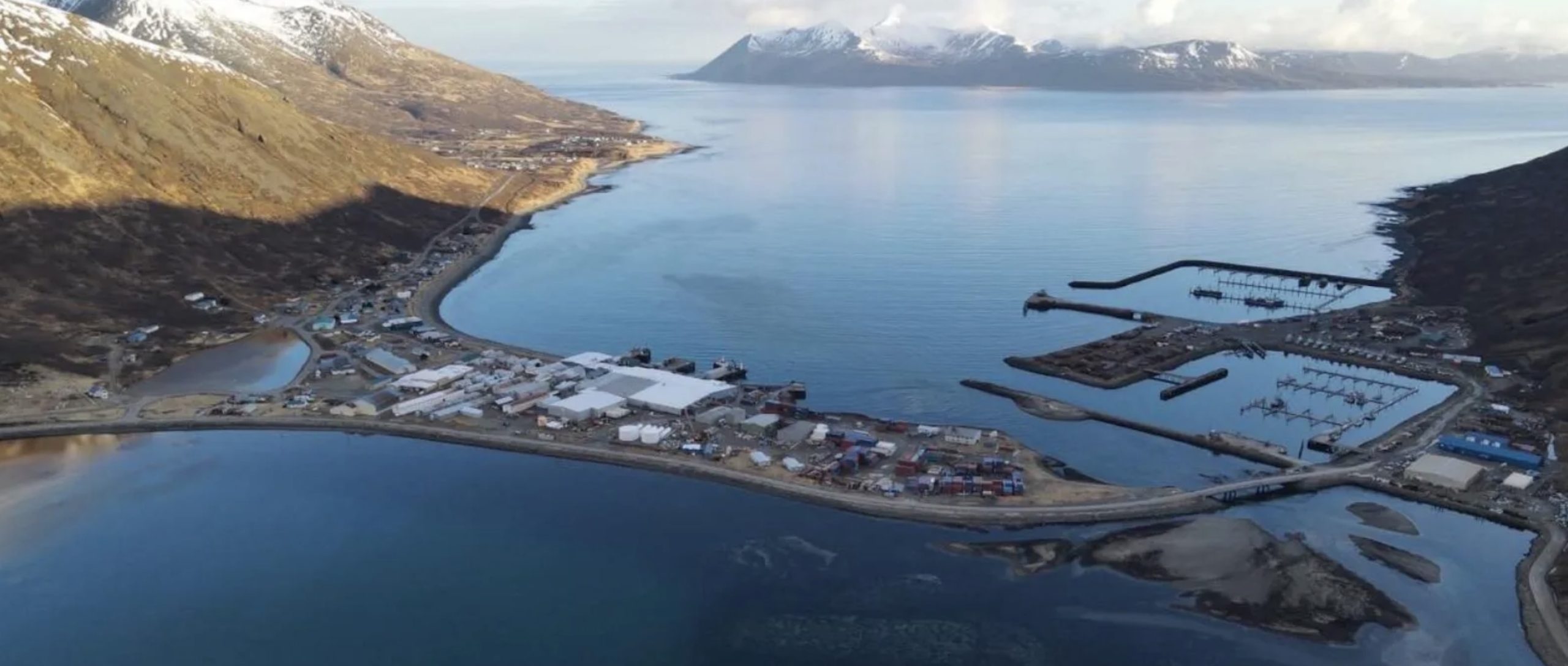
The corridor was intended to complete an approximately 18.9-mile, single-lane gravel road between King Cove and Cold Bay, including about 10.5 miles through the refuge.
Cold Bay has one of Alaska’s longest runways and can accommodate large aircraft capable of transporting patients directly to Anchorage and other cities with major hospitals. King Cove’s smaller airport is frequently closed by the severe winds, fog and icing common on the Alaska Peninsula.
“Today’s ruling by an Alaska federal judge who regularly sides with Lower 48 environmental groups is another shameful betrayal of the people of King Cove and a demonstration that elections have real-world consequences for the safety and well-being of Alaskans,” said US Sen. Dan Sullivan. “National Democrats, doing the bidding of far-left Lower 48 radical environmental groups, have for decades relentlessly fought this commonsense land exchange through successive Democratic administrations and Democrat members of Congress, and by getting sympathetic far-left judges onto the federal bench who will prioritize the interests of birds over the well-being of Alaska Natives.
For generations, King Cove residents have said the road is a matter of life and death. When aircraft cannot reach the community and travel by sea is unsafe, patients must sometimes wait for the weather to improve or rely on a U.S. Coast Guard helicopter evacuation.
Gleason acknowledged the hardships facing King Cove residents but concluded that those needs could not legally justify the land exchange approved by the Interior Department.
The ruling found that the Trump administration committed several legal errors in approving the transaction. The lawsuits challenged the exchange under the National Wildlife Refuge System Administration Act, the Endangered Species Act and the Alaska National Interest Lands Conservation Act, among other federal laws.
In the case brought by Defenders of Wildlife, Gleason ruled for the organization on at least one claim under the Refuge Act without resolving every claim raised in the litigation. Vacating the exchange effectively removes the federal land transfer on which the proposed refuge corridor depended.
Under the agreement signed by Burgum and King Cove Corporation in October 2025, the federal government transferred approximately 484 acres of refuge and wilderness land to the corporation. In return, King Cove Corporation agreed to transfer about 1,739 acres to the refuge and relinquish selection rights to thousands of additional acres within refuge boundaries.
The exchange followed an executive order signed by President Donald Trump on his first day back in office directing federal agencies to expedite Alaska resource and infrastructure projects.
Environmental organizations celebrated Gleason’s decision.
Defenders of Wildlife characterized the transaction as an “illegal closed-door deal” that would “tear out the heart of Izembek.” That is the organization’s advocacy language, but the court agreed that the exchange failed to meet federal legal requirements.
The group and other opponents say a road would damage internationally significant wetlands and increase traffic and human activity in a largely roadless area.
Izembek, located on the Alaska Peninsula between the Bering Sea and Gulf of Alaska, contains extensive eelgrass beds used by migratory waterfowl. The refuge provides habitat for nearly the entire Pacific black brant population, as well as Taverner’s cackling geese, emperor geese, tundra swans and Steller’s eiders.
Northern sea otters, Steller sea lions, caribou, brown bears and Pacific salmon also inhabit the region. So do humans.
The decision is the latest chapter in a dispute stretching back nearly 50 years and across multiple presidential administrations.
The Obama Administration rejected an earlier congressionally authorized exchange in 2013, concluding that a road would cause unacceptable damage to the refuge. During Trump’s first term, Interior secretaries Ryan Zinke and David Bernhardt approved separate land exchanges, both of which were challenged in court.
Gleason struck down the Zinke agreement in 2019, finding that Interior had reversed the previous administration’s policy without adequately explaining the change. A second exchange approved by Bernhardt was invalidated in 2020 by US District Judge John Sedwick.
A Ninth Circuit panel later reversed that decision, concluding that the Interior secretary was entitled to give greater weight to the welfare of King Cove residents than the previous administration had. The full appeals court agreed to rehear the case, but the litigation became moot after Biden Interior Secretary Deb Haaland withdrew from the 2019 agreement in 2023.
The Biden administration nevertheless began a new environmental review of a possible exchange after Haaland visited King Cove and heard directly from residents. That review formed part of the record inherited by the second Trump administration.
The latest ruling also comes as the State of Alaska and King Cove Corporation have been preparing to begin construction.
In early July, the US Army Corps of Engineers issued a Clean Water Act permit for the road project, the first federal construction permit issued after decades of studies and political battles. Work on an initial section of approximately three miles across corporation-owned land had been planned for as early as August.
As The Alaska Story reported in July, three Western Alaska tribes and the Center for Biological Diversity filed a separate lawsuit challenging that permit. The Native Village of Hooper Bay, Native Village of Paimiut and Chevak Native Village argue that disturbing Izembek could reduce the migratory birds their residents harvest for subsistence hundreds of miles to the north.
Other environmental organizations have filed additional challenges to the Corps permit and related federal authorizations and have sought injunctions to prevent construction while the cases proceed.
Gleason’s ruling vacates the land exchange, but it does not necessarily end the King Cove road dispute. The federal government, King Cove Corporation or the State of Alaska could appeal, and separate litigation involving the Corps permit and construction activity remains unresolved.
For King Cove, however, the decision represents another major legal setback after decades of federal reviews, land-exchange proposals, administrative reversals and courtroom battles.
Once again, a federal court has sided with the environmental organizations.
9 thoughts on “Federal judge again blocks King Cove road, vacates Trump administration land exchange”
Um — a judge and the judiciary have NO enforcement powers. Dunleavey could go right ahead and order the road building to commence, and Trump would have his back.
One feckless, little, woke woman judge. Brainwashed liberal from a law school, then practiced as a left-wing lawyer before going to the bench. Never elected to anything by anybody. Never visited King Cove. She’s not even from Alaska. Dunleavy needs to ignore her order and do what’s right for King Cove and all common sense Alaskans. Otherwise, the law is an ass, run by assholes.
Just continue with road construction and see what the woke judge does about it.
Gleason again!!!!
Gleason is a woke monster. In the pajoritive sense in every manner. A sniveling little old lady wearing a black robe, to fool everyone of her political proclivities.
The above comments resonate well – I agree. But they need to go further: judge gleason shows she is not capable of impartiality; she favors all leftist causes, including the theft of the PFD; there is only one recourse, since she will not resign – IMPEACH.
gleason was not the author of the PFD theft…
STOP voting for Democrats. It is not in your best interest. They do not have your best interest at heart, only their ideology.
And I’ll bet King Cove residents, as with most rural Native communities, voted mindlessly Democrat. You reap what you sow.