


By SUZANNE DOWNING
Aug. 10, 2026 – Gov. Mike Dunleavy plans to release a new Alaska LNG bill to the Legislature this week, earlier than the Aug. 20 date claimed by Senate majority leaders during their Monday press conference.
The legislation will closely resemble the version of House Bill 381 that emerged from a conference committee near the end of the Legislature’s previous special session, but with several targeted changes intended to attract enough votes to pass both chambers, according to officials in the Dunleavy administration.
The most significant concession from the governor will be his acceptance of a 1-2% tax on certain S corporations and other pass-through entities. The bill targets Hilcorp, which is the operator of much of the North Slope oil operations.
That represents a major compromise for Dunleavy, who opposed the broader corporate income tax provision added to the earlier gasline legislation. That proposal would have subjected some privately held oil and gas companies to the state’s 9.4% corporate income tax. Dunleavy said the tax could discourage investment in Alaska’s North Slope and Cook Inlet oil and gas fields. He may simply be calling the Democrats’ bluff.
Alaska’s Senate majority lays groundwork to sink new gasline bill — and blame Dunleavy
His opposition to taxes helped sink the conference committee bill in July. The measure passed the Senate 11-8 but failed in the House on a 19-19 vote after Dunleavy announced that he would veto it if it reached his desk with the tax provision intact.
Under the new proposal, the S-corporation tax rate would be reduced to 1-2%. Its effective date also would be delayed until Jan. 1, 2030, or until first gas begins flowing through the Alaska LNG project, according to administration officials.
Senate President Gary Stevens signaled during Monday’s Senate majority press conference that discussions were moving toward a 2% tax, indicating that legislative leaders were already aware of the emerging compromise, but were not favorable to it. Democrats will likely ratchet up that amount when they get their hands on the bill.
The new bill will also remove the section dealing with the required local contribution for public schools. That would return the legislation to the position originally proposed by the Dunleavy administration and contained in the version of HB 381 passed by the House.
Administration officials say municipalities would not be affected as significantly by the removal of that provision as they would have been under earlier versions of the legislation.
The rest of the bill is expected to remain largely unchanged from the conference committee version. The administration’s objective is to preserve the portions of the compromise that already have legislative support while removing or modifying the provisions that prevented the bill from winning the 21 votes needed in the House.
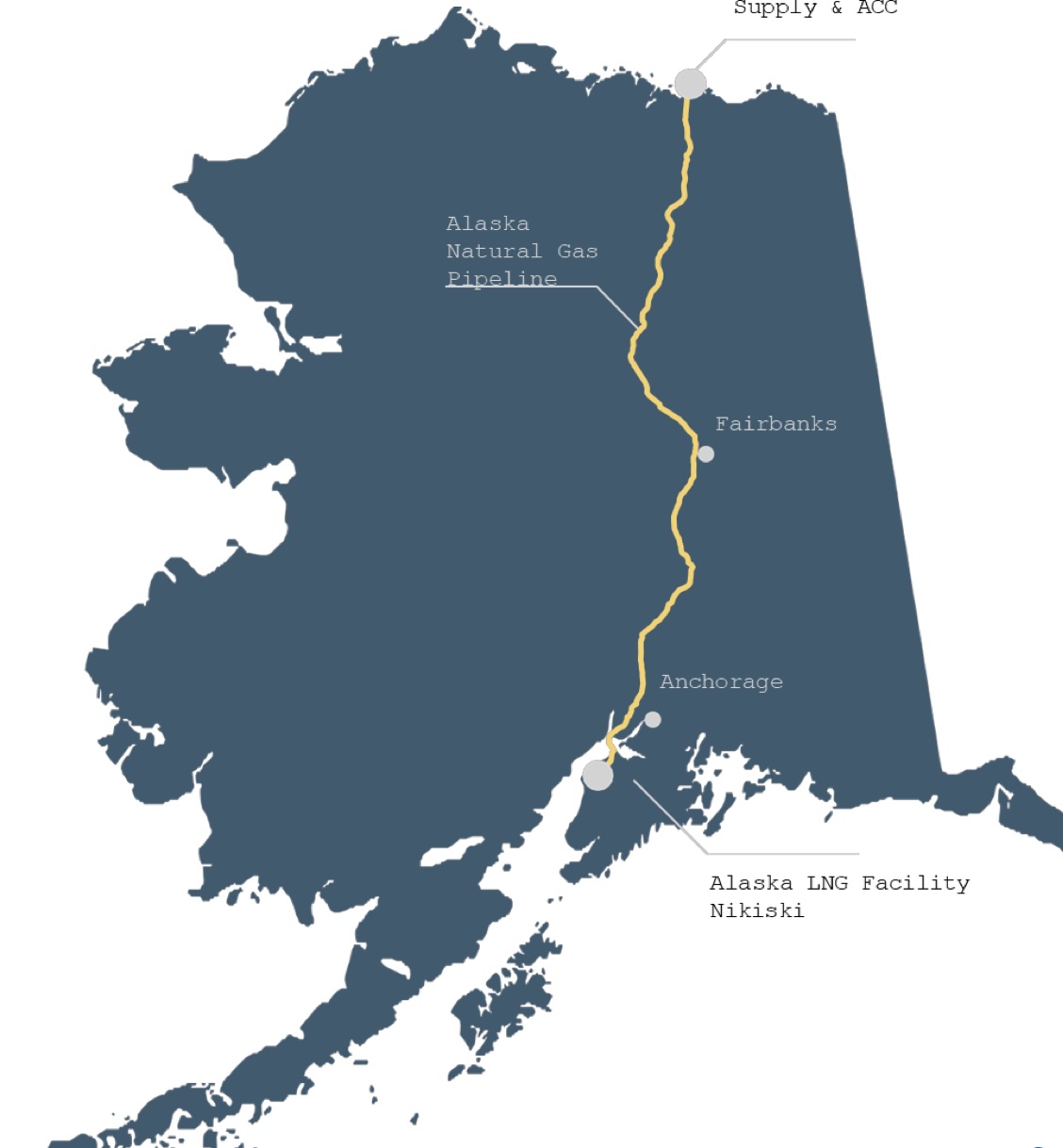
At the center of the legislation is a proposed construction-period tax structure for the Alaska LNG project. It would replace the existing property-tax system for project facilities with a volumetric tax based on the amount of gas transported through the pipeline. Dunleavy has argued that predictable tax terms are necessary for the project to secure financing and advance toward a final investment decision.
The House passed its version of HB 381 in June with strong support. The Senate subsequently added the corporate income tax expansion and several other provisions, leading to a prolonged dispute between the two chambers.
A conference committee attempted to reconcile the competing versions, but its final product could not win a majority in the House. Dunleavy then called lawmakers into a third special session beginning July 27.
The third special session has so far consisted primarily of technical sessions while the administration negotiated with legislators and stakeholders. The governor said Monday that those discussions were shaping an updated bill and encouraged lawmakers to reconvene Aug. 20 to take action.
The administration’s plan to introduce the legislation this week contradicts the Senate majority’s suggestion that lawmakers would not receive the bill until Aug. 20. Releasing it earlier would give legislators and the public time to review the language before lawmakers return for substantive work.
Acceptance of a 1-2% S-corporation tax marks a substantial shift for Dunleavy, who has never before voted for higher taxes. But by lowering the rate, delaying its implementation and removing the required-local-contribution section, the administration is attempting to assemble a version capable of attracting votes from the House majority, Senate majority and Republican minority caucuses.
The question now is whether Dunleavy’s compromise will be enough to break the stalemate, or whether legislators will again try to attach additional taxes and policy provisions to the gasline bill.
ConocoPhillips and Exxon don’t pay 9% of what they make in Alaska. Their effective rate is about 1-2%.



6 thoughts on “Breaking: Dunleavy to release gasline compromise bill this week that has a 2% S-corporation tax”
We are facing a gas shortfall this coming winter, Enstar has pegged it at a shortfall of 18 days worth of gas. Our legislature has failed to even try to improve this and has instead taken repeated action to make the problem worse. There are apparently legislators who wish to see their Alaskan constituents in Southcentral freeze to death. These legislators hold Alaskans in contempt. They’ve already made it clear who they are and what they want, their votes here will be yet another vote against Alaska and Alaskans.
Remember to vote. Tell your friends, co-workers, and relatives to vote as if their lives depend upon it, because it does.
Instead of gas, we can burn Giessel fuel
What is that, bullshit patties?
Hmmm(?) … I like Mike-D but I think he’s ‘too’ nice to these traitors holding up the project.
If he’s making a run for US Senate in ‘28, he’s gonna have to get mean and tough!
Whatever tax the Legislature shakes out of this gas line will be paid by Alaskan gas buyers. And that will only be after years of being held hostage, since Hilcorp warned the state over four years ago that increased gas production in Cook Inlet wasn’t going to happen. The rolling blackouts could have been avoided with immediate action instead of years of hostage negotiations.
Here’s the good part: these legislators will have to babysit their homes along with the rest of us. Taking a month or two vacation to Hawaii or Vegas will come with risk. Maybe it will be their homes that freeze up and flood?
A friend had an emergency generator installed at his home. It’s natural gas fired and it automatically starts when the power dies……..but it didn’t start. The service people came to check. The problem was that the gas pressure was too low to start the engine.
Have fun this winter. Pray for more global warming.
Dunleavys desperately trying to achieve a legacy that doesn’t smell like his recent visit to the toilet! The big turd doesn’t have a chance!