By WIN GRUENING
Feb. 5, 2026 – It’s a well-known saying that “timing is everything.”
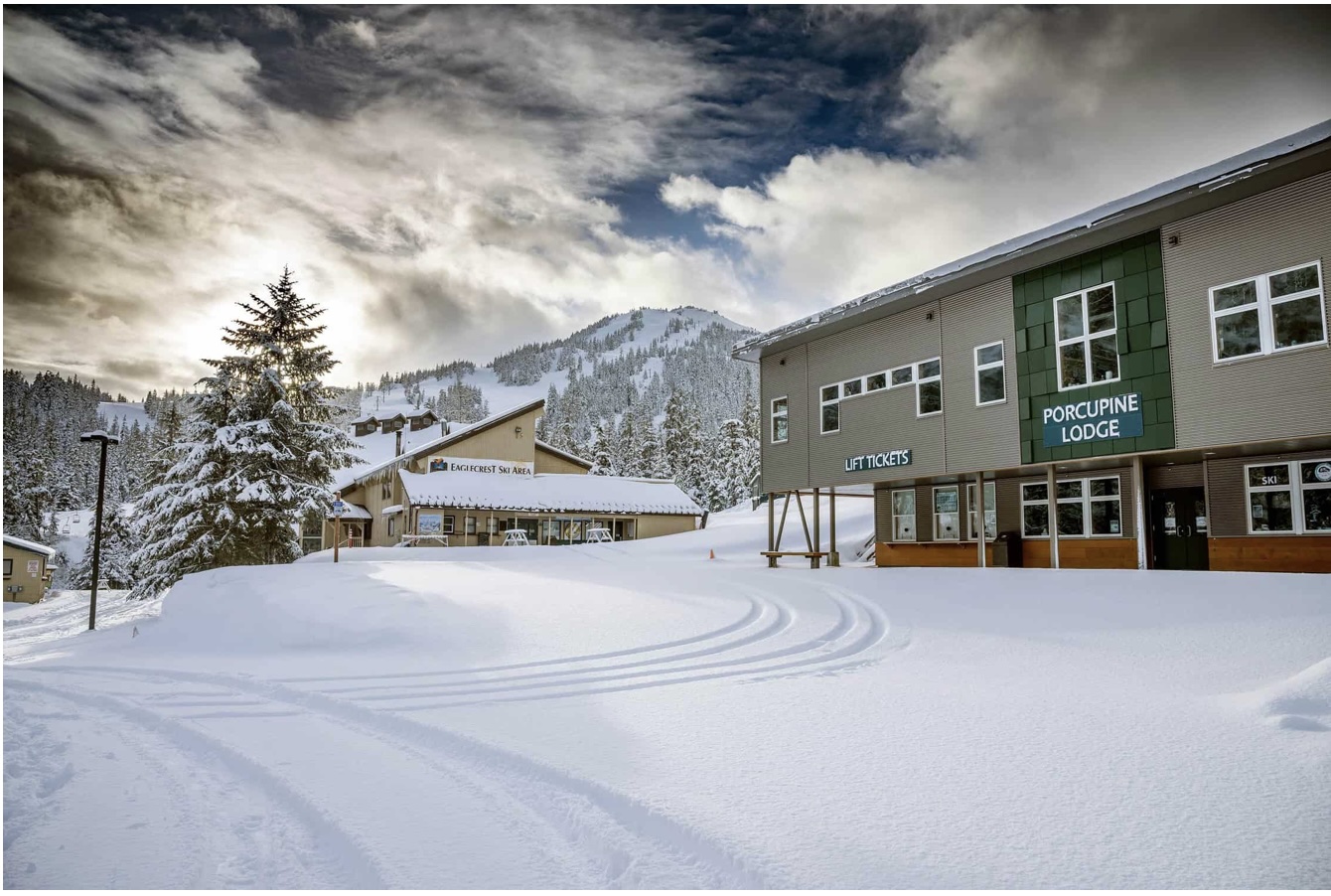
Certainly, this applies to the concerns surrounding Eaglecrest, Juneau’s municipally-owned ski area. Recent management changes, operational difficulties, increased subsidies, and a high-profile gondola project have all converged at a time when the city is facing its own additional financial challenges.
The Eaglecrest debate has reached a level that is placing pressure on Juneau city leaders to propose a permanent solution to a problem that some feel is largely temporary. The solution may, in fact, not resolve the problem, only aggravate it.
Several weeks ago, Juneau Mayor Beth Weldon proposed an ordinance changing the current board empowered to enact policy to an advisory board under the authority of the Juneau Assembly. The position of Ski Area General Manager would be hired by and report to the City Manager instead of an independent board.
On Jan. 26, assembly members discussed the draft ordinance. It became immediately clear there was no consensus on the necessity for the change and whether it would help address any of the issues facing the current empowered board. From comments made, it appeared that there were perhaps only three votes in favor of moving forward with the ordinance.
Instead, action was postponed until after a joint meeting of the Assembly and Eaglecrest board members tentatively set for March 4.
It’s unfortunate that local media stories have framed this discussion as a “fight” between the Eaglecrest Board and the Assembly. In fact, the Board and ski area management have been extremely deferential to the Assembly and city leaders, expressing their appreciation for municipal support as well as recognizing the challenges faced by the city.
The board’s disagreement with the proposal is based on their unwavering commitment to achieve a self-supporting enterprise and the belief that the most efficient and cost-effective management model is through an empowered board – not a department within the city akin to Parks & Recreation.
Many of the concerns center around the amount of funding required for on-going winter operations, maintenance, and capital needs, including the gondola project. That project has received more than its share of controversy and has suffered from wildly inaccurate rumors masquerading as facts on social media as well as setbacks exacerbated by unfortunately erroneous acquisition and transportation cost estimates.
Despite all that, Goldbelt, Inc., Juneau’s urban Native corporation, has invested $10 million in the project and remains committed to seeing the gondola in operation as an available summer tour option for cruise visitors by 2028. Approximately $5 million of Goldbelt’s original investment remains unspent.
Long-term financial viability for Eaglecrest requires expansion to full summer operation; thus, the importance of the gondola project cannot be overstated. Most other ski areas in the country have already incorporated summer tours and activities as a way to stabilize revenues and maintain a year-round employee work force.
Using conservative projections, revenues from cruise tours would provide an on-going revenue stream to Eaglecrest that will offset subsidies and help fund future equipment needs.
The level of additional city funding needed in the interim will be substantial but is not unprecedented. Recently, the city spent over a year and $8 million to renovate the Augustus Brown swimming pool, a single-use facility that serves far fewer users than Eaglecrest.
Knowing all this, what does reversing Eaglecrest’s governance structure add?
The current seven-member board is well-represented by professionals with subject-matter expertise in economic analysis, business planning, human resource management, and accounting and finance. The city hired a local financial consultant to work with the board on gondola and summer operations planning. City staff will no doubt support the board in their recent recruitment process for a new manager.
The city has alternatives short of changing the board’s independent status. That’s how the Assembly dealt with similar challenges facing the empowered boards of Bartlett Regional Hospital and the Juneau Airport – both of which are municipally-owned.
What is gained by substituting the bureaucracy embedded in the city internal processes for the flexibility, experience, and expertise of the current board? And how many more city employees will be hired or assigned to manage and oversee the specialized Eaglecrest operation?
It’s a mistake to equate the management and marketing of Eaglecrest’s complex winter and potential summer operation with overseeing municipal ball fields and swimming pools.
Eaglecrest Board members will have an opportunity to make their case during the upcoming joint meeting with the Assembly.
Eaglecrest users and supporters should do the same.
Win Gruening retired as senior vice president in charge of business banking for Key Bank for the State of Alaska in 2012. He was born and raised in Juneau and graduated from the US Air Force Academy in 1970. After serving as a pilot in the US Air Force flying in the Pacific and Vietnam, Win began his banking career with Rainier Bank in Seattle and moved home to Juneau in 1980. Win has been involved extensively in various local and statewide organizations such as United Way, Junior Achievement, and the Alaska Committee.
Win Gruening: Where is the transparency and accountability in Juneau city government?

Home » Win Gruening: Eaglecrest Ski Area can carve a run to financial independence, if city allows it
Win Gruening: Eaglecrest Ski Area can carve a run to financial independence, if city allows it
By WIN GRUENING
Feb. 5, 2026 – It’s a well-known saying that “timing is everything.”
Certainly, this applies to the concerns surrounding Eaglecrest, Juneau’s municipally-owned ski area. Recent management changes, operational difficulties, increased subsidies, and a high-profile gondola project have all converged at a time when the city is facing its own additional financial challenges.
The Eaglecrest debate has reached a level that is placing pressure on Juneau city leaders to propose a permanent solution to a problem that some feel is largely temporary. The solution may, in fact, not resolve the problem, only aggravate it.
Several weeks ago, Juneau Mayor Beth Weldon proposed an ordinance changing the current board empowered to enact policy to an advisory board under the authority of the Juneau Assembly. The position of Ski Area General Manager would be hired by and report to the City Manager instead of an independent board.
On Jan. 26, assembly members discussed the draft ordinance. It became immediately clear there was no consensus on the necessity for the change and whether it would help address any of the issues facing the current empowered board. From comments made, it appeared that there were perhaps only three votes in favor of moving forward with the ordinance.
Instead, action was postponed until after a joint meeting of the Assembly and Eaglecrest board members tentatively set for March 4.
It’s unfortunate that local media stories have framed this discussion as a “fight” between the Eaglecrest Board and the Assembly. In fact, the Board and ski area management have been extremely deferential to the Assembly and city leaders, expressing their appreciation for municipal support as well as recognizing the challenges faced by the city.
The board’s disagreement with the proposal is based on their unwavering commitment to achieve a self-supporting enterprise and the belief that the most efficient and cost-effective management model is through an empowered board – not a department within the city akin to Parks & Recreation.
Many of the concerns center around the amount of funding required for on-going winter operations, maintenance, and capital needs, including the gondola project. That project has received more than its share of controversy and has suffered from wildly inaccurate rumors masquerading as facts on social media as well as setbacks exacerbated by unfortunately erroneous acquisition and transportation cost estimates.
Despite all that, Goldbelt, Inc., Juneau’s urban Native corporation, has invested $10 million in the project and remains committed to seeing the gondola in operation as an available summer tour option for cruise visitors by 2028. Approximately $5 million of Goldbelt’s original investment remains unspent.
Long-term financial viability for Eaglecrest requires expansion to full summer operation; thus, the importance of the gondola project cannot be overstated. Most other ski areas in the country have already incorporated summer tours and activities as a way to stabilize revenues and maintain a year-round employee work force.
Using conservative projections, revenues from cruise tours would provide an on-going revenue stream to Eaglecrest that will offset subsidies and help fund future equipment needs.
The level of additional city funding needed in the interim will be substantial but is not unprecedented. Recently, the city spent over a year and $8 million to renovate the Augustus Brown swimming pool, a single-use facility that serves far fewer users than Eaglecrest.
Knowing all this, what does reversing Eaglecrest’s governance structure add?
The current seven-member board is well-represented by professionals with subject-matter expertise in economic analysis, business planning, human resource management, and accounting and finance. The city hired a local financial consultant to work with the board on gondola and summer operations planning. City staff will no doubt support the board in their recent recruitment process for a new manager.
The city has alternatives short of changing the board’s independent status. That’s how the Assembly dealt with similar challenges facing the empowered boards of Bartlett Regional Hospital and the Juneau Airport – both of which are municipally-owned.
What is gained by substituting the bureaucracy embedded in the city internal processes for the flexibility, experience, and expertise of the current board? And how many more city employees will be hired or assigned to manage and oversee the specialized Eaglecrest operation?
It’s a mistake to equate the management and marketing of Eaglecrest’s complex winter and potential summer operation with overseeing municipal ball fields and swimming pools.
Eaglecrest Board members will have an opportunity to make their case during the upcoming joint meeting with the Assembly.
Eaglecrest users and supporters should do the same.
Win Gruening retired as senior vice president in charge of business banking for Key Bank for the State of Alaska in 2012. He was born and raised in Juneau and graduated from the US Air Force Academy in 1970. After serving as a pilot in the US Air Force flying in the Pacific and Vietnam, Win began his banking career with Rainier Bank in Seattle and moved home to Juneau in 1980. Win has been involved extensively in various local and statewide organizations such as United Way, Junior Achievement, and the Alaska Committee.
Latest Post
From taxes to ‘occupied land’ politics, a Juneau hearing takes detour
By SUZANNE DOWNING Feb. 5, 2026 – A House Finance Committee meeting on House
Public testimony to be taken on governor’s fiscal plan: Get informed with Rep. Kevin McCabe
By SUZANNE DOWNING Feb. 5, 2026 – Alaskans will have a chance to weigh in
Bob Griffin: Too much space, too few students and ASD’s costly imbalance
Mismanaging ASD’s fixed costs robs resources from classrooms By BOB GRIFFIN Feb. 5, 2026 –
Comments