



By SUZANNE DOWNING
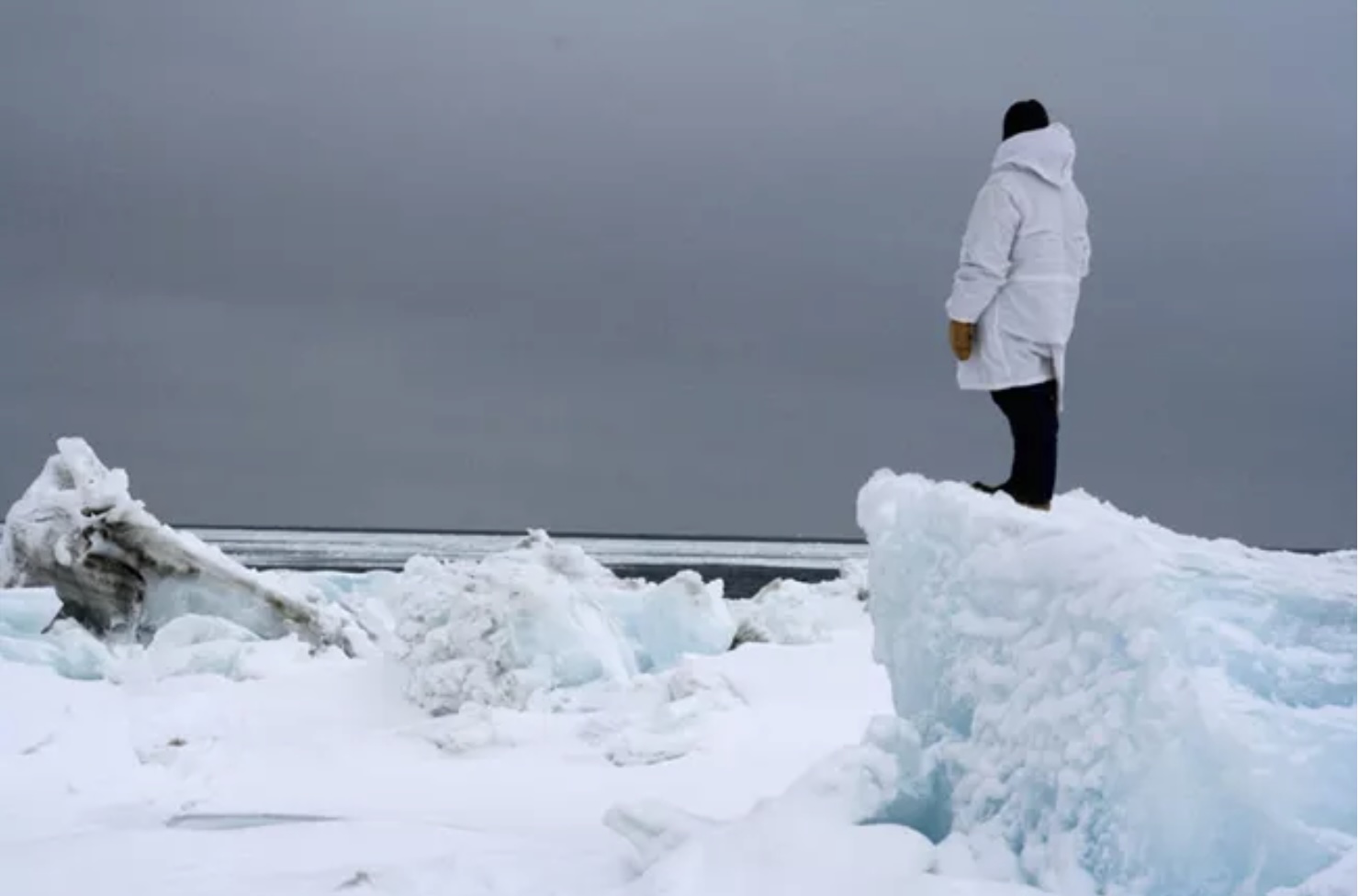
April 4, 2026 – The Alaska Eskimo Whaling Commission is formally opposing the proposed Polar LNG project on Alaska’s North Slope, warning that increased Arctic vessel traffic could disrupt the subsistence hunt of bowhead whales.
In a statement responding to the March announcement of a proposed LNG export facility at Prudhoe Bay, the commission said the project would introduce large icebreaking vessels directly into the migration paths used by bowhead whales during both spring and fall seasons.
“The Alaska Eskimo Whaling Commission has worked for over 40 years to minimize the adverse impacts of near-shore and offshore oil and gas activity, including but not limited to vessel traffic, on our subsistence hunt of bowhead whales,” the commission said. “The AEWC opposes the Polar LNG Project, which would do the exact opposite — it would increase vessel traffic that would pass directly through both the spring and fall migration of the bowhead whale.”
The commission said traffic associated with the project would include “large, loud icebreaking vessels” transiting in and out of West Dock at Prudhoe Bay and traveling through the Bering Strait, including routes near St. Lawrence Island.
“We oppose the increased vessel traffic caused by Russia’s Arctic oil and gas activities, and don’t want to see it happen in Alaska,” the statement said.

Created by 1977 after the International Whaling Commission announced a ban on whaling by Alaska Natives, the Alaska Eskimo Whaling Commission has been advocating for the subsistence rights of 11 whaling-based villages. The group’s opposition comes just days after Polar LNG announced a concept to liquefy natural gas on the North Slope and ship it by ocean-going LNG carriers to Asian markets, using Arctic routes as an alternative to the gasline proposed overland to Nikiski, on the Kenai Peninsula.
The proposal could be competition or simply another route to getting gas to market.
Polar LNG’s concept would rely on nearshore liquefaction infrastructure at Prudhoe Bay and expanded use of West Dock, with LNG carriers navigating Arctic waters to reach Asia. Supporters have described the approach as potentially faster to build and a way to begin monetizing Alaska’s vast stranded North Slope gas resources sooner.
But the whaling commission said vessel traffic, particularly icebreaking ships, presents risks to subsistence hunting that communities have worked for decades to mitigate through agreements with offshore oil and gas operators.
The group emphasized that bowhead whale migration routes pass directly through the areas that would see increased traffic under the Polar LNG concept, including nearshore waters used by subsistence hunters.
The statement signals that subsistence in the tight ice-bound waters of the Arctic concerns may become a central issue if the proposal advances, particularly given the long history of consultation requirements and mitigation agreements for North Slope offshore activity.
The Polar LNG concept remains in early stages, with no engineering or permitting schedules released publicly.


7 thoughts on “Whaling commission opposes Polar LNG project, citing bowhead migration concerns”
Whaling on the North Slope is really nothing “whaling” in a “fishing” sense. It’s more like fishing on the Russian River. Whalers go to the coast and wait for the whales to swim by during their treks to the feeding and breeding grounds. Whalers use speed boats and harpoon cannons. Since the ocean is only 100 feet deep the whales cannot dive deep to get away from the harpoons. Whaling is more like sport fishing. Yes, they call it subsistence. But as someone who’s seen the practice, I can say it’s really not.
Legitimate concerns. Non Natives have always under estimated the impacts of not having the natural foods and its adverse effect on Natives overall mental health, physical health, and spiritual health. Even Natives by a whole group had not yet recognized their staying balanced means weekly consuming natural Alaska edible plants (beyond just berries) and natural meats in to their system.
Alaska Natives never had a good working relationship with Alaska leadership and US leaders (whom are non native descendants and lack understanding what Native descendants truly need beside just jobs and money); they they don’t trust their their leaders. Natives have lost so much already and now they look at a new generation who doesn’t understand wants to either take away the whale or the caribou. They are operating out of generational fear.
Something realistic the Northern Inupiaq on the commission have to recognize is icebreakers will come across the Arctic as ice is breaking more and more.
This world is bigger and encompasses other people groups besides Alaskans and Americans. The Inupiaq regarding the whale they going to have to get adapative acceptance to increased traffic will come and come in force from others who are not just Americans.
***That goes for the caribou herds and the interior northern groups
Just realism. there are More people in the world who needs more oil and gas than a whale…
The icebreakers whether or not Inupiaq communities are ready
Including the renewable projects are needing oil and gas to be built and operated
Another thing Russia will not listen to a group of Natives when they don’t even treat their own Native groups as human. The Natives on the other side of the dateline, their lives are so improvised and bad that Alaska Natives lives look plump, happier, and living in luxury.
I Thank God! That Russia felt pressure to sell its international rights to Alaska and America through William Seward bought Alaska. Else life would look very different for all of us who are Alaska Native descendants if Russia never sold their rights of Alaska.
Show me the science.