


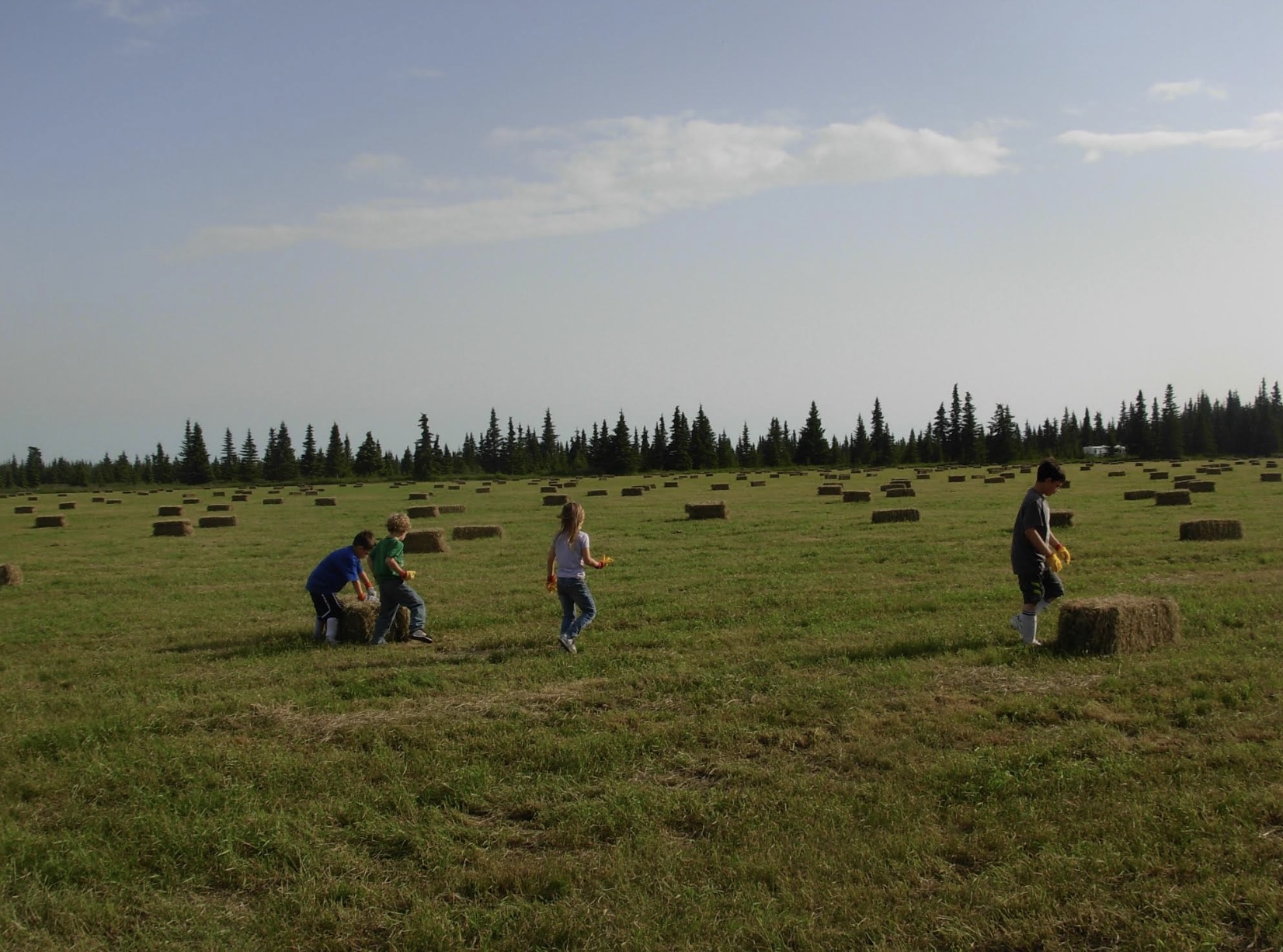
For more than a decade, David Yragui has been fighting two unstoppable forces – water and government. On a gray day near Kenai on the Kenai Peninsula, pumps hum across his land, trenches snake toward the river, and piles of paperwork rest on his desk. What started as a ranch built on hard work and good intentions has become a slow-motion flood, both literal and bureaucratic.
Yragui is a builder, not a complainer. He’s the kind of man who, when the road’s impassable, brings in gravel himself. When ditches clog, he buys an excavator. When the borough shrugs and ignores flooding, he draws up maps and digs until the job is done. But in the end, that very instinct – to fix what government won’t – landed him in court.
He started with nothing but drive. In the early 1980s, while working jobs from Nome to Dutch Harbor, he founded Redoubt Plumbing & Heating. The company grew into a cluster of businesses – tool repair, tool rental, oilfield services, contracting – that kept him working long hours and saving every dime. He and his wife scraped by on little. Vacations were rare. Every dollar went toward one goal: Buy land and build a ranch for his family.
By 1999, after nearly 20 years of bush jobs and small-town and state contracts, he bought 75 acres off K-Beach Road — cash, no mortgage. He cleared it himself, bit by bit, while still running crews across the state. The dream was simple: A working ranch with hay fields, a barn, and a home that could stand the test of Alaska weather.
Over time, the dream grew. He built Buoy Ave. and several connecting roads, added underground utilities, and even carved out an airpark for fellow pilots. He subdivided part of the land into small ranch parcels, complete with covenants meant to protect neighbors and keep lawsuits at bay. The borough approved his plans, and for a while it all worked as intended. Families moved in, hay was cut, and the ranch thrived.
Then came the water.
The drainage in that part of K-Beach has always been tricky. The land sits below a vast 28-square-mile wetlands complex on CIRI property leased by Hilcorp. When the rains of 2013 arrived, the natural sheet flow had nowhere to go. Yragui watched as water rose through the hay fields and crept toward his son’s home. Culverts were missing on borough-maintained roads. Ditches were plugged. He could see the flood coming, and no one was coming to stop it.
So David Yragui did what he always did: He got to work.
With permits in hand, he dug emergency ditches along Trawling Ave, and Karluk Ave., laying culverts to redirect the flow. The water drained — fast — saving homes that were already inches from flooding. But success was short-lived. Within weeks, the borough issued cease-and-desist orders, citing missing line locates and unapproved culvert work. State and federal agencies followed, warning of potential Clean Water Act violations. The ditches, they said, had to be filled.
He filled them. And the water came back.
By October 2013, heavy rains had left hundreds of homes flooded from Eastway Road to Poppy Lane. Cows were lost. Fields were drowned. The ranch was under water. Desperate, Yragui rented the Soldotna Sports Center and called a community meeting. About 150 people showed up, including homeowners, local officials, even then-Sen. Peter Micciche. Hydrologist Jim Munter explained that the entire area sits on an ancient alluvial fan, a landscape where water spreads out and slows down, with nowhere to drain. For thousands of years, the ground had soaked it in. Now, the water’s path was changing.
The next day, Yragui was back in the field with pumps and hoses, trying to help neighbors bail out.
“No good deed goes unpunished,” he says now.
The borough, facing angry residents, pointed at him as the culprit. Lawsuits followed. State letters arrived. Federal inspectors showed up. And still, the water kept coming.
Over the next decade, Yragui never stopped trying to solve it. He co-founded the K-Beach High Water Task Force, met monthly with engineers and hydrologists, and kept documenting every flood event. He spent hundreds of thousands of dollars on drainage work and legal fees. His businesses shrank under the weight of the fight. His wife, Mary Jeanne, feared he would work himself into the grave. There were shingles, sleepless nights, and long winters with no clear end to the dreaded floods.
The rains returned in 2022. Once again, the low ground filled and the ditches overflowed. Yragui says he built a new trapezoid-shaped drainage ditch that were wider and deeper this time, and that helped save homes on Karluk Ave. But the borough sued him in 2023, arguing that his excavations violated environmental rules. He countered with his own lawsuit in 2024, saying the borough has failed to maintain the area’s drainage system and left landowners like him to fend for themselves. That case is still active in court.
Now, more than 25 years after buying his homestead, Yragui’s property remains part ranch, part floodplain, and part battleground. The culverts he once asked for are slowly being installed – but often, he says, in the wrong places and badly engineered. Each new storm tests the limits of both the soil and his patience.
“They’re trying to break me,” he says quietly, looking across the hay field that was his life’s work. Then he pauses, adds a line that sums up everything about his long fight with water and bureaucracy: “But I’ve got God on my side.”


14 thoughts on “The man who fought the flood: One rancher’s battle against water and bureaucracy on the Kenai”
“Government is a disease masquerading as its own cure.”
.
– Robert LeFevre
He was and is right.
Why does god make it rain and flood so much?
So you will learn how to pray and be thank full for what he has bestowed upon you, mainly family
So, David, have you prayed for something to be thankful for, like less rain? That seems logical. Ask him to bestow some dry weather.
Failed inept government. It is no wonder confidence in government has taken a downward slide. Such inaction and unnecessary roadblocks are statewide. We have waste at every level, even local, and money spent on foolishness like DEI and lgbtq etc agendas while infrastructure fails. The Kenai Peninsula borough should be thrilled to have such a proactive problem solving resident doing much of the work that should be borough responsibility. The subdivisions roadways were complete and likely under borough maintenance and water can be rerouted with good drainage. The borough has failed and it is reprehensible. I hope and pray Mr. Yargui has success with his counter suit and that borough officials are held accountable. It seems also with too many elected officials, politics, power and control are the order of the day rather than serving the public as they were hired or elected to do.
I know the family well enough to call them as God fearing & faithful that his ( God’s) interventions may take time but being patience is a virtue one most not forsake . I have extensive knowledge of drainage issues as have constructed numerous federal. state & local projects that were complete drainage structures but also in emergencies to alleviate potential flooding before flooding & after such events ( Matanuska River re-channel redirection that later toke out many homes further down river) best plans of mice & men ( the corp. of engineers).
What Dave has tried & has done was justifiable in both cases. I witnessed it personally. The Kenai Peninsula Borough is on the wrong track & they know that but it’s a game of who is the more powerful ( Public officials EGO’s )… not what is in the best interest of Dave, his families private property & his neighbors also. This legal fight is at the cost of us borough taxpayers, is a waste & the borough should realize that. Liberty Ed Martin Jr
Likewise , I also know the family well enough to admire this God fearing and community minded individual. I shudder to think what financial hardships they have had to endure to defend against that bureaucratic entity.
Have seen firsthand the damage done by the KPB to David and his 25+ neighbors properties, their house foundations, their wells and their septic systems that are now below the water table.
Ineptitude in their execution of a very poorly planned drainage system that has hundreds of acres backed up into a gallery against a single culvert beneath Kalifornsky Beach Road. I perceive they, KPB, don’t even have a Hydrologist on boarded for this issue
God Bless you Sir for your relentless pursuit for justice.
On a much smaller scale down in Homer, I have learned first hand that the Borough doesn’t seem to exhibit a basic understanding of the simple drainage principle that water flows downhill and normal seasonal drainage can indeed be controlled. In opposition to that, bureaucracy seems to flow uphill and can’t be controlled when bureaucrats get their hackles up at taxpayers who try to fix Borough mistakes made in the past (when building foundations were made of spruce logs and roads were often “improved” with corduroyed logs through bogs). In my own experience, the Borough seems to prefer keeping the past mistakes in the past and shy away from making or allowing actual simple improvements where drainage is involved. I don’t get it but, dang, there it is…🤷♂️
The environmental industrial complex ie the Cook Inlet Keeper have all governmental groups looking to cover their own butts in fear. This is a normality in our society. Unless this changes expect more of the same.
Kinda off topic, but why do christians fear god? Shouldn’t it it be a mutual love fest?
One presumes you feared disappointing your own father and invoking his wrath. It’s an integral part of loving and honoring his integrity in raising you.
We need more articles like this one to shine a light on what the public sector is up against in trying to fix problems that the government doesn’t want fixed. I respect Dave and his family for continuing to persevere to find solutions to our flooding problems in the face of government adversity.
When government agencies prevent property owners from protecting their properties from natural disasters it needs to be discussed openly like this instead of buried by the media.
So true, David and his hydrologists have solutions for the flooding that fall upon deaf ears.
If Ak Dept of F&G would just enhance the anadromous species steam to the east the area would drain and the salmon wouldn’t be trying to spawn in the hayfields and roadside ditches.