




By SUZANNE DOWNING
March 24, 2026 – Ketchikan Rep. Jeremy Bynum’s comments during debate over Senate Bill 64 deserve a closer look, because they blurred together three very different concepts: tribal sovereignty, voter eligibility, and acceptable identification. They were either intentionally dishonest or simply uninformed.
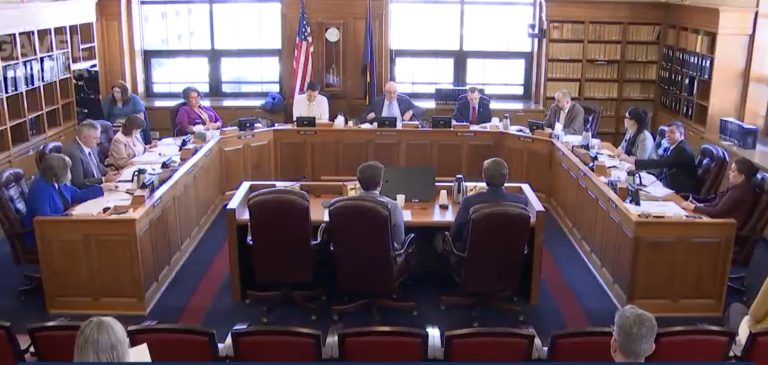
During floor debate on Monday, Bynum, representing District 1, which includes the reservation of Metlakatla, argued that adding tribal IDs as acceptable voter identification is important because Alaska Native tribes are “sovereign.”
“It is an extremely important issue for the members of my community that they have the ability to use their ids to vote. As sovereign people it is important that they have some self determination as a soveeign nation to use their ids to vote in our elections. As American citizens it’s their right to vote in our elections,” Bynum said on the House floor.
That framing sounds so compelling. It is, however, legally muddled.
Let’s start with what is not in dispute: Alaska Native voters who are US citizens absolutely have the right to vote in Alaska elections if they meet the same requirements as every other voter: citizenship, residency, registration, and eligibility under Alaska law. That right does not come from tribal sovereignty but it comes from the US Constitution, Alaska Constitution, and state election statutes. It is a fact that a person could be a member of a tribe, and yet have residency elsewhere, even in another country. That’s all part of the “blood quantum” formula.
Tribal sovereignty is real, but it is limited across the country. Tribes are recognized as “domestic dependent nations” with authority over internal governance, membership, and certain matters on tribal land. They do not set the rules for Alaska’s state elections. They do not determine voter eligibility. And their sovereignty does not extend beyond their land area into controlling who participates in state or federal elections.
That authority belongs to the State of Alaska and federal law.
Bynum’s argument suggests that because tribes are sovereign, their IDs should be accepted for voting. But that reverses the legal logic. If tribal IDs are accepted, it would only be because the Legislature allows them and because the state chooses to recognize them as identification documents that somehow establish in-state residency. Not because tribal sovereignty requires it.
Importantly, identification and eligibility are not the same thing.
A tribal ID may establish who someone is a member of a tribe. It does not necessarily establish where they live. Alaska law requires voters to be residents of the state and of their legislative district. A tribal ID, by itself, does not confirm that state residency, district residency, or how long someone has lived there.
This question is not unique to tribal IDs. Many forms of ID don’t prove residency and don’t even come with photos. But that’s exactly why the distinction is so critical: Voting requires more than identity. It requires qualification.
Bynum implied that sovereignty itself is the credential. It is not. Tribal members vote in Alaska elections as US citizens and Alaska residents, not as citizens of separate nations exercising independent political authority with dual citizenship.
If sovereignty itself were the basis for voting rights in state elections, then voter eligibility would no longer be grounded in citizenship and residency. It would be grounded in membership in a separate government. That is not how American elections work, and it is not how Alaska’s Constitution defines its electorate.
To be clear, none of this diminishes Alaska Native voting rights. Those rights are already protected. Alaska Natives vote and serve in elected office.
The question is whether lawmakers should justify election policy changes by invoking tribal sovereignty in a way that confuses the legal basis for voting.
Once that line blurs, it becomes harder to explain what actually determines who can vote. Is membership in a tribe based in Alaska enough to establish residency?
Rep. Bynum is on quicksand when he suggests that tribal sovereignty itself is enough. It isn’t. And he should be honest when he rises to speak on the House floor.
Suzanne Downing is founder and editor of The Alaska Story and is a longtime Alaskan.



6 thoughts on “Suzanne Downing: Tribal ID does not establish state residency for purposes of voting eligibility”
Again. Alaska Native Tribes are not Sovereign.
How can an entire people of a tribe be a sovereign nation while it is 100% dependent on the Federal government/taxpayers.
Isreal is a great example of a nation that was built out of the WW2 era to which today Isreal is a sovereign nation neither dependent nor in need of America nor the UK or any its neighbors but quite the opposite its neighbors are dependent on Isreal. That’s sovereignty Native people of Alaska.
I have an ID that came in a Cracker Jack box. Is that as good or better than a tribal ID?
A. U.S. Department of Justice (DOJ)
• Consistently treats tribal IDs as valid government-issued ID
• Has taken action when states tried to restrict Native voters (including ID issues)
B. U.S. Election Assistance Commission (EAC)
• Publishes federal voting guidance and materials
• Includes tribal IDs in examples of acceptable identification under HAVA frameworks
Zack, it might be a lot of things, but proof of Alaska residency it is not. Don’t die on this hill.
I am not convinced that anyone can explain how tribal IDs are issued, who issues them, or to whom they are issued. There may be business opportunity here. I could print some cards up and sell ‘em.
Suzanne – You do offer a fair warning against confusing tribal sovereignty with state election rules, but you overreache when you imply Bynum’s support for tribal IDs somehow threatens voter eligibility standards. In reality, SB64 adds tribal identification cards only as a form of identification, which is exactly like a driver’s license or state ID card – or even a passport.
Nothing in the bill declares that a tribal ID establishes residency, proves U.S. citizenship, or grants special voting rights based on sovereignty. Alaska law continues to require every voter whether Native or non-Native, to affirm bona fide residency in the state and precinct through sworn statements, You know this. Permanent Fund Dividend linkages, address-bearing documents, and the Division of Elections’ verification processes, which SB64 actually strengthens through expanded voter-roll audits and cleanup.
Bynum’s point about respecting tribal members’ ability to use their own government-issued ID for identity verification is not “quicksand”; it is a narrow, practical accommodation that treats Alaska Natives the same as other citizens who rely on various photo IDs (such as State Drivers Licenses that often have the wrong physical address on them) that also do not, by themselves, prove where they live.
The real conservative priority here is passing SB64’s strong system-wide reforms to the election system (roll maintenance, ballot tracking, cybersecurity) so that when Alaskans vote to fully repeal ranked-choice voting in November 2026, they do so on a clean, transparent, and trustworthy playing field—not one where legitimate identity tools are rejected while the underlying machinery remains broken.
Both you and Allard are wrong on this one.